 Pocket Botanist
Pflanzenratgeber
germander speedwell.
Veronica chamaedrys
Aussprache veh-RON-ih-kah kam-EE-driss
Auch bekannt als Birdseye Speedwell, Germander Speedwell, bird's-eye


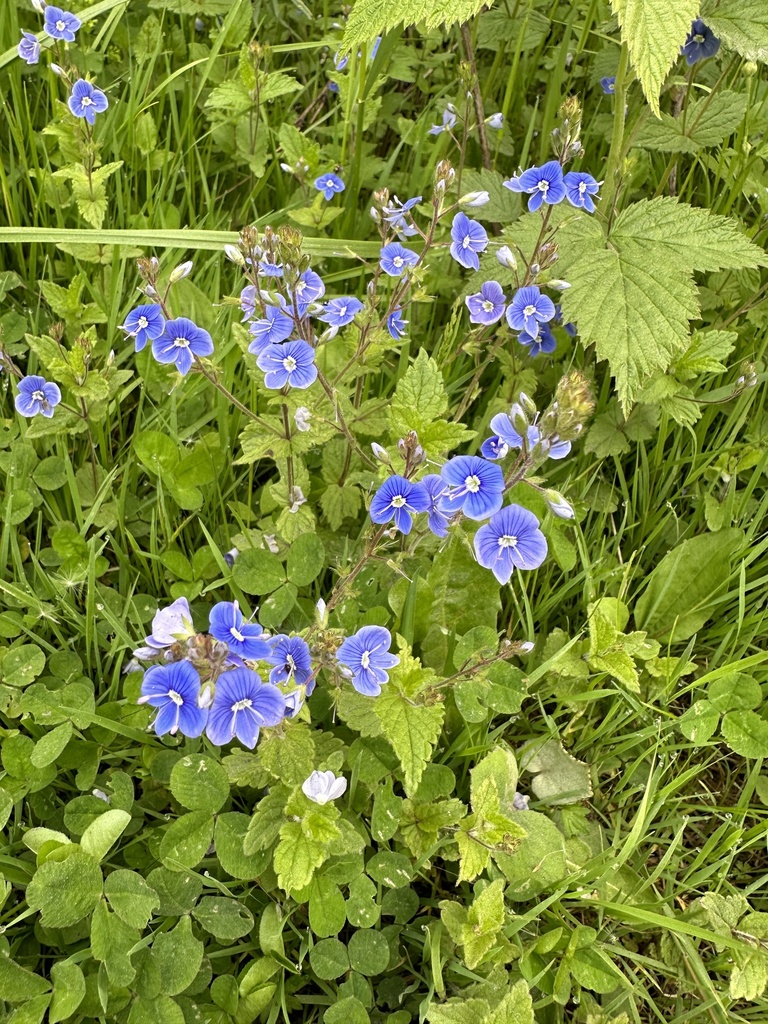
This charming perennial is a favorite for its bright blue flowers that appear in late spring. It spreads nicely to form a low carpet in your garden. You'll love how it adds a splash of color to shaded areas.
Auf einen Blick
- Pflegestufe
- Einfach
- Pflanzenart
- perennial
- Licht
- partial shade to full sun
- Licht im Innenraum
- Hell, indirekt
- Gießen
- Alle 3 bis 7 Tage
- Endgröße
- 12 to 18 inches
- Wachstum
- Schnell
- Winterhärte
- USDA 4 bis 8
- Blütezeit
- Late spring to early summer
Pflege
Keep the soil consistently moist but not waterlogged to mimic its natural woodland habitat. Watch for wilting during dry spells, as this plant prefers steady moisture. It is quite hardy and generally resists most pests.
- Gießen
- Water whenever the top inch of soil begins to feel dry to the touch.
- Düngen
- Apply a balanced liquid fertilizer once during the spring growth spurt.
- Schneiden
- Trim back the foliage after the main flowering period to encourage a tidy appearance.
- Umtopfen
- Refresh the soil or move to a larger container if the plant becomes root bound.
- Boden
- moist, well drained soil
- Boden-pH
- 6.0 to 7.5
- Temperatur
- -25 bis 30°C
- Luftfeuchtigkeit
- 40 bis 70%
- Trockenheitstoleranz
- Mittel
- Lebensdauer
- Perennial, typically 3 to 5 years.
- Wildverbiss-Resistenz
- Mittel
Anzeichen fürs Umtopfen
- Roots growing out of the drainage holes
- Water sitting on the surface of the soil
Sicherheit
- Menschen
- There are no known reports of significant human toxicity for this species.
- Kinder
- No specific safety concerns for children, though it is best to discourage eating any garden plant.
- Essbarkeit
- This plant is not considered edible and should not be consumed.
So erkennst du die Pflanze
- Bright blue four petaled flowers
- Opposite ovate leaves with serrated edges
- Hairy stems with two lines of hairs
- Low growing creeping habit
- Höhe
- 0,1 bis 0,3m
- Breite
- 0,3 bis 0,6m
- Blätter
- green, deciduous
- Blüten
- blue, white, 0,5 bis 1,5cm
Häufige Probleme
- Powdery mildew — A fungal infection that creates a white dusty coating on the leaves.
Standort und Pflege
- Vermehrung
- division, seed, cuttings
- Pflanzzeit
- spring, autumn
- Überwinterung
- The foliage may die back in cold winters, so simply clear away any dead debris in early spring.
- Im Kübel
- It grows well in wide, shallow containers as a trailing plant.
Division
- 1. Dig up a clump in spring or autumn.
- 2. Gently pull the root mass apart into smaller sections.
- 3. Replant the divisions immediately at the same depth.
Pair this with other low growing woodland plants to create a dense ground cover that suppresses weeds.
Gute Pflanzpartner
- Bugleweed — They share similar moisture needs and make a lovely low carpet.
- Walderdbeere — They grow well together in woodland garden settings.
Ähnliche Arten
- thymeleaf speedwell — It has a similar growth habit but smaller, paler flowers.
Botanisches
- Familie
- Plantaginaceae
- Gattung
- Veronica
- Ordnung
- Lamiales
- Klasse
- Magnoliopsida
- Ursprüngliche Heimat
- Europe and western Asia.
- Artenschutz
- This plant is common and not of conservation concern.
It thrives in meadows and woodland edges where it can creep through low vegetation.
- Nutzen für Wildtiere
- nectar source
- Bestäuber
- Bienen, Schmetterlinge
- Verwendung
- ground cover, rock garden, pollinator garden
Im Jahresverlauf
Ökologische Zeigerwerte
- Salzgehalt
- 1/9
- Bodenreaktion
- 5/9
- Licht
- 5/9
- Temperatur
- 4/9
- Feuchtigkeit
- 5/9
- Nährstoffe
- 5/9
Taxonomie abgeglichen mit GBIF.
Häufige Fragen
- Is it invasive?
- It can spread quickly in ideal conditions but is generally considered manageable.
- Does it need full sun?
- It prefers partial shade but will tolerate full sun if the soil stays moist.
Woher der Name kommt
The name Veronica is thought to be a reference to Saint Veronica, while chamaedrys comes from Greek words meaning ground oak.
Gut zu wissen
- It is often called germander speedwell.
- The name speedwell comes from the wish for a traveler to speed well on their journey.
- It spreads by creeping stems that root at the nodes.
Probleme mit germander speedwell?
Diese Seite bietet allgemeine Infos. Pocket Botanist erkennt Probleme anhand eines Fotos deiner echten Pflanze, passt das Gießen an dein Licht und deinen Standort an und erinnert dich an die Pflege.
Dieser Ratgeber wurde mit KI erstellt und mit der GBIF-Taxonomie abgeglichen. Er dient zur allgemeinen Information und ersetzt keine gärtnerische oder tierärztliche Beratung. Hier erfährst du, wie wir diese Ratgeber erstellen.