 Pocket Botanist
Guide botanique
Ribwort plantain.
Plantago lanceolata
Prononciation plan-TAY-go lan-see-oh-LAY-tuh
Aussi appelée Buckhorn, Buckhorn Plantain, English Plantai, English Plantain, German Psyllium, Lamb's Tongue, Lanceleaf Indianwheat, Lanceleaf Plantain


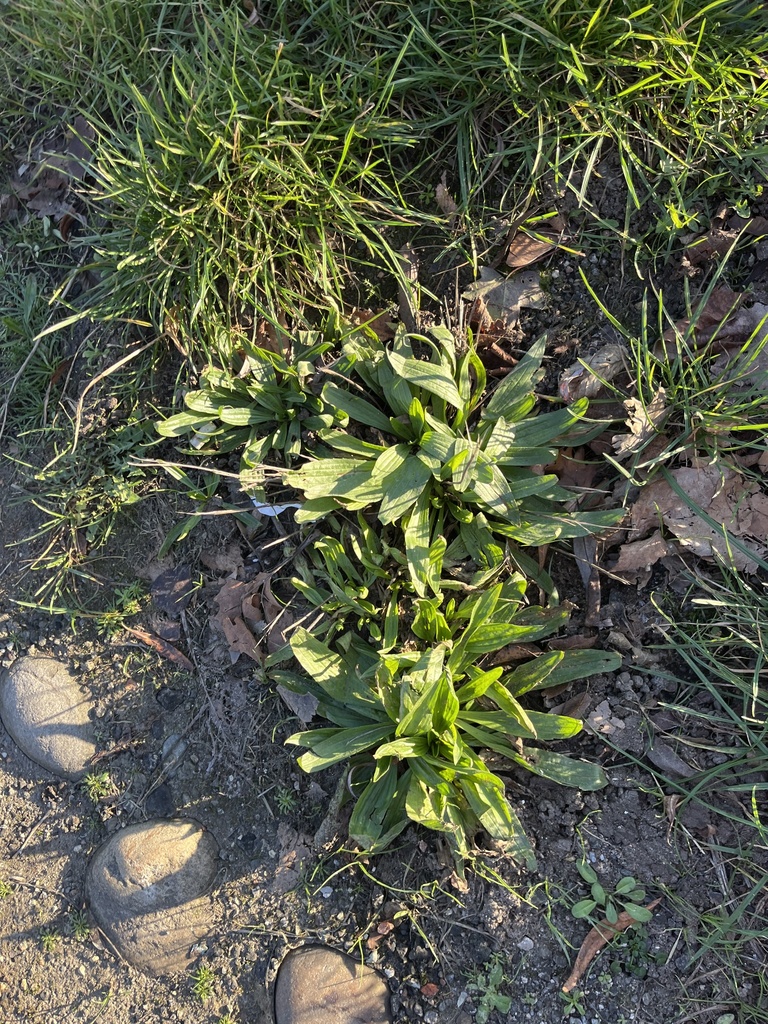
Ribwort plantain is a hardy perennial herb often found in meadows and along roadsides. It is known for its distinct ribbed leaves and tall, slender flower spikes. This plant is quite resilient and adapts well to various soil conditions.

En un coup d'œil
- Niveau d'entretien
- Facile
- Type de plante
- Perennial herb
- Lumière
- Full sun
- Lumière en intérieur
- Soleil direct
- Arrosage
- Tous les 3 à 7 jours
- Taille adulte
- 1 to 2 feet
- Croissance
- Moyenne
- Rusticité
- USDA 3 à 10
- Floraison
- Late spring to early autumn
Entretien
Keep the soil consistently moist to support healthy growth. Watch for yellowing leaves which can indicate poor drainage or overwatering. It thrives best when given plenty of space to spread.
- Arrosage
- Water whenever the top inch of soil feels dry to the touch.
- Engrais
- Apply a balanced liquid fertilizer during the active growing season.
- Taille
- Trim back spent flower stalks to encourage new growth.
- Rempotage
- Move to a slightly larger container once the roots fill the current pot.
- Sol
- Well draining loamy soil
- pH du sol
- 6.0 to 7.5
- Température
- -20 à 35°C
- Humidité
- 30 à 80%
- Résistance à la sécheresse
- Moyenne
- Durée de vie
- Perennial, typically 3 to 5 years.
- Résistance aux chevreuils et lapins
- Moyenne
Signes qu'il faut rempoter
- Roots growing out of drainage holes
- Stunted growth
Sécurité
- Humains
- It is generally considered non-toxic to humans.
- Enfants
- There are no specific safety concerns for children, though it is often found in areas treated with herbicides.
- Allergènes de contact
- The leaves can cause mild skin irritation in sensitive individuals.
- Allergènes aéroportés
- The windborne pollen is a significant cause of seasonal hay fever.
- Comestibilité
- Young leaves are edible, but older leaves become tough and bitter.
Comment l'identifier
- Narrow lance shaped leaves
- Prominent parallel leaf veins
- Tall leafless flower stalks
- Small brownish flower heads
- Hauteur
- 0,1 à 0,5m
- Envergure
- 0,15 à 0,3m
- Feuilles
- green, semi-evergreen
- Fleurs
- brown, white, 0,5 à 1,5cm
- Fruits
- brown, Summer to autumn
Problèmes courants
- Powdery mildew — A fungal infection that appears as white dusty spots on leaves.
La cultiver
- Multiplication
- seed, division
- Quand planter
- spring, autumn
- Hivernage
- The plant remains as a low rosette of leaves through winter in mild climates and regrows from the crown in spring.
- En pot
- It grows easily in pots, but is rarely kept as a container plant due to its weedy nature.
Seed
- 1. Collect seeds in late summer.
- 2. Sow directly into soil in autumn.
- 3. Keep soil moist until germination.
It works well in meadow mixes but can outcompete delicate garden flowers.
Bonnes associations
- Trèfle blanc — They both thrive in similar meadow conditions.
- Pissenlit — These species often grow together in disturbed grasslands.
Espèces similaires
- Greater Plantain — It has similar medicinal properties but much wider, rounded leaves.
Science
- Famille
- Plantaginaceae
- Genre
- Plantago
- Ordre
- Lamiales
- Classe
- Magnoliopsida
- Région d'origine
- Europe and temperate Asia.
- Préservation
- It is a widespread, non-threatened species often considered an invasive weed in non-native regions.
It colonizes disturbed ground and compacted soils by producing abundant wind dispersed seeds.
- Intérêt pour la faune
- larval host plant, nectar source
- Pollinisateurs
- abeilles, papillons, papillons de nuit
- Utilisations
- herbal medicine, forage, ground cover
Au fil des saisons
Repères écologiques
- Salinité
- 3/9
- Réaction du sol
- 5/9
- Lumière
- 7/9
- Température
- 5/9
- Humidité
- 5/9
- Nutriments
- 5/9
Taxonomie vérifiée avec le GBIF.
Ce qu'on demande souvent
- Is it a weed?
- Yes, it is widely considered a lawn weed, though it has medicinal uses.
- Does it need much water?
- It is quite adaptable but prefers consistent moisture.
D'où vient le nom
The name Plantago comes from the Latin word for sole of the foot, referring to the leaf shape, while lanceolata describes the lance shaped leaves.
Bon à savoir
- It is often called ribwort plantain due to the prominent veins in its leaves.
- The plant was historically used to treat wounds and skin ailments.
- It thrives in compacted soil where other plants struggle.
Ta plante a mauvaise mine ?
Cette page est un guide général. Pocket Botanist diagnostique les problèmes directement à partir d'une photo de ta plante, adapte l'arrosage à sa luminosité et te prévient quand il faut t'en occuper.
Ce guide a été généré par IA et vérifié avec la taxonomie du GBIF. Il s'agit d'informations générales, et non de conseils horticoles ou vétérinaires. Découvre comment nous concevons ces guides.