 Pocket Botanist
Guide botanique
Iris des marais jaune.
Iris pseudacorus L.
Prononciation EYE-ris soo-dack-OR-us
Aussi appelée Iris jaune


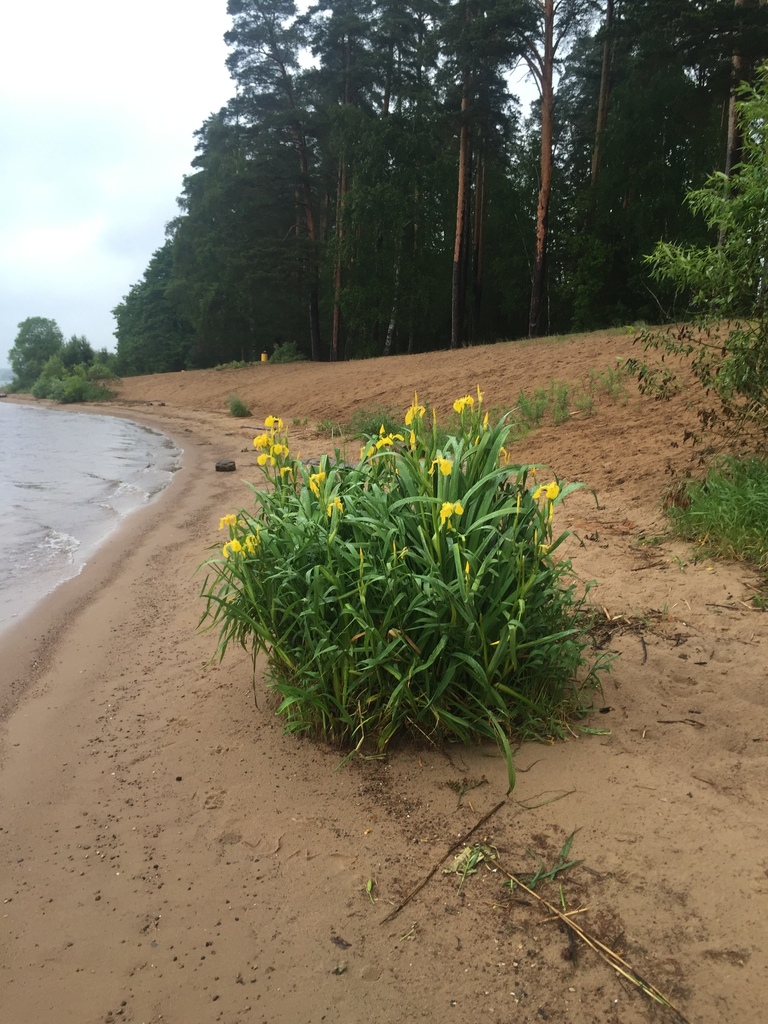
Cette plante vivace rustique est un excellent choix pour les jardins aquatiques ou les zones humides de votre jardin. Elle produit de magnifiques fleurs jaunes qui illuminent vraiment le paysage. Gardez simplement à l'esprit qu'elle peut se propager de manière assez agressive dans de bonnes conditions.

En un coup d'œil
- Niveau d'entretien
- Facile
- Type de plante
- Vivace
- Lumière
- Plein soleil à ombre partielle
- Lumière en intérieur
- Lumière vive indirecte
- Arrosage
- Tous les 1 à 3 jours
- Taille adulte
- 3 à 5 pieds
- Croissance
- Rapide
- Rusticité
- USDA 4 à 9
- Floraison
- Fin du printemps au début de l'été
Entretien
Gardez le sol constamment humide, voire submergé dans une eau peu profonde. Surveillez le jaunissement des feuilles, signe que la plante est trop sèche. Vous devriez enlever les tiges florales fanées pour que la plante reste nette.
- Arrosage
- Assurez-vous que le sol reste constamment humide ou gardez la base dans une eau peu profonde.
- Engrais
- Appliquez un engrais équilibré pour plantes aquatiques pendant la saison de croissance active.
- Taille
- Coupez le feuillage au ras du sol à la fin de l'automne, une fois que les feuilles sont mortes.
- Rempotage
- Divisez les rhizomes tous les quelques années pour éviter que la plante ne devienne trop dense.
- Sol
- Sols humides, marécageux ou argileux
- pH du sol
- 6.0 à 7.5
- Température
- -25 à 35°C
- Humidité
- 60 à 100%
- Résistance à la sécheresse
- Faible
- Durée de vie
- Vivace, généralement 10 ans et plus.
- Résistance aux chevreuils et lapins
- Élevée
Signes qu'il faut rempoter
- Des racines sortent des trous de drainage.
- La plante arrête de fleurir en raison de la surpopulation.
- Le rhizome s'est expulsé du sol.
Sécurité
- Humains
- La sève peut provoquer une irritation cutanée et les rhizomes sont toxiques s'ils sont ingérés.
- Animaux
- Cette plante est toxique pour les chats et les chiens si ingérée.
- Enfants
- Tenez les enfants éloignés de cette plante car les feuilles et les rhizomes sont toxiques s'ils sont mâchés ou avalés.
- Allergènes de contact
- La sève contient des cristaux d'oxalate de calcium qui peuvent provoquer une irritation cutanée au contact.
- Allergènes aéroportés
- Il n'y a pas de preuves significatives d'allergies respiratoires associées à cette espèce.
- Comestibilité
- Toutes les parties de cette plante sont toxiques si ingérées et peuvent causer de graves troubles digestifs.
Comment l'identifier
- Fleurs jaune vif avec des marques brunes
- Longues feuilles vertes en forme d'épée
- Pousse en touffes à partir de rhizomes épais
- Les capsules de graines sont grosses et vertes
- Hauteur
- 0,9 à 1,5m
- Envergure
- 0,6 à 1,2m
- Feuilles
- vert, caduc
- Fleurs
- jaune, 8 à 12cm
- Fruits
- brun, Fin de l'été
Problèmes à surveiller
- Perceur de l'irisCourant
- Taches foliairesCourant
- Pourriture mollePeu courant
- Puceron du nénupharPeu courant
- Foreur de l'iris — Les chenilles creusent des tunnels dans les rhizomes, provoquant la pourriture et le déclin de la plante.
Par symptôme
Vérifie la santé de ta plante en photo
Pocket Botanist analyse une photo de ta plante et te dit ce qui ne va pas et quoi essayer en premier.
La cultiver
- Multiplication
- division, semis
- Quand planter
- printemps, automne
- Hivernage
- Taillez le feuillage mort au ras du sol à la fin de l'automne. Les rhizomes sont rustiques et survivront aux températures de gel pendant qu'ils sont submergés.
- En pot
- Elle pousse bien dans des pots aquatiques immergés dans des plans d'eau, à condition que le pot ait au moins 30 centimètres de large.
Division
- 1. Soulevez la touffe au début de l'automne.
- 2. Utilisez un couteau bien aiguisé pour couper le rhizome en sections.
- 3. Assurez-vous que chaque section a des racines saines et un éventail de feuilles.
- 4. Replantez immédiatement dans un sol humide ou dans l'eau.
Groupez cet iris avec d'autres plantes aimant l'humidité pour créer un écosystème de jardin marécageux équilibré.
Bonnes associations
- Caltha des marais — Ils partagent des exigences similaires en matière de sol humide et marécageux.
- salicaire pourpre — Ils offrent un contraste de couleurs classique dans les milieux humides.
Espèces similaires
- Acorus calamus — Il a un feuillage et des préférences d'habitat similaires mais manque de fleurs jaunes voyantes.
Science
- Famille
- Iridaceae
- Genre
- Iris
- Ordre
- Asparagales
- Classe
- Liliopsida
- Région d'origine
- Europe, Asie occidentale et Afrique du Nord-Ouest.
- Préservation
- Elle est considérée comme une mauvaise herbe envahissante dans de nombreuses régions d'Amérique du Nord et de Nouvelle-Zélande en raison de sa propagation agressive.
Elle prospère dans les marais, au bord des rivières et au bord des étangs où ses rhizomes peuvent rester immergés.
- Intérêt pour la faune
- source de nectar
- Pollinisateurs
- abeilles
- Utilisations
- plante ornementale de bassin, restauration des zones humides, accent de jardin aquatique
Au fil des saisons
Repères écologiques
- Lumière
- 7/9
- Humidité
- 9/9
- Nutriments
- 6/9
- Salinité
- 2/9
- Réaction du sol
- 5/9
- Température
- 5/9
Taxonomie vérifiée avec le GBIF.
Ce qu'on demande souvent
- Puis-je planter ceci dans un parterre de jardin ordinaire ?
- Elle préfère un sol très humide ou marécageux et aura du mal dans des conditions de jardin sec standard.
- Comment contrôler sa propagation ?
- Retirez les capsules de graines avant qu'elles ne mûrissent et divisez les touffes régulièrement pour éviter la surpopulation.
D'où vient le nom
Le nom pseudacorus signifie faux acorus, faisant référence à sa ressemblance avec la plante d'acore odorant, Acorus calamus.
Bon à savoir
- Elle est connue sous le nom d'iris drapeau jaune.
- Elle peut pousser dans l'eau jusqu'à 25 centimètres de profondeur.
- Les rhizomes étaient historiquement utilisés pour fabriquer de l'encre et des teintures.
- C'est un symbole de la monarchie française.
Aussi dans
Garde ta plante en pleine forme
Cette page est un guide général. Enregistre ta plante dans Pocket Botanist et tu reçois des rappels d'entretien adaptés à cette plante, ainsi qu'un historique d'entretien qui montre ce qui a marché.
Ce guide a été généré par IA et vérifié avec la taxonomie du GBIF. Il s'agit d'informations générales, et non de conseils horticoles ou vétérinaires. Découvre comment nous concevons ces guides.