 Pocket Botanist
Pflanzenratgeber
Gelbe Schwertlilie.
Iris pseudacorus
Aussprache EYE-ris soo-duh-KOR-us
Auch bekannt als Flag Iris


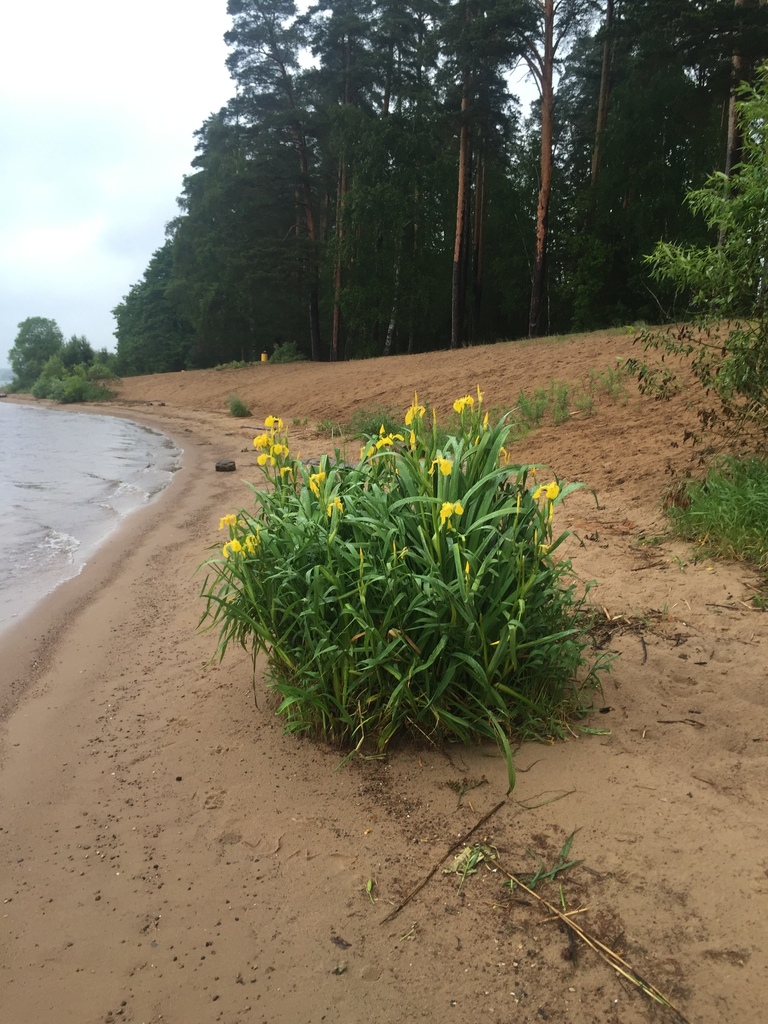
Die Gelbe Schwertlilie ist eine auffällige Staude, die sich an feuchten Standorten wie Sümpfen und Teichrändern wohlfühlt. Sie hat wunderschöne gelbe Blüten im späten Frühling bis Frühsommer und kann sich leicht ausbreiten. Diese Pflanze wird oft zur naturnahen Gestaltung von Wassergärten und zur Uferbefestigung verwendet.
Auf einen Blick
- Care level
- Easy
- Plant type
- Krautige Staude
- Light
- Volle Sonne bis Halbschatten
- Indoor light
- bright-indirect
- Water
- Every 0 to 1 days
- Mature size
- 3-5 Fuß hoch, 2-4 Fuß breit
- Growth rate
- fast
- Hardiness
- USDA 3 to 9
- Bloom time
- Später Frühling bis Frühsommer
Pflege
Sorgen Sie für durchgehend feuchten bis nassen Boden, da sie stehendes Wasser liebt. Entfernen Sie verblühte Blütenstängel, um mehr Blüten anzuregen und eine unerwünschte Samenbildung zu verhindern. Beachten Sie ihr starkes Ausbreitungsverhalten im Garten.
- Watering
- Bevorzugt staunasse oder durchgehend feuchte Erde; lassen Sie sie nicht austrocknen.
- Feeding
- Im Allgemeinen nicht nötig, wenn sie in nährstoffreichem Boden oder in natürlichen Feuchtgebieten wächst; eine leichte Düngung im Frühjahr kann vorteilhaft sein.
- Pruning
- Schneiden Sie abgestorbenes Laub im späten Herbst oder frühen Frühling zurück, um die Pflanze aufzuräumen und potenzielle Schädlinge zu entfernen, die überwintern.
- Repotting
- Teilen Sie die Horste alle 2-3 Jahre, wenn sie zu dicht werden, um die Vitalität zu erhalten und die Ausbreitung zu kontrollieren.
- Soil
- Lehm, Ton, Sand; durchgehend feucht bis nass
- Soil pH
- 5.5-7.5
- Temperature
- -30 to 35°C
- Humidity
- 60 to 100%
Sicherheit
- People
- All parts of the plant contain toxins that can cause skin irritation and gastrointestinal upset if ingested.
- Pets
- Diese Pflanze kann giftig sein, wenn sie von Haustieren gefressen wird und Magen-Darm-Beschwerden verursacht.
- Children
- The plant's toxicity means children should be prevented from ingesting any part of it.
- Contact allergens
- The sap can cause skin irritation in sensitive individuals.
- Airborne allergens
- Pollen may cause mild respiratory irritation for some people.
- Edibility
- This plant is not considered edible for humans.
So erkennst du die Pflanze
- Aufrechte, schwertförmige Blätter
- Leuchtend gelbe, lilienartige Blüten
- Blüten mit dunklen Adern
- Wächst im oder am Wasser
- Rhizomartiges Wurzelsystem
- Height
- 0.9 to 1.5m
- Spread
- 0.6 to 1.2m
- Leaves
- Grün, immergrün
- Flowers
- Gelb, 7 to 10cm
- Fruit
- Grün, Braun, Spätsommer bis Herbst
Häufige Probleme
- Iris borer — This pest bores into the rhizomes and leaves, causing damage and weakening the plant.
- Fungal leaf spot — Causes spots on the leaves, which can lead to reduced vigor.
- Invasive spread — Aggressively colonizes wetlands, outcompeting native species.
Standort und Pflege
- Propagation
- Teilung, Samen
- When to plant
- Frühling, Herbst
When planting yellow flag iris, ensure you are in an area where its invasive tendencies can be managed or are not a concern, such as a contained water garden.
Gute Pflanzpartner
- Cattail — These plants share similar wet habitat preferences and can create a cohesive wetland planting.
- Water Lily — Both thrive in water gardens and provide complementary foliage and floral interest.
- Pickerelweed — It enjoys wet conditions and offers vertical structure and flower spikes that complement the iris.
Fernhalten von
- Purple Loosestrife — Both are invasive in wetlands and compete fiercely for resources and space.
- Reed Canary Grass — This grass can form dense monocultures that outcompete and displace other wetland vegetation.
Ähnliche Arten
- Siberian Iris — It has a similar iris form but prefers drier conditions and is not invasive.
- Blue Flag Iris — This native North American iris is also a wetland plant but is generally less aggressive and has blue-purple flowers.
Botanisches
- Family
- Iridaceae
- Genus
- Iris
- Order
- Asparagales
- Class
- Liliopsida
- Native range
- Europe, North Africa, and Western Asia
- Conservation
- Yellow flag iris is considered an invasive species in many regions outside its native range.
It thrives in shallow water or saturated soils, forming dense stands that can alter wetland ecosystems.
- Value to wildlife
- nectar source, pollen source
- Pollinators
- bees, butterflies, moths
- Uses
- ornamental, wetland restoration (caution: invasive)
Im Jahresverlauf
Ökologische Zeigerwerte
- Salinity
- 4/9
- Soil reaction
- 6.5/9
- Light
- 7/9
- Temperature
- 7/9
- Moisture
- 9/9
- Nutrients
- 6/9
Taxonomie abgeglichen mit GBIF.
Häufige Fragen
- What are the growing conditions for Iris pseudacorus?
- It prefers full sun to partial shade and consistently moist to waterlogged soil.
- How tall does it get?
- It typically grows 2 to 4 feet tall.
- When does it bloom?
- It usually blooms in late spring to early summer.
- Is it suitable for a water garden?
- Yes, it's excellent for water gardens, pond edges, and marshy areas, but be mindful of its invasive potential.
Woher der Name kommt
The common name 'yellow flag iris' comes from its striking yellow flowers and flag-like leaves. The scientific name 'pseudacorus' means 'false acorus,' referring to its resemblance to the sweet flag plant (Acorus calamus).
Gut zu wissen
- It's a wetland plant that thrives in moist to wet conditions.
- The flowers are bright yellow and quite showy.
- It spreads rapidly via rhizomes and seeds.
- It's native to Europe, North Africa, and Western Asia.
Auch in
Geht es deiner gelbe schwertlilie nicht gut?
Diese Seite bietet allgemeine Infos. Pocket Botanist erkennt Probleme anhand eines Fotos deiner echten Pflanze, passt das Gießen an dein Licht und deinen Standort an und erinnert dich an die Pflege.
Dieser Ratgeber wurde mit KI erstellt und mit der GBIF-Taxonomie abgeglichen. Er dient zur allgemeinen Information und ersetzt keine gärtnerische oder tierärztliche Beratung. Hier erfährst du, wie wir diese Ratgeber erstellen.