 Pocket Botanist
Guide botanique
Yam.
Dioscorea alata
Prononciation dy-oh-skor-EE-uh uh-LAY-tuh
Aussi appelée Greater Yams, Guyana arrowroot, Water Yam, Winged Yam, Yams, greater yam, ten-months yam



The yam is a vigorous climbing vine grown primarily for its large, edible starchy tubers. It thrives in tropical climates and needs plenty of space for its stems to climb. You'll find it's a staple food source in many parts of the world.
En un coup d'œil
- Niveau d'entretien
- Moyenne
- Type de plante
- Tuberous perennial vine
- Lumière
- Full sun to partial shade
- Lumière en intérieur
- Lumière vive indirecte
- Arrosage
- Tous les 2 à 4 jours
- Taille adulte
- 3 to 10 meters
- Croissance
- Rapide
- Rusticité
- USDA 9 à 12
- Floraison
- Mid to late summer
Entretien
Provide a sturdy trellis for the vines to climb as they grow rapidly during the season. Keep the soil consistently moist but not waterlogged to prevent tuber rot. Watch for yellowing leaves which can indicate poor drainage or nutrient issues.
- Arrosage
- Keep the soil evenly moist throughout the growing season.
- Engrais
- Apply a balanced fertilizer monthly during the active growing phase.
- Taille
- Trim back dead or damaged vines to encourage healthy growth.
- Rempotage
- Repot or replant tubers annually at the start of the new growing season.
- Sol
- Well draining, fertile, loamy soil
- pH du sol
- 5.5 to 6.5
- Température
- 15 à 35°C
- Humidité
- 60 à 90%
- Résistance à la sécheresse
- Faible
- Durée de vie
- Perennial, typically grown as an annual crop
- Résistance aux chevreuils et lapins
- Moyenne
Signes qu'il faut rempoter
- Roots growing out of the drainage holes
- Stunted growth despite regular feeding
Sécurité
- Humains
- Raw tubers contain substances that can cause irritation and are considered toxic if not properly prepared.
- Enfants
- Keep tubers out of reach of children, as raw ingestion can cause severe mouth and throat irritation.
- Allergènes de contact
- Handling raw tubers can cause skin irritation due to the presence of calcium oxalate raphides.
- Allergènes aéroportés
- There are no significant reports of respiratory allergies associated with this plant.
- Comestibilité
- The tubers must be cooked thoroughly before consumption to neutralize calcium oxalate crystals and other compounds.
Comment l'identifier
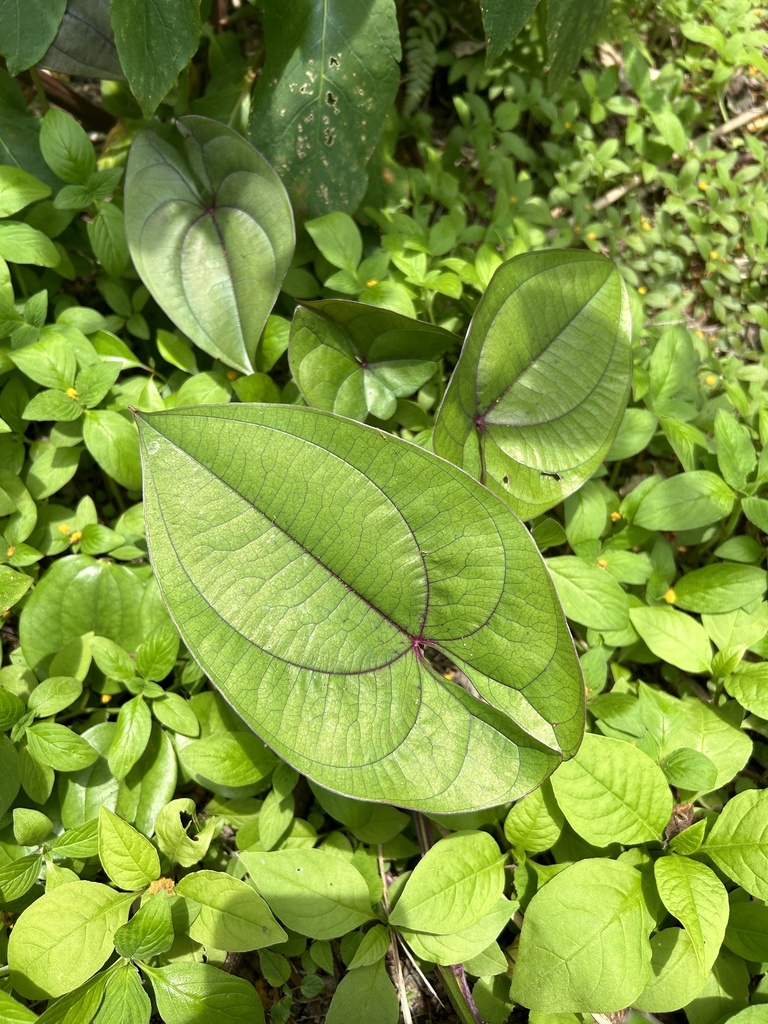
- Heart shaped, opposite leaves
- Square, winged stems
- Large, underground starchy tubers
- Small, inconspicuous flowers
- Vining growth habit
- Hauteur
- 3 à 10m
- Envergure
- 0,5 à 2m
- Feuilles
- green, deciduous
- Fleurs
- white, yellow, 0,5 à 1cm
- Fruits
- brown, Late autumn to winter
Problèmes courants
- Yam mosaic virus — Causes leaf mottling and stunted growth.
- Scale insects — Sucking insects that weaken the vine.
La cultiver
- Multiplication
- tuber division, bulbils
- Quand planter
- Spring
- Hivernage
- In cooler climates, dig up the tubers after the first frost and store them in a cool, dry, dark place until spring.
- En pot
- It can be grown in large containers of at least 20 liters, provided you have a tall trellis for the vines.
Tuber division
- 1. Cut a healthy tuber into sections, ensuring each piece has at least one bud or eye.
- 2. Allow the cut surfaces to dry for a day to prevent rot.
- 3. Plant the sections in well draining soil about 10 cm deep.
Use tall, sturdy plants as living trellises to save space and provide support for the vigorous vines.
Bonnes associations
- Maïs — Provides a natural trellis for the yam vines to climb.
- Haricot commun — Fixes nitrogen in the soil to support the heavy feeding yam.
Espèces similaires
- Dioscorea rotundata — A closely related species also grown for its edible tubers.
Science
- Famille
- Dioscoreaceae
- Genre
- Dioscorea
- Ordre
- Dioscoreales
- Classe
- Liliopsida
- Région d'origine
- Tropical Southeast Asia
- Préservation
- This species is widely cultivated and not currently of conservation concern.
It thrives in warm, humid tropical environments and climbs using twining stems to reach sunlight.
- Intérêt pour la faune
- nectar source
- Pollinisateurs
- abeilles, coléoptères
- Utilisations
- food crop, ornamental vine
Au fil des saisons
Repères écologiques
- Salinité
- 2/9
- Réaction du sol
- 6/9
- Lumière
- 7/9
- Température
- 8/9
- Humidité
- 6/9
- Nutriments
- 7/9
Taxonomie vérifiée avec le GBIF.
Ce qu'on demande souvent
- Can I grow this in a pot?
- Yes, but you need a very large container to accommodate the large tuber growth.
- When do I harvest?
- Harvest when the foliage begins to yellow and die back in late autumn.
D'où vient le nom
The genus name honors the ancient Greek physician Dioscorides, while the species name alata refers to the winged stems.
Bon à savoir
- It is also known as the greater yam or purple yam.
- The plant produces aerial tubers called bulbils that can also be used for propagation.
- It is a significant crop in the Philippines where it is called ube.
- The vines can grow quite long, often requiring sturdy trellising.
Ta plante a mauvaise mine ?
Cette page est un guide général. Pocket Botanist diagnostique les problèmes directement à partir d'une photo de ta plante, adapte l'arrosage à sa luminosité et te prévient quand il faut t'en occuper.
Ce guide a été généré par IA et vérifié avec la taxonomie du GBIF. Il s'agit d'informations générales, et non de conseils horticoles ou vétérinaires. Découvre comment nous concevons ces guides.