 Pocket Botanist
Guía de plantas
Winged Bean.
Psophocarpus tetragonolobus
Pronunciación so-fo-KAR-pus tet-ra-go-no-LO-bus
También se conoce como Four-angled Bean, Goa Bean, Goa-bean, Winged Bean, asparagus-pea, four-angle-bean, princess-pea, winged-bean



The winged bean is a tropical legume known for its edible pods, leaves, and tubers. It thrives in warm, humid climates and grows as a vigorous climbing vine. You will love how productive this plant is in your garden.
De un vistazo
- Nivel de cuidados
- Media
- Tipo de planta
- Annual legume
- Luz
- Full sun
- Luz en interior
- Sol directo
- Riego
- Cada 2 a 4 días
- Tamaño adulto
- 3 to 4 meters
- Ritmo de crecimiento
- Rápido
- Rusticidad
- USDA 9 a 12
- Floración
- Late summer to autumn
Cuidados
Provide a sturdy trellis for this climber to scale as it grows quickly. Keep the soil consistently moist but not waterlogged to encourage pod production. Watch for yellowing leaves which can indicate poor drainage or nutrient deficiency.
- Riego
- Keep the soil evenly moist throughout the growing season.
- Abonado
- Use a balanced fertilizer low in nitrogen to support flowering.
- Poda
- Trim back excessive foliage to improve airflow and focus energy on pod development.
- Trasplante
- This plant is typically grown as an annual and does not require repotting.
- Suelo
- Well draining loamy soil
- pH del suelo
- 6.0 to 7.0
- Temperatura
- 15 a 35°C
- Humedad
- 60 a 90%
- Tolerancia a la sequía
- Baja
- Longevidad
- Perennial, typically grown as an annual
- Fragancia
- Suave
- Resistencia a ciervos y conejos
- Moderada
Señales de que necesita trasplante
- Roots growing out of the drainage holes.
- Water running straight through the pot without soaking in.
Seguridad
- Personas
- Raw consumption of the seeds or pods can cause digestive distress due to high levels of trypsin inhibitors.
- Niños
- The seeds are small and hard, posing a potential choking hazard if left unattended.
- Alérgenos por contacto
- The foliage can cause mild skin irritation in sensitive individuals.
- Alérgenos en el aire
- Pollen may trigger mild reactions in those with severe legume allergies.
- Comestibilidad
- Always cook the pods and seeds thoroughly to neutralize anti-nutritional factors before consumption.
Cómo identificarla
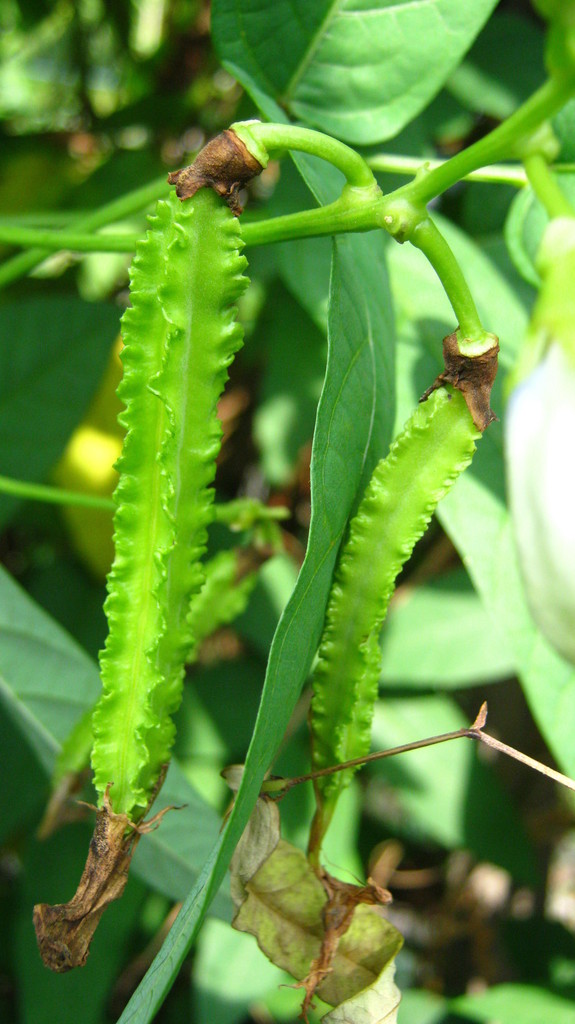
- Four distinct longitudinal wings on pods
- Compound leaves with three leaflets
- Bright blue or white pea flowers
- Vigorous climbing vine habit
- Altura
- 3 a 4m
- Anchura
- 0,6 a 1m
- Hojas
- green, deciduous
- Flores
- blue, white, purple, 2 a 4cm
- Frutos
- green, purple, Autumn
Problemas frecuentes
- Powdery mildew — A white fungal growth appears on leaves during humid, stagnant conditions.
- Aphids — Small insects that cluster on new growth and suck plant sap.
Cómo cultivarla
- Propagación
- seed
- Cuándo plantar
- Spring
- Cuidados en invierno
- In frost-prone areas, treat it as an annual and harvest before the first freeze. In tropical zones, cut back dead vines to encourage new growth in spring.
- En maceta
- It can grow in large containers of at least 20 liters, provided you supply a tall trellis.
Seed Sowing
- 1. Soak seeds in water for 24 hours to soften the hard coat.
- 2. Plant seeds 2 cm deep in warm, well-draining soil.
- 3. Keep soil consistently moist until germination occurs.
Plant near tall crops to provide the necessary vertical space for the vines to spread.
Buenas compañeras
Especies parecidas
- Judía común — Both are nitrogen-fixing legumes used for their edible pods.
Ciencia
- Familia
- Fabaceae
- Género
- Psophocarpus
- Orden
- Fabales
- Clase
- Magnoliopsida
- Distribución natural
- Tropical Asia and Papua New Guinea
- Conservación
- It is widely cultivated in tropical regions and is not considered threatened.
It is a perennial vine that acts as an annual in cooler climates, fixing nitrogen to thrive in nutrient-poor soils.
- Valor para la fauna
- nectar source
- Polinizadores
- abejas, mariposas
- Usos
- culinary vegetable, nitrogen-fixing cover crop, ornamental vine
A lo largo del año
Indicadores ecológicos
- Salinidad
- 2/9
- Reacción del suelo
- 6/9
- Luz
- 8/9
- Temperatura
- 9/9
- Humedad
- 7/9
- Nutrientes
- 5/9
Taxonomía cotejada con GBIF.
Lo que más preguntan
- Do I need a trellis?
- Yes, this is a vigorous climber that requires strong support.
- Can I eat the leaves?
- Yes, they are often used like spinach in stir-fries.
De dónde viene el nombre
The name Psophocarpus comes from Greek words meaning noisy fruit, referring to the sound the pods make when they dry and split.
Bueno saberlo
- The pods have four distinct wings running down their length.
- It is a nitrogen-fixing legume that improves soil health.
- The tubers are rich in protein compared to other root vegetables.
- It thrives in hot, humid climates where other beans struggle.
¿Tu winged bean tiene mal aspecto?
Esta página es una guía general. Pocket Botanist diagnostica problemas a partir de una foto de tu propia planta, calcula el riego según tu luz y tus condiciones, y te avisa cuando toca cuidarla.
Esta guía se ha generado con IA y se ha cotejado con la taxonomía de GBIF. Es información general, no asesoramiento botánico ni veterinario. Descubre cómo elaboramos estas guías.