 Pocket Botanist
Pflanzenratgeber
Indischer Majoran.
Plectranthus amboinicus
Aussprache PLEK-tran-thus am-boy-NEE-kus
Auch bekannt als Kubanischer Oregano, Französischer Thymian, Indischer Borage, Indische Minze, Mexikanische Minze, Mexikanische Minze, Spanischer Thymian, country-borage


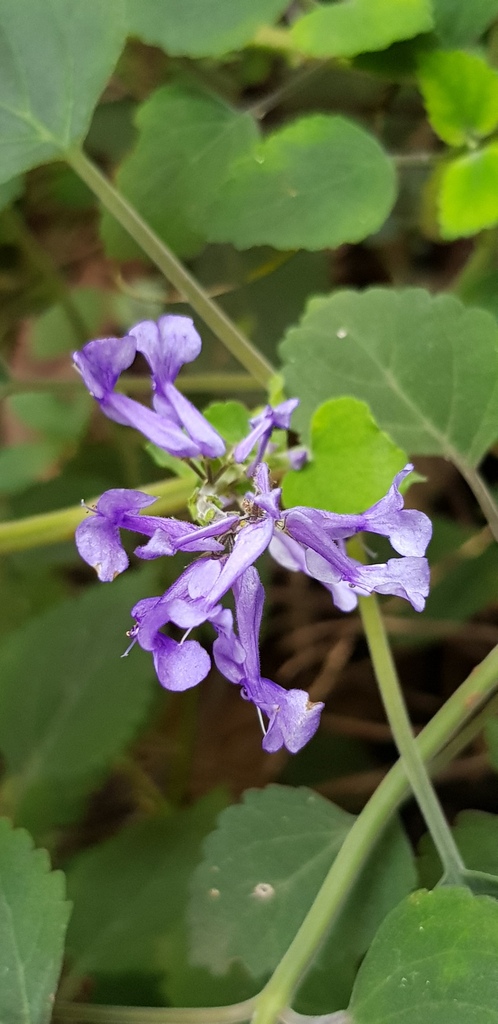
Indischer Majoran ist ein sukkulentes Kraut, das oft wegen seines aromatischen Laubs und seiner kulinarischen Verwendung angebaut wird. Er ist eine fantastische Ergänzung für Küchen und Kräutergärten und bietet einen einzigartigen Geschmack und einen angenehmen Duft.
Auf einen Blick
- Care level
- Easy
- Plant type
- Krautige Staude
- Light
- Helles, indirektes Sonnenlicht
- Indoor light
- bright-indirect
- Water
- Every 7 to 14 days
- Mature size
- 1-3 Fuß hoch und breit
- Growth rate
- fast
- Hardiness
- USDA 10 to 12
- Bloom time
- Sommer bis Herbst
Pflege
Sorgen Sie für helles, indirektes Licht und lassen Sie die Erde zwischen den Wassergaben austrocknen. Diese Pflanze mag Wärme und gute Luftzirkulation; vermeiden Sie Überwässerung, die zu Wurzelfäule führen kann.
- Watering
- Gründlich wässern, wenn sich der oberste Zentimeter der Erde trocken anfühlt; im kälteren Monaten weniger gießen.
- Feeding
- Alle zwei Monate während der Wachstumsperiode mit einem ausgewogenen Flüssigdünger füttern, der halb verdünnt ist.
- Pruning
- Zur Formgebung, Förderung buschigeren Wachstums und zur Ernte der Blätter zurückschneiden; im Frühling oder Sommer schneiden.
- Repotting
- Umtopfen, wenn die Pflanze wurzelgebunden wird, normalerweise alle 1-2 Jahre im Frühling.
- Soil
- Gut durchlässige Blumenerde, wie Kaktus- oder Sukkulentenerde
- Soil pH
- Leicht sauer bis neutral (6,0-7,0)
- Temperature
- 10 to 30°C
- Humidity
- 40 to 60%
Sicherheit
- People
- Non-toxic
- Pets
- Ungiftig
- Edibility
- While traditionally used in cooking and traditional medicine, consult with a healthcare professional before ingesting for medicinal purposes. Ensure the plant has not been treated with pesticides if consuming.
So erkennst du die Pflanze
- Fleischige, flaumige, eiförmige Blätter
- Crassulacean Acid Metabolism (CAM) Photosynthese
- Vierkantige Stängel, typisch für die Minzfamilie
- Aromatischer Duft, der an Oregano erinnert
- Kleine, blass lavendelfarbene Blüten in Quirlen
- Height
- 0.3 to 0.9m
- Spread
- 0.3 to 0.9m
- Leaves
- Grün, Graugrün, immergrün
- Flowers
- Lavendel, Weiß, 0.5 to 1cm
Häufige Probleme
- Root rot — Caused by overwatering and poor drainage, leading to yellowing leaves and wilting.
- Mealybugs — Small, white, cottony insects that feed on plant sap, often found in leaf axils.
- Spider mites — Tiny pests that cause stippling on leaves and can form fine webs; thrive in dry conditions.
Standort und Pflege
- Propagation
- Stecklinge, Teilung
- When to plant
- Frühling, Sommer
Plant Indian Borage with other Mediterranean herbs that prefer well-draining soil and bright light to create a harmonious and pest-resistant herb garden.
Gute Pflanzpartner
- Rosemary — Both prefer well-draining soil and similar light conditions, benefiting from companion planting that deters pests.
- Thyme — Thyme also thrives in well-draining soil and similar light, creating a complementary herb planting.
- Sage — Sage shares similar needs for bright light and well-draining soil, making them good garden partners.
Fernhalten von
- Mint — Mint can be overly aggressive and invasive, potentially outcompeting Indian Borage for resources if planted too closely.
Ähnliche Arten
- Coleus — While closely related and in the same genus, Coleus is primarily grown for its ornamental foliage and typically prefers more moisture and shade than Indian Borage.
- Oregano — Oregano has a similar culinary flavor profile and growing requirements, but Indian Borage has a more succulent leaf texture.
Botanisches
- Family
- Lamiaceae
- Genus
- Coleus
- Order
- Lamiales
- Class
- Magnoliopsida
- Native range
- Eastern Africa, Southern Africa, Indian Ocean islands
In its native habitats, it often grows in disturbed areas, on rocky slopes, or along coastal regions, tolerating dry conditions.
- Uses
- Culinary herb, Ornamental, Traditional medicine
Im Jahresverlauf
Ökologische Zeigerwerte
- Salinity
- 2/9
- Soil reaction
- 6/9
- Light
- 7/9
- Temperature
- 8/9
- Moisture
- 4/9
- Nutrients
- 5/9
Taxonomie abgeglichen mit GBIF.
Häufige Fragen
- Can I grow Indian Borage indoors?
- Yes, Indian Borage does well indoors as long as it receives plenty of bright, indirect light.
- How do I propagate Indian Borage?
- It's very easy to propagate from stem cuttings; simply place a cutting in water or moist soil, and it should root quickly.
- Why are the leaves on my Indian Borage yellowing?
- Yellowing leaves often indicate overwatering or poor drainage, which can lead to root rot.
- What is the scent of Indian Borage like?
- It has a strong, pungent, herbaceous aroma, often compared to oregano or thyme, but with a unique minty undertone.
Woher der Name kommt
The genus name 'Plectranthus' comes from the Greek words 'plectron' (spur) and 'anthos' (flower), referring to a spur-like appendage on the flower. 'Amboinicus' refers to Ambon Island in Indonesia, where it was likely first described.
Gut zu wissen
- Its strong aroma is thought to deter some pests.
- It's sometimes called 'Cuban Oregano' due to its culinary resemblance.
- The fuzzy leaves help reduce water loss.
- It can be used to soothe insect bites or minor burns.
Geht es deiner indischer majoran nicht gut?
Diese Seite bietet allgemeine Infos. Pocket Botanist erkennt Probleme anhand eines Fotos deiner echten Pflanze, passt das Gießen an dein Licht und deinen Standort an und erinnert dich an die Pflege.
Dieser Ratgeber wurde mit KI erstellt und mit der GBIF-Taxonomie abgeglichen. Er dient zur allgemeinen Information und ersetzt keine gärtnerische oder tierärztliche Beratung. Hier erfährst du, wie wir diese Ratgeber erstellen.