 Pocket Botanist
Guide botanique
Indian Borage.
Plectranthus amboinicus
Prononciation PLEK-tran-thus am-boy-NEE-kus
Aussi appelée Cuban-oregano, French-thyme, Indian-borage, Indian-mint, Mexican mint, Mexican-mint, Spanish-thyme, country-borage
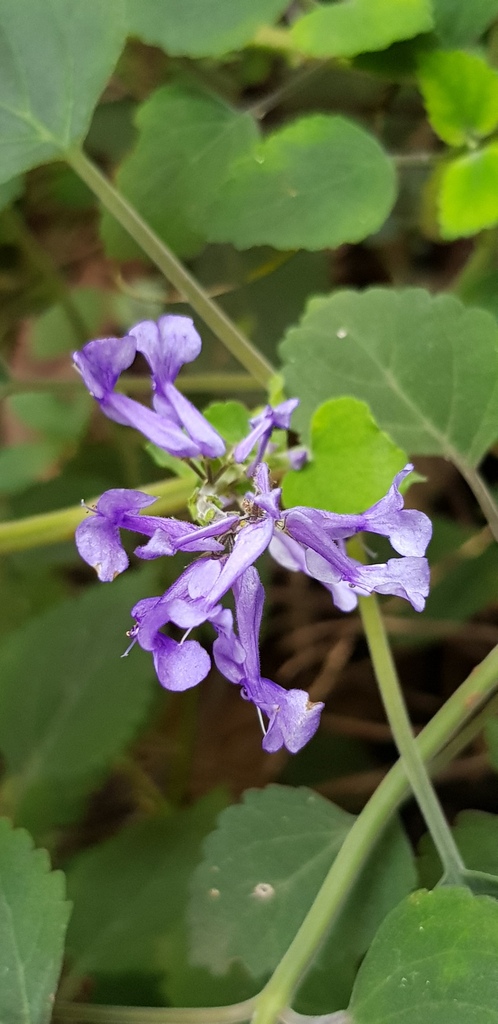
Indian Borage is a succulent herb, often grown for its aromatic foliage and culinary uses. It's a fantastic addition to kitchens and herb gardens, providing a unique flavor and pleasant scent.
En un coup d'œil
- Care level
- Easy
- Plant type
- Herbaceous perennial
- Light
- Bright, indirect sunlight
- Indoor light
- bright-indirect
- Water
- Every 7 to 14 days
- Mature size
- 1-3 feet tall and wide
- Growth rate
- fast
- Hardiness
- USDA 10 to 12
- Bloom time
- Summer to fall
Entretien
Provide bright, indirect light and allow the soil to dry out between waterings. This plant enjoys warmth and good air circulation; avoid overwatering, which can lead to root rot.
- Watering
- Water thoroughly when the top inch of soil feels dry; reduce watering in cooler months.
- Feeding
- Feed with a balanced liquid fertilizer diluted by half every other month during the growing season.
- Pruning
- Prune to maintain shape, encourage bushier growth, and harvest leaves; prune in spring or summer.
- Repotting
- Repot when the plant becomes root-bound, typically every 1-2 years, in the spring.
- Soil
- Well-draining potting mix, like cactus or succulent soil
- Soil pH
- Slightly acidic to neutral (6.0-7.0)
- Temperature
- 10 to 30°C
- Humidity
- 40 to 60%
Sécurité
- People
- Non-toxic
- Pets
- Non-toxic
- Edibility
- While traditionally used in cooking and traditional medicine, consult with a healthcare professional before ingesting for medicinal purposes. Ensure the plant has not been treated with pesticides if consuming.
Comment l'identifier
- Fleshy, fuzzy, ovate leaves
- Crassulacean Acid Metabolism (CAM) photosynthesis
- Square stems typical of the mint family
- Aromatic, oregano-like scent
- Small, pale lavender flowers in whorls
- Height
- 0.3 to 0.9m
- Spread
- 0.3 to 0.9m
- Leaves
- Green, Gray-green, evergreen
- Flowers
- Lavender, White, 0.5 to 1cm
Problèmes courants
- Root rot — Caused by overwatering and poor drainage, leading to yellowing leaves and wilting.
- Mealybugs — Small, white, cottony insects that feed on plant sap, often found in leaf axils.
- Spider mites — Tiny pests that cause stippling on leaves and can form fine webs; thrive in dry conditions.
La cultiver
- Propagation
- Cuttings, Division
- When to plant
- Spring, Summer
Plant Indian Borage with other Mediterranean herbs that prefer well-draining soil and bright light to create a harmonious and pest-resistant herb garden.
Bonnes associations
- Rosemary — Both prefer well-draining soil and similar light conditions, benefiting from companion planting that deters pests.
- Thyme — Thyme also thrives in well-draining soil and similar light, creating a complementary herb planting.
- Sage — Sage shares similar needs for bright light and well-draining soil, making them good garden partners.
À éloigner de
- Mint — Mint can be overly aggressive and invasive, potentially outcompeting Indian Borage for resources if planted too closely.
Espèces similaires
- Coleus — While closely related and in the same genus, Coleus is primarily grown for its ornamental foliage and typically prefers more moisture and shade than Indian Borage.
- Oregano — Oregano has a similar culinary flavor profile and growing requirements, but Indian Borage has a more succulent leaf texture.
Science
- Family
- Lamiaceae
- Genus
- Coleus
- Order
- Lamiales
- Class
- Magnoliopsida
- Native range
- Eastern Africa, Southern Africa, Indian Ocean islands
In its native habitats, it often grows in disturbed areas, on rocky slopes, or along coastal regions, tolerating dry conditions.
- Uses
- Culinary herb, Ornamental, Traditional medicine
Au fil des saisons
Repères écologiques
- Salinity
- 2/9
- Soil reaction
- 6/9
- Light
- 7/9
- Temperature
- 8/9
- Moisture
- 4/9
- Nutrients
- 5/9
Taxonomie vérifiée avec le GBIF.
Ce qu'on demande souvent
- Can I grow Indian Borage indoors?
- Yes, Indian Borage does well indoors as long as it receives plenty of bright, indirect light.
- How do I propagate Indian Borage?
- It's very easy to propagate from stem cuttings; simply place a cutting in water or moist soil, and it should root quickly.
- Why are the leaves on my Indian Borage yellowing?
- Yellowing leaves often indicate overwatering or poor drainage, which can lead to root rot.
- What is the scent of Indian Borage like?
- It has a strong, pungent, herbaceous aroma, often compared to oregano or thyme, but with a unique minty undertone.
D'où vient le nom
The genus name 'Plectranthus' comes from the Greek words 'plectron' (spur) and 'anthos' (flower), referring to a spur-like appendage on the flower. 'Amboinicus' refers to Ambon Island in Indonesia, where it was likely first described.
Bon à savoir
- Its strong aroma is thought to deter some pests.
- It's sometimes called 'Cuban Oregano' due to its culinary resemblance.
- The fuzzy leaves help reduce water loss.
- It can be used to soothe insect bites or minor burns.
Ton indian borage a mauvaise mine ?
Cette page est un guide général. Pocket Botanist diagnostique les problèmes directement à partir d'une photo de ta plante, adapte l'arrosage à sa luminosité et te prévient quand il faut t'en occuper.
Ce guide a été généré par IA et vérifié avec la taxonomie du GBIF. Il s'agit d'informations générales, et non de conseils horticoles ou vétérinaires. Découvre comment nous concevons ces guides.