 Pocket Botanist
Guide botanique
Coleus.
Plectranthus scutellarioides
Prononciation PLEK-tran-thus skoo-tel-lar-ee-OY-deez
Aussi appelée coleus, painted-nettle
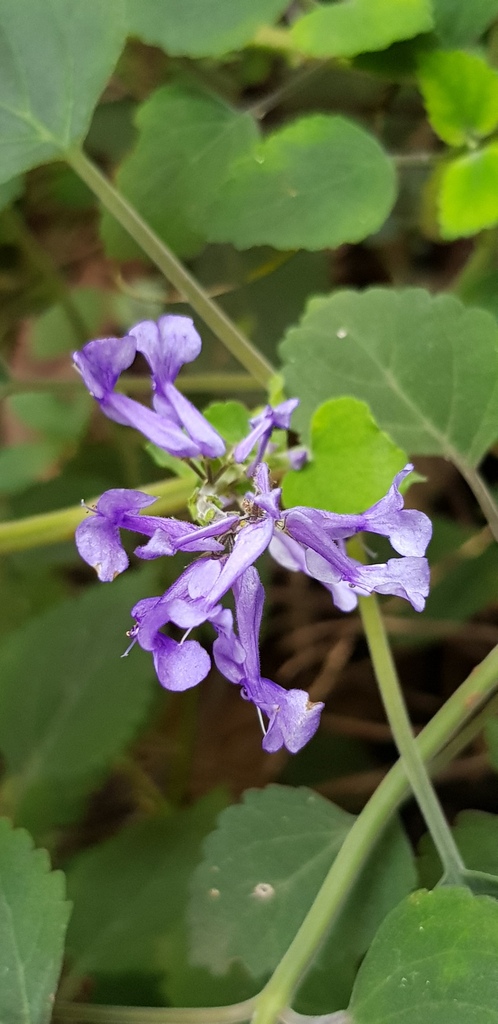
Coleus are beloved for their incredibly diverse and vibrant foliage, showcasing a stunning array of colors, patterns, and textures. These herbaceous perennials are primarily grown as annuals in many climates for their ornamental value, offering a splash of exotic color to gardens and containers. They are relatively easy to care for, making them a popular choice for both novice and experienced gardeners looking to add visual interest.
En un coup d'œil
- Care level
- Easy
- Plant type
- Perennial grown as annual
- Light
- Partial Shade to Bright Indirect Light
- Indoor light
- bright-indirect
- Water
- Every 3 to 7 days
- Mature size
- 1-3 feet tall and wide
- Growth rate
- fast
- Hardiness
- USDA 11 to 12
- Bloom time
- Summer
Entretien
Provide bright, indirect light and well-draining soil, watering when the top inch of soil feels dry. Pinching back regularly encourages bushier growth and prevents legginess, ensuring a fuller plant with more colorful foliage.
- Watering
- Water thoroughly when the top inch of soil is dry; avoid overwatering.
- Feeding
- Feed with a balanced liquid fertilizer every two weeks during the growing season.
- Pruning
- Pinch back stem tips regularly to encourage bushier growth and remove flower stalks to direct energy into foliage.
- Repotting
- Repot young plants annually or when root-bound; mature plants can be repotted less frequently.
- Soil
- Well-draining potting mix
- Soil pH
- Slightly acidic to neutral (5.5-7.0)
- Temperature
- 18 to 24°C
- Humidity
- 40 to 60%
Sécurité
- People
- Non-toxic
- Pets
- Non-toxic
- Edibility
- This plant is not intended for human consumption.
Comment l'identifier
- Square stems
- Opposite, toothed leaves
- Leaves in various colors and patterns
- Small, usually white or blue flowers
- Fuzzy stems and leaves
- Height
- 0.3 to 0.9m
- Spread
- 0.3 to 0.9m
- Leaves
- Green, Red, Pink, Yellow, Purple, Burgundy, Chartreuse, Variegated, evergreen
- Flowers
- White, Blue, 0.5 to 1cm
Problèmes courants
- Spider Mites — Tiny pests causing stippling on leaves and fine webbing, thrive in dry conditions.
- Aphids — Small insects that cluster on new growth, causing distortion and sticky honeydew.
- Mealybugs — Cottony white insects found in leaf axils and on stems, sucking sap.
- Root Rot — Caused by overwatering, leading to yellowing leaves and plant decline.
La cultiver
- Propagation
- Cuttings, Seed
- When to plant
- Spring, Summer
Pair Coleus with plants that have similar light and moisture needs, like ferns or hostas, for a cohesive display.
Bonnes associations
- Impatiens — Both prefer similar bright, indirect light and moist soil conditions, creating a lush underplanting.
- Begonia — Begonias offer varied foliage and flower colors that complement Coleus beautifully in containers or shady beds.
- Fuchsia — Fuchsias appreciate similar light and moisture levels, adding delicate blooms to a mixed planting.
À éloigner de
- Full Sun — Intense direct sunlight can scorch the leaves and cause the vibrant colors to fade.
- Frost — Coleus is sensitive to cold and will be damaged or killed by freezing temperatures.
- Waterlogged Soil — Consistently wet soil leads to root rot, which is detrimental to the plant's health.
Espèces similaires
- Plectranthus 'Mona Lavender' — Shares similar care requirements and produces attractive flowers, though its foliage is less varied than true Coleus.
- Hypoestes phyllostachya — Also known as the polka dot plant, it offers colorful, spotted foliage but prefers slightly different conditions.
Science
- Family
- Lamiaceae
- Genus
- Coleus
- Order
- Lamiales
- Class
- Magnoliopsida
- Native range
- Southeast Asia and Australia
In its native habitat, Coleus thrives in moist, shaded areas, often found in understory environments or along forest edges.
- Uses
- Ornamental foliage plant, Container gardening, Annual bedding plants
Au fil des saisons
Repères écologiques
- Salinity
- 1/9
- Soil reaction
- 6/9
- Light
- 7/9
- Temperature
- 7/9
- Moisture
- 5/9
- Nutrients
- 6/9
Taxonomie vérifiée avec le GBIF.
Ce qu'on demande souvent
- Can Coleus be grown indoors?
- Yes, Coleus can be grown indoors as houseplants, provided they receive adequate bright, indirect light.
- Why is my Coleus leggy?
- Legginess usually indicates insufficient light; move your Coleus to a brighter location and pinch back the stems.
- Do I need to deadhead Coleus?
- It's beneficial to pinch off flower stalks as they appear to encourage more vigorous leaf growth and color.
- Can Coleus be overwintered?
- Yes, you can bring Coleus indoors before the first frost and treat it as a houseplant for the winter.
D'où vient le nom
The genus name 'Plectranthus' comes from Greek words meaning 'spur' and 'flower,' referring to a spur on the corolla of some species. The specific epithet 'scutellarioides' means 'like Scutellaria,' another genus in the mint family.
Bon à savoir
- Coleus leaves can display almost every color except true blue.
- They belong to the mint family (Lamiaceae).
- Their flowers are often insignificant compared to their stunning foliage.
- Over 10,000 cultivars of Coleus exist.
Ton coleus a mauvaise mine ?
Cette page est un guide général. Pocket Botanist diagnostique les problèmes directement à partir d'une photo de ta plante, adapte l'arrosage à sa luminosité et te prévient quand il faut t'en occuper.
Ce guide a été généré par IA et vérifié avec la taxonomie du GBIF. Il s'agit d'informations générales, et non de conseils horticoles ou vétérinaires. Découvre comment nous concevons ces guides.