 Pocket Botanist
Plant guide
Indian Borage.
Plectranthus amboinicus
Pronounced PLEK-tran-thus am-boy-NEE-kus
Also known as Cuban-oregano, French-thyme, Indian-borage, Indian-mint, Mexican mint, Mexican-mint, Spanish-thyme, country-borage
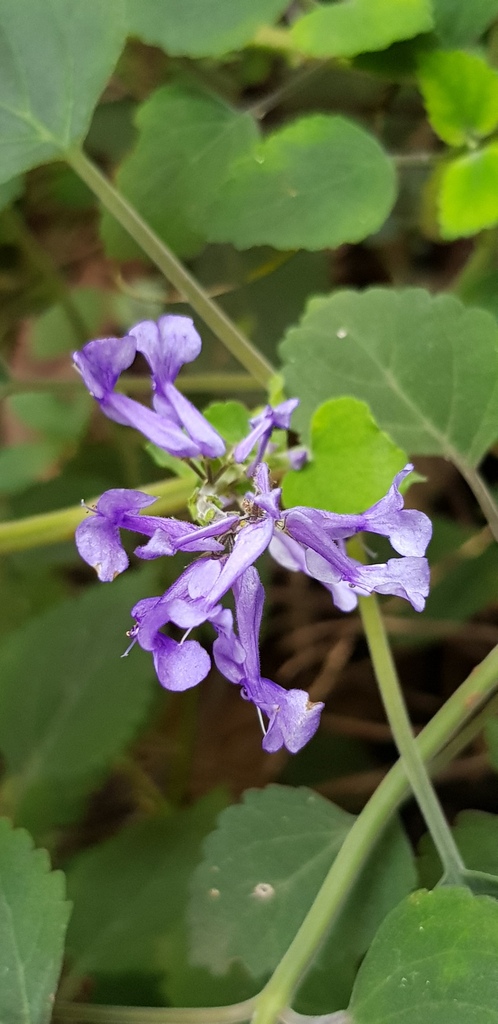
Indian Borage is a succulent herb, often grown for its aromatic foliage and culinary uses. It's a fantastic addition to kitchens and herb gardens, providing a unique flavor and pleasant scent.
At a glance
- Care level
- Easy
- Plant type
- Herbaceous perennial
- Light
- Bright, indirect sunlight
- Indoor light
- bright-indirect
- Water
- Every 7 to 14 days
- Mature size
- 1-3 feet tall and wide
- Growth rate
- fast
- Hardiness
- USDA 10 to 12
- Bloom time
- Summer to fall
Care
Provide bright, indirect light and allow the soil to dry out between waterings. This plant enjoys warmth and good air circulation; avoid overwatering, which can lead to root rot.
- Watering
- Water thoroughly when the top inch of soil feels dry; reduce watering in cooler months.
- Feeding
- Feed with a balanced liquid fertilizer diluted by half every other month during the growing season.
- Pruning
- Prune to maintain shape, encourage bushier growth, and harvest leaves; prune in spring or summer.
- Repotting
- Repot when the plant becomes root-bound, typically every 1-2 years, in the spring.
- Soil
- Well-draining potting mix, like cactus or succulent soil
- Soil pH
- Slightly acidic to neutral (6.0-7.0)
- Temperature
- 10 to 30°C
- Humidity
- 40 to 60%
Safety
- People
- Non-toxic
- Pets
- Non-toxic
- Edibility
- While traditionally used in cooking and traditional medicine, consult with a healthcare professional before ingesting for medicinal purposes. Ensure the plant has not been treated with pesticides if consuming.
How to identify it
- Fleshy, fuzzy, ovate leaves
- Crassulacean Acid Metabolism (CAM) photosynthesis
- Square stems typical of the mint family
- Aromatic, oregano-like scent
- Small, pale lavender flowers in whorls
- Height
- 0.3 to 0.9m
- Spread
- 0.3 to 0.9m
- Leaves
- Green, Gray-green, evergreen
- Flowers
- Lavender, White, 0.5 to 1cm
Common problems
- Root rot — Caused by overwatering and poor drainage, leading to yellowing leaves and wilting.
- Mealybugs — Small, white, cottony insects that feed on plant sap, often found in leaf axils.
- Spider mites — Tiny pests that cause stippling on leaves and can form fine webs; thrive in dry conditions.
Growing it
- Propagation
- Cuttings, Division
- When to plant
- Spring, Summer
Plant Indian Borage with other Mediterranean herbs that prefer well-draining soil and bright light to create a harmonious and pest-resistant herb garden.
Grows well with
- Rosemary — Both prefer well-draining soil and similar light conditions, benefiting from companion planting that deters pests.
- Thyme — Thyme also thrives in well-draining soil and similar light, creating a complementary herb planting.
- Sage — Sage shares similar needs for bright light and well-draining soil, making them good garden partners.
Keep away from
- Mint — Mint can be overly aggressive and invasive, potentially outcompeting Indian Borage for resources if planted too closely.
Similar species
- Coleus — While closely related and in the same genus, Coleus is primarily grown for its ornamental foliage and typically prefers more moisture and shade than Indian Borage.
- Oregano — Oregano has a similar culinary flavor profile and growing requirements, but Indian Borage has a more succulent leaf texture.
Science
- Family
- Lamiaceae
- Genus
- Coleus
- Order
- Lamiales
- Class
- Magnoliopsida
- Native range
- Eastern Africa, Southern Africa, Indian Ocean islands
In its native habitats, it often grows in disturbed areas, on rocky slopes, or along coastal regions, tolerating dry conditions.
- Uses
- Culinary herb, Ornamental, Traditional medicine
Through the year
Ecological indicators
- Salinity
- 2/9
- Soil reaction
- 6/9
- Light
- 7/9
- Temperature
- 8/9
- Moisture
- 4/9
- Nutrients
- 5/9
Taxonomy resolved against GBIF.
Questions people ask
- Can I grow Indian Borage indoors?
- Yes, Indian Borage does well indoors as long as it receives plenty of bright, indirect light.
- How do I propagate Indian Borage?
- It's very easy to propagate from stem cuttings; simply place a cutting in water or moist soil, and it should root quickly.
- Why are the leaves on my Indian Borage yellowing?
- Yellowing leaves often indicate overwatering or poor drainage, which can lead to root rot.
- What is the scent of Indian Borage like?
- It has a strong, pungent, herbaceous aroma, often compared to oregano or thyme, but with a unique minty undertone.
Where the name comes from
The genus name 'Plectranthus' comes from the Greek words 'plectron' (spur) and 'anthos' (flower), referring to a spur-like appendage on the flower. 'Amboinicus' refers to Ambon Island in Indonesia, where it was likely first described.
Good to know
- Its strong aroma is thought to deter some pests.
- It's sometimes called 'Cuban Oregano' due to its culinary resemblance.
- The fuzzy leaves help reduce water loss.
- It can be used to soothe insect bites or minor burns.
Is your indian borage looking unwell?
This page is a general guide. Pocket Botanist diagnoses problems from a photo of your actual plant, works out watering for your light and conditions, and reminds you when care is due.
This guide was generated with AI and checked against GBIF taxonomy. It is general information, not horticultural or veterinary advice. Read about how we build these guides.