 Pocket Botanist
Symptoms by part
Stems
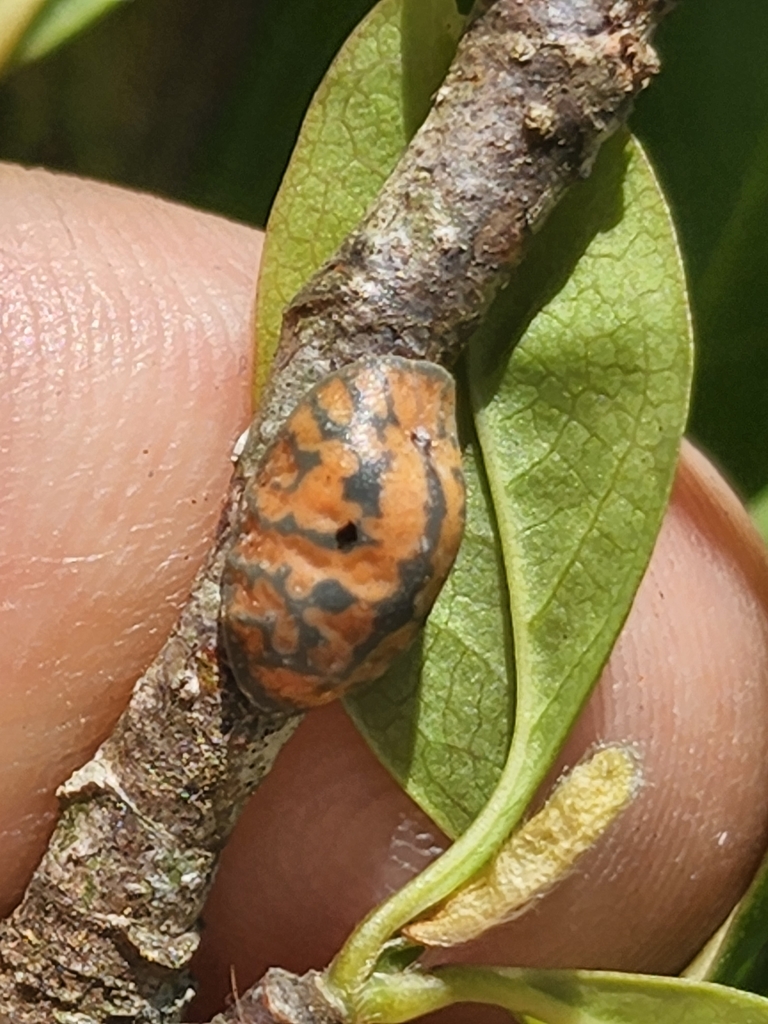
You will see clusters of large, dark brown, hemispherical bumps attached to the twigs and branches. These bumps are the adult female insects, which may be covered in a white, waxy powder or surrounded by sticky honeydew.
Causes
- High populations of scale insects often thrive on trees that are already stressed by drought or poor soil conditions.
- Lack of natural predators like ladybugs and parasitic wasps in the immediate environment allows scale numbers to explode.
- Dense, unpruned branch structures provide protected areas for the insects to settle and reproduce.
Could be confused with
- Bud scales · Bud scales are a natural part of the tree anatomy and will be uniform in shape and location, whereas Tulip Tree Scale insects are irregular in size and can be scraped off the bark.
- Lecanium scale · Lecanium scales are generally smaller and flatter than the large, bumpy Tulip Tree Scale, and they often infest a wider variety of tree species.
Find out what's really wrong with your plant
Problems that look alike are easy to mix up. Pocket Botanist looks at a photo of your actual plant and tells you what's going on, how serious it is, and what to try first. Identification and a health check are free.



Scan with your phone's camera to get the app
Or go to pocketbotanist.app/get on your phone
Treatment
- Scrub the infested branches with a soft brush and water to physically remove the adult scales.
- Prune away and destroy heavily infested branches to reduce the total population on the tree.
- Apply fatty acids to the branches when the young crawlers are active in the warm growing season, follow the label.
Without chemicals
- Prune out the most heavily infested branches to lower the pest density.
- Use a high pressure water spray to dislodge the insects from the bark during the crawler stage.
- Encourage natural predators by planting flowers that attract beneficial insects like ladybugs and lacewings.
Chemical options
- Fatty acids, apply as a contact spray to the stems during the crawler stage, follow the label.
Preventing it
- Keep the tree well watered during dry spells to help it maintain its natural defenses.
- Avoid over fertilizing with nitrogen, which can encourage the soft, succulent growth that scale insects prefer.
- Prune the tree to improve airflow and light penetration, which makes the environment less hospitable for scale colonies.
Season
The warm growing season is when the young crawlers are active and moving across the branches to find new feeding sites.
Spread risk
Moderate
Severity
High
When to act
Act as soon as you notice the brown bumps on the stems, particularly during the warm growing season when the crawlers are vulnerable. If the tree shows significant dieback or is too large to treat safely, contact a tree surgeon for professional assessment.
Keep your plants healthy from here
Save your plants in Pocket Botanist and you get care reminders timed for each one, plus a care history that shows what worked. Identification and a health check are free.
Questions people ask
- Will the sooty mold kill my tree?
- The sooty mold itself is just a fungus that grows on the sticky honeydew left by the scale, but it can block sunlight from the leaves and weaken the tree over time.
- Can I just leave the scale alone?
- While a light infestation might be tolerated, a heavy population will drain the tree of vital sap and can lead to branch death or the eventual decline of the entire tree.
Plants it affects
Answers plant by plant
This guide was generated with AI on and is general information, not horticultural advice. Read about how we build these guides.