 Pocket Botanist
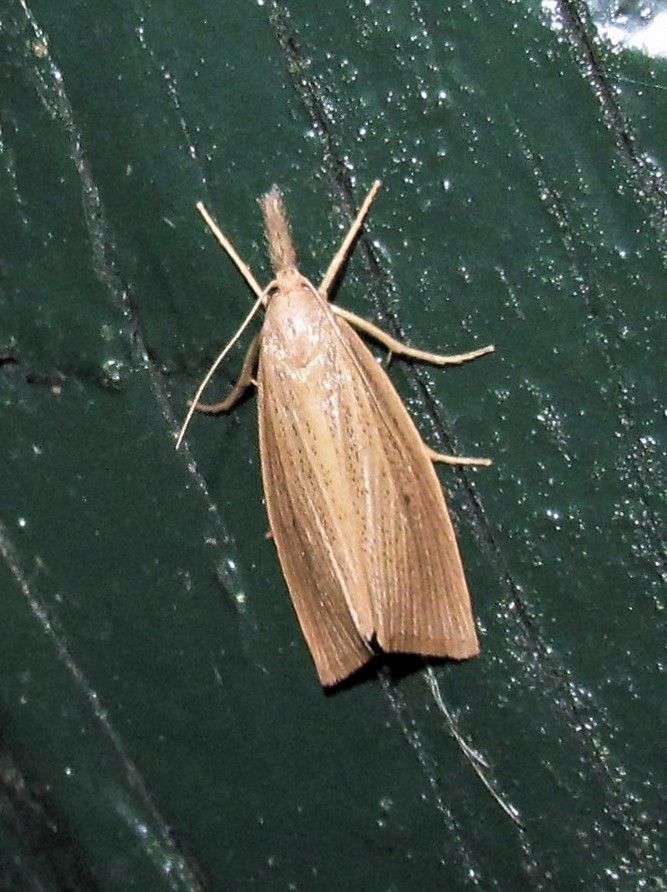
Symptoms by part
Stems
You will see small entry holes on the exterior of the stalk, often surrounded by fine, sawdust like frass. Inside the stem, you may find hollowed out tunnels and the larvae themselves.
Causes
- Warm and humid conditions that favor rapid moth reproduction.
- Presence of crop residue from previous seasons that provides a shelter for overwintering larvae.
- High density of host grasses in the immediate area.
Could be confused with
- Corn Earworm · Corn earworms typically feed on the silk and kernels of ears rather than boring deep into the main stalk.
- Stalk Borer · Stalk borers often leave a distinct, ragged entry hole and are usually found in the crown or lower stem, whereas Sugarcane Borer tunnels are often higher up the stalk.
Find out what's really wrong with your plant
Problems that look alike are easy to mix up. Pocket Botanist looks at a photo of your actual plant and tells you what's going on, how serious it is, and what to try first. Identification and a health check are free.



Scan with your phone's camera to get the app
Or go to pocketbotanist.app/get on your phone
Treatment
- Remove and destroy any stalks showing signs of infestation to stop the larvae from maturing.
- Clear away all plant debris from the base of the plants after harvest to eliminate overwintering sites.
- Apply Bacillus thuringiensis to the foliage and stalk surfaces during the early larval stage, follow the label.
Without chemicals
- Rotate crops to non host species to break the life cycle.
- Destroy crop residues immediately after harvest.
- Use physical barriers like fine mesh netting over young plants to prevent moths from laying eggs.
Chemical options
- Bacillus thuringiensis, apply to foliage when larvae are active, follow the label.
- Spinosad, spray on affected areas during early larval stages, follow the label.
Preventing it
- Plant resistant varieties if they are available for your specific crop.
- Maintain a clean garden by removing weeds that serve as alternative hosts.
- Time your planting to avoid the peak flight periods of the adult moths.
Season
The warm growing season.
Spread risk
Moderate
Severity
High
When to act
Act as soon as you spot entry holes or frass on the stalks to prevent the larvae from tunneling further. If the majority of your crop shows severe structural damage or lodging, it is best to remove and dispose of the plants entirely.
Keep your plants healthy from here
Save your plants in Pocket Botanist and you get care reminders timed for each one, plus a care history that shows what worked. Identification and a health check are free.
Questions people ask
- Can I save a plant that has been bored into?
- If the damage is limited to one or two stalks, you can prune those out. If the main stem is heavily tunneled, the plant will likely not recover its strength.
- How do I know if the larvae are still inside?
- Look for fresh frass, which looks like fine sawdust, near the entry holes. If the frass is old and dry, the larvae may have already moved on or pupated.
Plants it affects
Answers plant by plant
This guide was generated with AI on and is general information, not horticultural advice. Read about how we build these guides.