 Pocket Botanist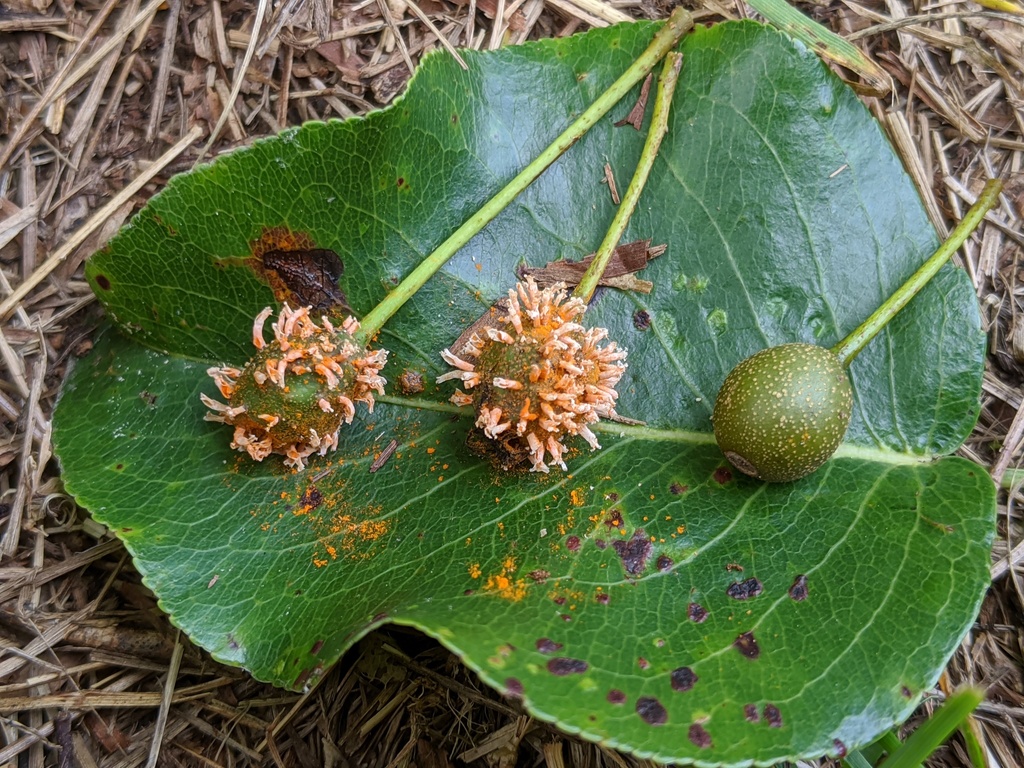
Symptoms by part
Fruit
The fruit develops swollen, distorted areas that eventually erupt with bright orange, tube like fungal structures.
Stems
Branches show spindle shaped swellings or galls that may crack open and release orange spores during wet weather.
Causes
- Presence of nearby juniper trees which act as the alternate host for the fungus.
- Extended periods of cool, wet weather during the spring.
- High humidity that allows fungal spores to travel through the air and germinate on susceptible plant tissues.
Could be confused with
- Cedar Apple Rust · Cedar apple rust primarily affects leaves with yellow or orange spots, whereas quince rust is much more focused on fruit and stem distortion.
- Fire Blight · Fire blight causes a scorched, black appearance and shepherd crook curling on stems, while quince rust causes swelling and orange fungal eruptions.
Treatment
- Prune out and destroy any branches showing signs of swelling or galls as soon as they are spotted.
- Remove and dispose of all infected fruit from the tree and the ground to prevent further spore release.
- Sanitize all pruning tools with a solution of alcohol between cuts to avoid spreading the fungus to healthy wood.
Without chemicals
- Remove nearby juniper trees if possible to break the disease cycle.
- Prune the canopy to improve air circulation and help the plant dry out faster after rain.
- Use a rain cover or protective netting over small trees during wet spring periods to keep moisture off the fruit and stems.
Chemical options
- Tebuconazole, apply as a preventative spray to the foliage and fruit during the early spring bloom period, follow the label.
Preventing it
- Select and plant resistant varieties of quince and other pome fruits.
- Maintain a distance of at least 300 meters between your fruit trees and any juniper plants.
- Keep the area around the base of the tree clear of debris to reduce humidity.
Season
The warm growing season, specifically during wet spring weather.
Spread risk
Moderate
Severity
Moderate
When to act
Act immediately upon seeing the first signs of swelling or orange eruptions to limit the spread. If a tree is severely infected with galls on the main trunk, consult a tree surgeon to determine if the plant can be saved or needs removal.
Think it's Quince Rust?
This guide covers the general picture. Pocket Botanist looks at your actual plant from a photo and tells you what's really going on, how serious it is, and what to try first. Identification and a health check are free.


Questions people ask
- Can I eat fruit that has quince rust on it?
- It is best to discard infected fruit as the fungus causes deep decay and ruins the texture and flavor.
- Will my tree die from quince rust?
- While it rarely kills a mature tree outright, it can severely weaken the structure and reduce fruit production to the point where the tree is no longer productive.
Plants it affects
This guide was generated with AI and is general information, not horticultural advice. Read about how we build these guides.