 Pocket Botanist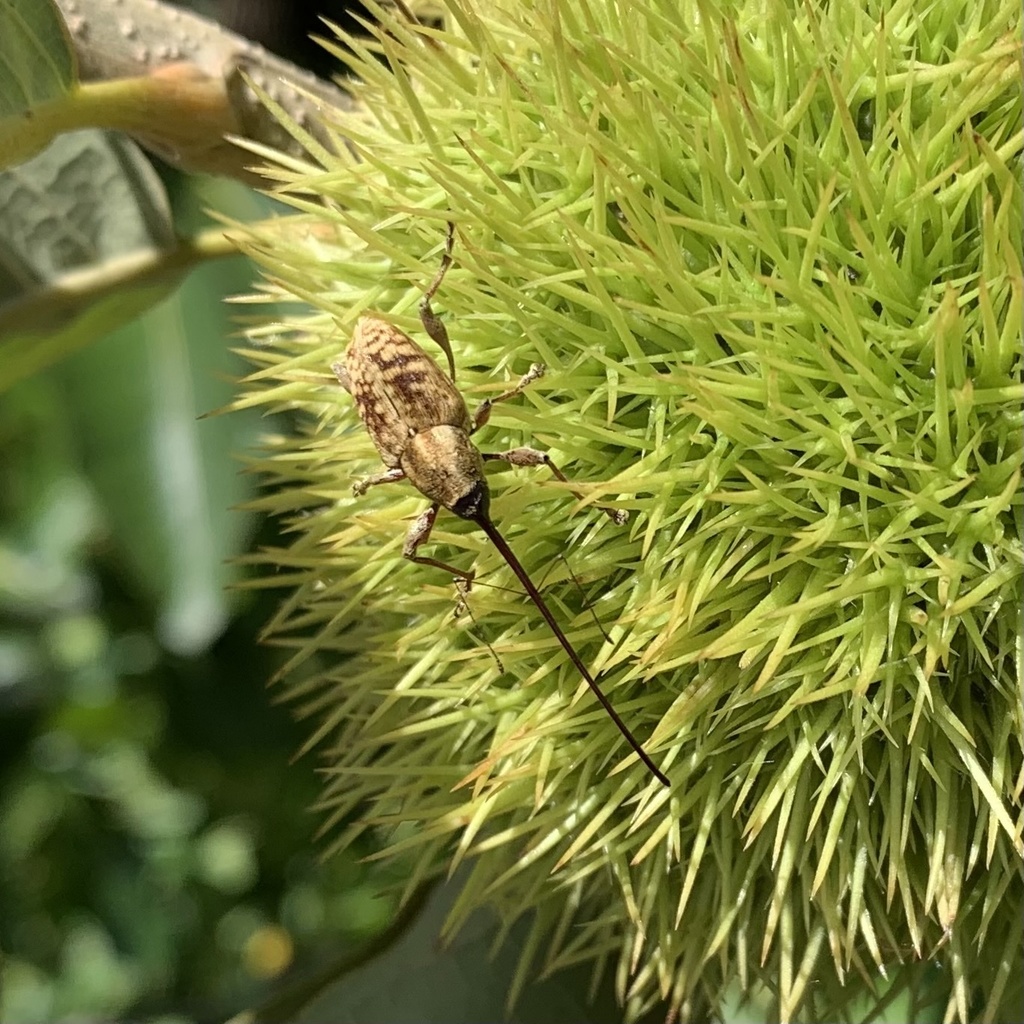
Symptoms by part
Fruit
You will notice small, perfectly round exit holes on the shell of the nut, often accompanied by fine, sawdust like frass near the opening.
Causes
- The presence of adult weevils during the nut development stage.
- Warm, humid conditions that favor the emergence and mating of adult beetles.
- Fallen nuts left on the ground, which allow larvae to exit and burrow into the soil to pupate.
Could be confused with
- Squirrel damage · Squirrels typically chew large, jagged holes in the shell to reach the nut, whereas weevils leave tiny, precise circular holes.
- Nut drop due to drought · Nuts dropped from water stress are usually intact and lack any exit holes or internal tunneling.
Treatment
- Spread a light colored sheet or tarp beneath the tree canopy during the early morning to catch falling adults.
- Shake the branches firmly to dislodge adult weevils onto the sheet, then collect and dispose of them in soapy water.
- Gather all fallen nuts from the ground daily to prevent larvae from exiting and burrowing into the soil.
- Dispose of any infested nuts by burning them or sealing them in a bag for trash collection, rather than composting them.
Without chemicals
- Clear away all debris and fallen leaves from beneath the tree to expose larvae to natural predators.
- Use fine mesh netting over the tree canopy early in the season to physically block adult weevils from reaching the developing fruit.
Preventing it
- Rake and remove all fallen nuts and husks from the orchard floor immediately after harvest.
- Cultivate the soil lightly beneath the tree in late autumn to expose pupating larvae to birds and freezing temperatures.
- Encourage natural predators like ground beetles and birds in your garden.
Season
The warm growing season, specifically when nuts are beginning to form and ripen.
Spread risk
Moderate
Severity
Moderate
When to act
Act as soon as you see the first signs of small holes in the nuts or notice adult beetles on the foliage. If the tree is too large to manage safely, contact a tree surgeon for assistance with canopy treatments or pruning.
Think it's Nut Weevil?
This guide covers the general picture. Pocket Botanist looks at your actual plant from a photo and tells you what's really going on, how serious it is, and what to try first. Identification and a health check are free.


Questions people ask
- Are nuts with holes safe to eat?
- It is best to discard them, as the larvae have likely consumed the kernel and introduced bacteria or fungi into the nut.
- Do I need to spray my tree?
- Chemical control is rarely effective for nut weevils because the larvae are protected inside the shell, so mechanical removal is much more reliable.
Plants it affects
This guide was generated with AI and is general information, not horticultural advice. Read about how we build these guides.