 Pocket Botanist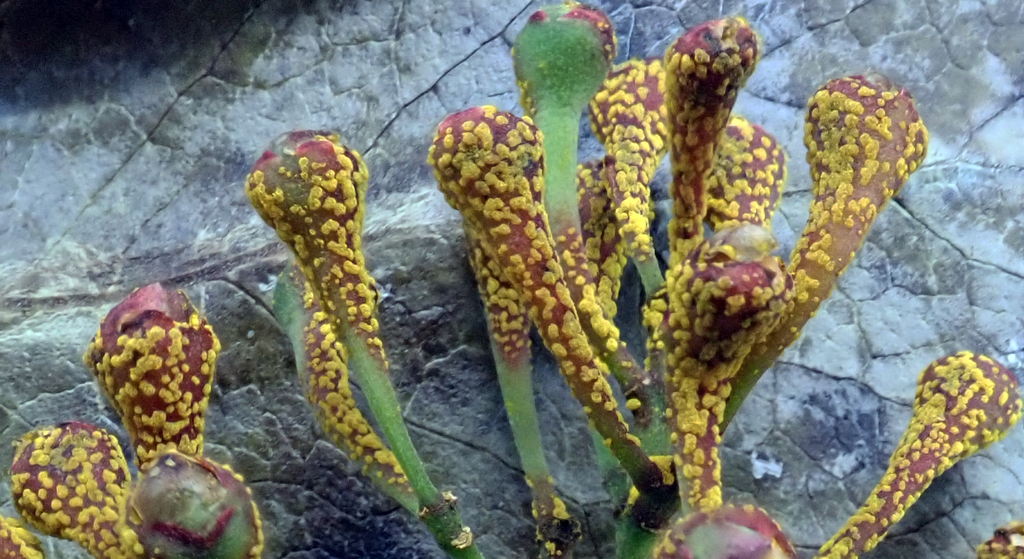
Symptoms by part
Leaves
Small purple spots appear first, followed by the development of bright yellow, powdery pustules on either side of the leaf surface.
Stems
Young, succulent stems show the same yellow, powdery spore masses and may become twisted, distorted, or die back completely.
Causes
- High humidity and frequent rainfall
- Temperatures between 15 to 25 degrees Celsius
- Presence of succulent, new plant growth
- Poor air circulation around the plant canopy
Could be confused with
- Aphid damage · Aphids are visible insects that cause leaf curling, whereas Myrtle Rust produces distinct yellow, powdery spores.
- Leaf spot diseases · Other fungal leaf spots are usually brown or black and lack the bright, neon yellow, powdery texture of Myrtle Rust.
Treatment
- Prune away all infected leaves and stems using sterilized shears to stop the spread of spores.
- Place all removed infected material into a sealed plastic bag and dispose of it in the trash, never in the compost.
- Clean all pruning tools with a disinfectant solution after every cut to prevent moving spores to healthy parts of the plant.
- Improve airflow around the plant by thinning out dense foliage or moving the plant to a breezier location.
Without chemicals
- Prune out infected growth immediately upon discovery.
- Sterilize tools with alcohol between cuts.
- Ensure the plant is in a location with excellent air movement.
- Avoid overhead watering to keep foliage dry.
Chemical options
- Tebuconazole, apply as a foliar spray to all surfaces of the plant, follow the label.
Preventing it
- Choose resistant plant varieties when possible.
- Space plants widely to encourage good air circulation.
- Water at the base of the plant rather than wetting the leaves.
- Inspect new plants thoroughly for signs of infection before adding them to your garden.
Season
The warm growing season, especially during periods of high moisture.
Spread risk
High
Severity
High
When to act
Act immediately when you see the first yellow spots to prevent the spores from spreading to the rest of the plant. If the infection covers more than half of the plant or causes significant dieback, remove and destroy the entire plant to protect your other garden specimens.
Think it's Myrtle Rust?
This guide covers the general picture. Pocket Botanist looks at your actual plant from a photo and tells you what's really going on, how serious it is, and what to try first. Identification and a health check are free.


Questions people ask
- Can I compost the infected leaves?
- No, you should never compost infected material because the spores can survive and spread through your garden when you use the finished compost.
- Will my plant recover if I cut off all the infected parts?
- If the plant is otherwise healthy and the infection is caught early, it can recover, but it will need careful monitoring to ensure the fungus does not return on new growth.
This guide was generated with AI and is general information, not horticultural advice. Read about how we build these guides.