 Pocket Botanist
Symptoms by part
Leaves
You will see a lacy, skeletonized appearance where the green tissue between the veins has been eaten away, leaving only the leaf veins behind.
Causes
- Warm temperatures that favor rapid reproduction cycles.
- Presence of host plants like common beans or edamame in the garden.
- Overwintering adults emerging from nearby garden debris or leaf litter.
Could be confused with
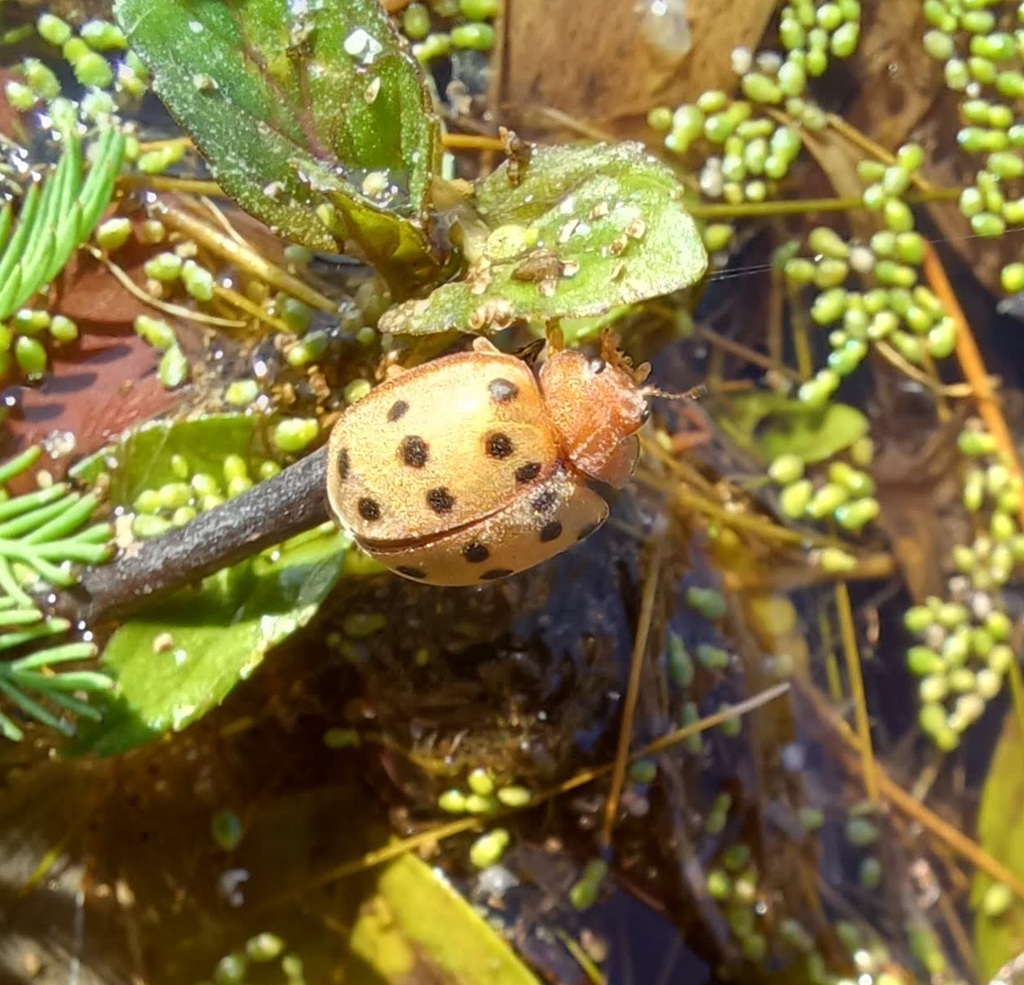
- Ladybugs · Most ladybugs are beneficial predators that eat aphids, whereas the Mexican bean beetle is a plant eater that causes skeletonized damage.
- Japanese Beetles · Japanese beetles have a metallic green and copper body. Both skeletonize leaves, but Japanese beetles feed mainly on the upper leaf surface, while bean beetles and their spiny yellow larvae feed from the undersides of the leaves.
Find out what's really wrong with your plant
Problems that look alike are easy to mix up. Pocket Botanist looks at a photo of your actual plant and tells you what's going on, how serious it is, and what to try first. Identification and a health check are free.



Scan with your phone's camera to get the app
Or go to pocketbotanist.app/get on your phone
Treatment
- Hand pick adult beetles and larvae off the undersides of leaves during the early morning hours when they are less active.
- Drop the collected beetles into a container of soapy water to kill them.
- Remove and destroy any leaves that show heavy clusters of yellow eggs on the undersides.
- Apply spinosad to the foliage, specifically targeting the undersides of the leaves where the larvae feed, follow the label.
Without chemicals
- Use floating row covers early in the season to prevent adult beetles from landing on your bean plants.
- Plant beans early in the season to allow them to mature before the peak beetle population arrives.
- Clear away all plant debris and weeds at the end of the season to remove overwintering sites.
Chemical options
- Spinosad, apply as a spray to the undersides of leaves, follow the label.
Preventing it
- Rotate your bean crops to a different part of the garden each year.
- Keep the garden free of weeds and tall grasses that provide shelter for adults.
- Plant trap crops like early beans to lure beetles away from your main harvest.
Season
The warm growing season.
Spread risk
Moderate
Severity
Moderate
When to act
Act as soon as you spot the first signs of lacy leaf damage or yellow egg clusters. If the plant is completely defoliated and the bean pods are not yet mature, it is best to remove the plant to prevent the population from spreading to nearby crops.
Keep your plants healthy from here
Save your plants in Pocket Botanist and you get care reminders timed for each one, plus a care history that shows what worked. Identification and a health check are free.
Questions people ask
- Are these beetles harmful to humans?
- No, they are strictly plant eaters and do not bite or sting people.
- Will my plants recover after being skeletonized?
- If the damage is light, the plant may recover, but heavy skeletonization usually prevents the plant from producing a good yield.
- Do I need to spray every day?
- No, follow the specific application intervals listed on the product label for the chemical you choose.
Plants it affects
Answers plant by plant
This guide was generated with AI on and is general information, not horticultural advice. Read about how we build these guides.