 Pocket Botanist
Symptoms by part
Stems
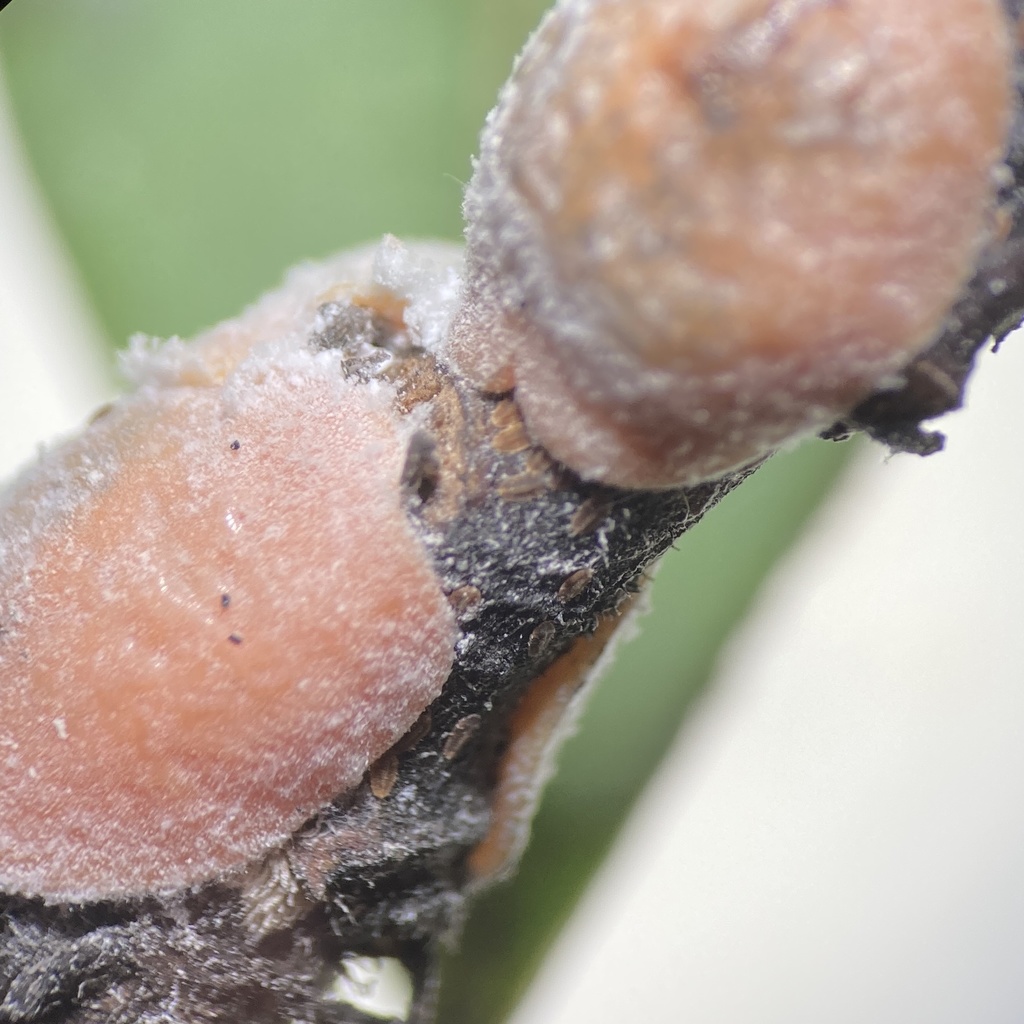
You will see large, bumpy, brown or white waxy bumps clustered along the twigs and branches. These bumps are the insects themselves, which may be covered in a white powdery wax.
Causes
- High humidity and lack of airflow around the branches.
- Trees that are already stressed by drought or poor soil conditions.
- The presence of ants, which protect the scale insects from predators to feed on the honeydew they produce.
Could be confused with
- Bud scales · Bud scales are a natural part of the plant anatomy near the tips of branches and do not produce sticky honeydew or black sooty mold.
- Lecanium scale · Lecanium scales are generally smaller and flatter than the large, rounded bumps of magnolia scale.
Find out what's really wrong with your plant
Problems that look alike are easy to mix up. Pocket Botanist looks at a photo of your actual plant and tells you what's going on, how serious it is, and what to try first. Identification and a health check are free.



Scan with your phone's camera to get the app
Or go to pocketbotanist.app/get on your phone
Treatment
- Scrub the infested branches with a soft brush and water to physically dislodge the adult scales.
- Prune away heavily infested branches that are too dense to clean effectively.
- Apply plant oils to the stems during the crawler stage in the warm growing season, follow the label.
Without chemicals
- Prune out the most heavily infested branches to improve airflow and reduce the population.
- Use a strong stream of water to wash off honeydew and dislodge young crawlers.
- Encourage natural predators like lady beetles by avoiding broad spectrum insecticides.
Chemical options
- Plant oils, apply to stems when crawlers are active, follow the label.
Preventing it
- Keep the tree well watered during dry spells to maintain its natural defenses.
- Prune the canopy to ensure good light penetration and air circulation.
- Manage ant populations around the base of the tree to allow natural predators to reach the scale.
Season
The warm growing season.
Spread risk
Moderate
Severity
High
When to act
Act as soon as you notice the white, waxy bumps on the branches. If the tree shows significant dieback or is too large to manage safely, contact a tree surgeon for professional assessment.
Keep your plants healthy from here
Save your plants in Pocket Botanist and you get care reminders timed for each one, plus a care history that shows what worked. Identification and a health check are free.
Questions people ask
- Will my magnolia tree die from this?
- If left untreated for several years, the loss of sap and the stress from sooty mold can kill branches or even the entire tree.
- What is the sticky substance on my leaves?
- That is honeydew, a sugary waste product excreted by the scale insects as they feed on the tree sap.
Plants it affects
Answers plant by plant
This guide was generated with AI on and is general information, not horticultural advice. Read about how we build these guides.