 Pocket Botanist
Symptoms by part
Fruit
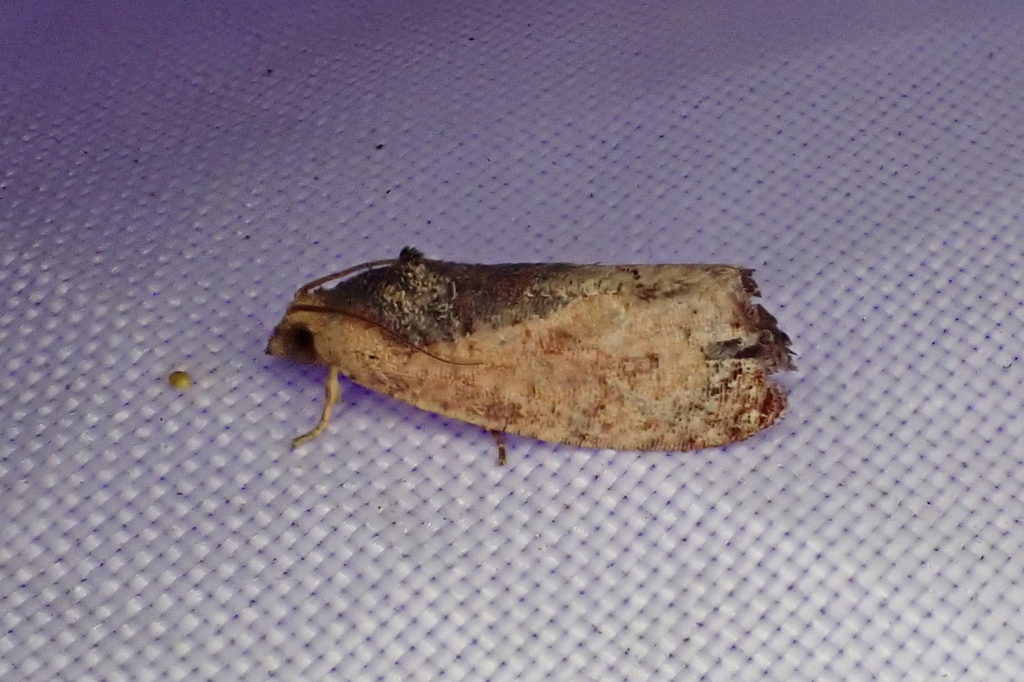
Look for tiny entry holes on the husk, often surrounded by a small amount of frass or sawdust like debris. Inside the husk, you will find tunnels and a hollowed out or damaged kernel.
Causes
- Presence of adult moths laying eggs on the surface of developing nuts.
- Warm temperatures that accelerate the life cycle of the larvae.
- Accumulation of fallen, infested nuts on the ground that provide a breeding site for the next generation.
Could be confused with
- Macadamia Flower Caterpillar · This pest primarily targets the flower racemes rather than the mature nuts, and it does not bore into the hard shell.
- Nut drop due to physiological stress · Fruit drop caused by water stress or nutrient deficiency will show clean, intact kernels without any bore holes or internal tunneling.
Find out what's really wrong with your plant
Problems that look alike are easy to mix up. Pocket Botanist looks at a photo of your actual plant and tells you what's going on, how serious it is, and what to try first. Identification and a health check are free.



Scan with your phone's camera to get the app
Or go to pocketbotanist.app/get on your phone
Treatment
- Collect and destroy all fallen nuts from under the tree canopy immediately to remove larvae.
- Remove any infested nuts still hanging on the tree, because larvae can pupate inside damaged husks and new moths emerge from them.
- Apply Bacillus thuringiensis to the developing nuts according to the manufacturer instructions to target young larvae before they enter the husk, follow the label.
Without chemicals
- Sanitation by removing all infested fruit from the tree and the ground.
- Bagging individual nut clusters with fine mesh netting to prevent moths from laying eggs.
Chemical options
- Bacillus thuringiensis, apply as a spray to the nut clusters during the early stages of nut development, follow the label.
Preventing it
- Maintain a clean orchard floor by clearing away all debris and fallen nuts.
- Harvest nuts promptly as soon as they mature to reduce the time they are exposed to egg laying moths.
- Encourage natural predators like parasitic wasps that feed on the larvae.
Season
The warm growing season, when nuts are developing on the tree.
Spread risk
Moderate
Severity
Moderate
When to act
Act as soon as you notice entry holes on the husks or premature nut drop. If the tree is too large to manage safely, consult a tree surgeon for assistance.
Keep your plants healthy from here
Save your plants in Pocket Botanist and you get care reminders timed for each one, plus a care history that shows what worked. Identification and a health check are free.
Questions people ask
- Can I eat the nuts if I find a borer hole?
- No, the larva typically consumes or contaminates the kernel, making it unsuitable for eating.
- Do I need to spray the whole tree?
- Focus your treatment on the nut clusters, as that is where the larvae feed and where the eggs are laid.
Plants it affects
Answers plant by plant
This guide was generated with AI on and is general information, not horticultural advice. Read about how we build these guides.