 Pocket Botanist
Symptoms by part
Stems
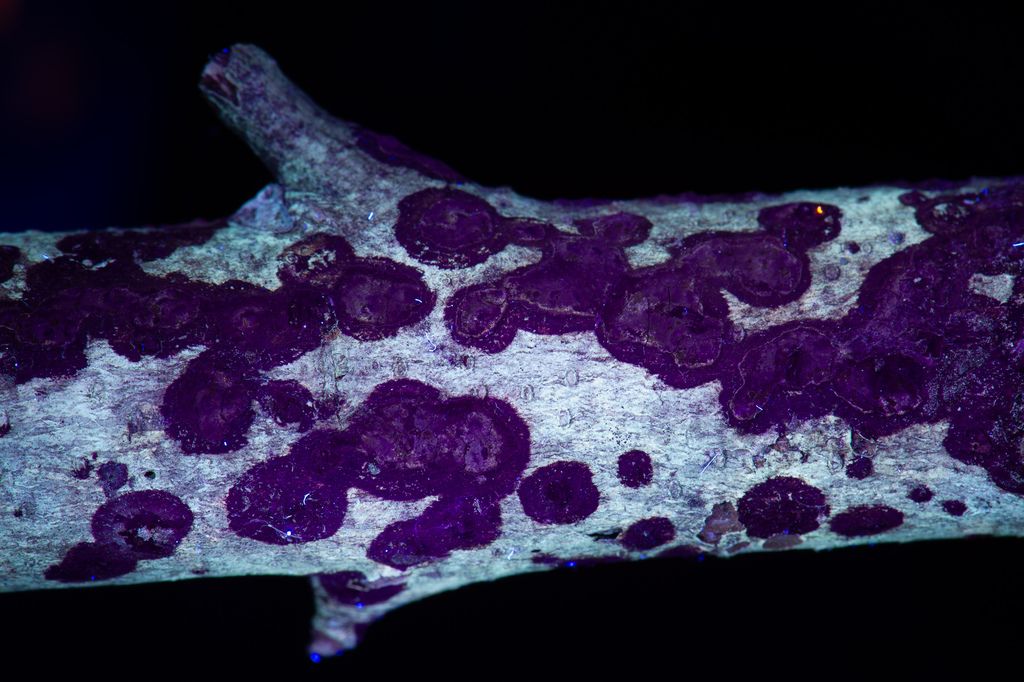
You will see patches of bark sloughing off to reveal a dusty, charcoal colored fungal mat underneath. As the disease progresses, the wood underneath becomes brittle and may show signs of internal decay.
Causes
- Extended periods of drought that stress the tree.
- Physical damage to the bark from lawn equipment or storms.
- Soil compaction that restricts root access to water and nutrients.
- Root damage caused by construction or heavy foot traffic.
Could be confused with
- Sunscald · Sunscald usually appears as a vertical strip of dead bark on the south or southwest side of the trunk, whereas Hypoxylon Canker creates irregular, patchy areas that reveal dark fungal spores.
- Natural bark shedding · Healthy bark shedding typically reveals fresh, intact bark underneath, while Hypoxylon Canker exposes a dry, powdery, dark fungal layer.
Find out what's really wrong with your plant
Problems that look alike are easy to mix up. Pocket Botanist looks at a photo of your actual plant and tells you what's going on, how serious it is, and what to try first. Identification and a health check are free.



Scan with your phone's camera to get the app
Or go to pocketbotanist.app/get on your phone
Treatment
- Prune away individual infected branches if the canker is isolated to a small limb, ensuring you cut well into healthy wood.
- Sterilize your pruning tools with a bleach solution between every single cut to avoid moving spores to healthy parts of the tree.
- Remove the entire tree if the canker has reached the main trunk, as the structural integrity is likely compromised beyond repair.
Without chemicals
- Water the tree deeply during dry spells to reduce stress.
- Apply a layer of organic mulch around the base of the tree to retain soil moisture.
- Avoid wounding the trunk with lawn mowers or string trimmers.
- Remove and destroy infected wood by burning or burying it to prevent spores from spreading.
Preventing it
- Keep trees well watered during periods of drought.
- Protect the trunk from mechanical injury by creating a mulch ring that keeps mowers away.
- Avoid heavy construction or soil disturbance near the root zone.
- Avoid heavy pruning or excessive canopy thinning, which adds stress to the tree.
Season
The warm growing season is when the fungus is most active and visible.
Spread risk
Moderate
Severity
High
When to act
Act immediately upon seeing the characteristic charcoal colored fungal mats, as the tree is already in a state of decline. If the canker is on the main trunk or if the tree is large and near structures, hire a professional tree surgeon to safely remove it.
Keep your plants healthy from here
Save your plants in Pocket Botanist and you get care reminders timed for each one, plus a care history that shows what worked. Identification and a health check are free.
Questions people ask
- Can I save a tree that has Hypoxylon Canker on the main trunk?
- Unfortunately, no. Once the fungus has colonized the main trunk, the wood is structurally compromised and the tree cannot be cured.
- Is there a spray I can use to stop the fungus?
- There are no effective chemical sprays for this disease. The best approach is to manage the tree's health and remove infected parts.
Plants it affects
Answers plant by plant
This guide was generated with AI on and is general information, not horticultural advice. Read about how we build these guides.