 Pocket Botanist
Symptoms by part
Leaves
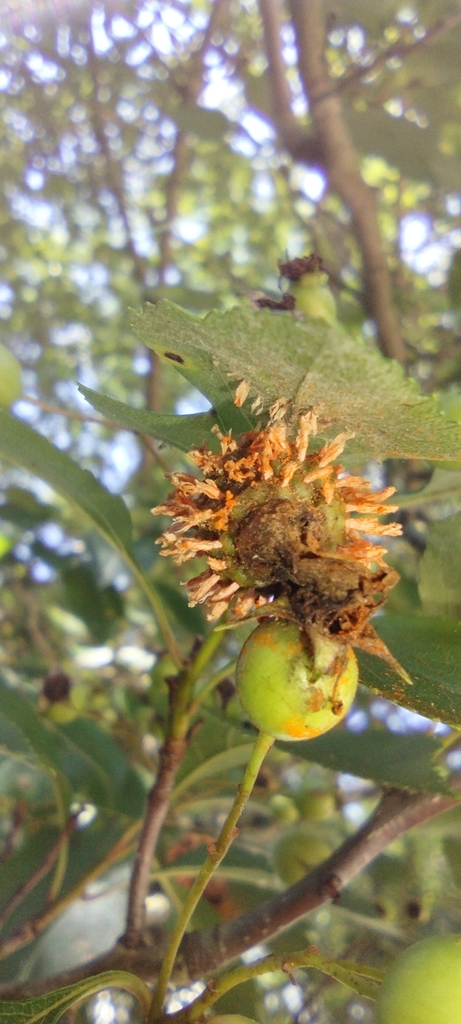
Small, yellow to orange circular spots appear on the upper surface, often developing into raised, orange, cup-like structures on the underside of the leaf.
Causes
- High humidity and frequent rainfall during the spring.
- The presence of nearby juniper plants, which act as the alternate host for the fungus.
- Poor air circulation around the tree canopy.
Could be confused with
- Leaf Spot · Leaf spot typically creates dark brown or black lesions without the bright orange, powdery spores or cup-like structures seen in rust.
- Aphid damage · Aphids cause leaves to curl and yellow, but they do not produce the distinct orange fungal pustules associated with rust.
Find out what's really wrong with your plant
Problems that look alike are easy to mix up. Pocket Botanist looks at a photo of your actual plant and tells you what's going on, how serious it is, and what to try first. Identification and a health check are free.



Scan with your phone's camera to get the app
Or go to pocketbotanist.app/get on your phone
Treatment
- 1. Prune out and destroy any heavily infected branches during the dormant season to reduce the amount of fungus present.
- 2. Inspect nearby junipers in late winter, then prune out and destroy any rust galls before they release spores in spring, since the fungus overwinters on juniper rather than in fallen hawthorn leaves.
- 3. Apply sulfur as a preventative spray to the foliage when new growth begins in the spring, follow the label.
Without chemicals
- Remove nearby juniper plants if possible, as they are necessary for the fungus to complete its life cycle.
- Prune the canopy to improve airflow and allow the leaves to dry out faster after rain.
- Water the tree at the base rather than overhead to keep the foliage dry.
Chemical options
- sulfur, apply to foliage at the first sign of spring growth, follow the label.
- potassium bicarbonate, spray on foliage to alter the leaf surface pH, follow the label.
Preventing it
- Choose resistant varieties of hawthorn when planting new trees.
- Space trees far enough apart to ensure good air movement.
- Keep the area under the tree clean of debris throughout the year.
Season
The warm growing season, specifically during wet spring weather.
Spread risk
Moderate
Severity
Moderate
When to act
Begin preventive treatment when new growth starts in spring, before any spots appear. Once yellow spots are visible, the infection has already taken place. If the tree loses its leaves prematurely for several years in a row, consider replacing it with a more resistant species.
Keep your plants healthy from here
Save your plants in Pocket Botanist and you get care reminders timed for each one, plus a care history that shows what worked. Identification and a health check are free.
Questions people ask
- Will my hawthorn tree die from rust?
- It is unlikely to kill a healthy, mature tree, but it can cause stress and make the tree more susceptible to other issues if it loses its leaves repeatedly.
- Do I really need to remove my juniper trees?
- Since the fungus requires both hosts to complete its life cycle, removing the juniper is the most effective way to break the cycle and stop the rust from returning.
Plants it affects
Answers plant by plant
This guide was generated with AI on and is general information, not horticultural advice. Read about how we build these guides.