 Pocket Botanist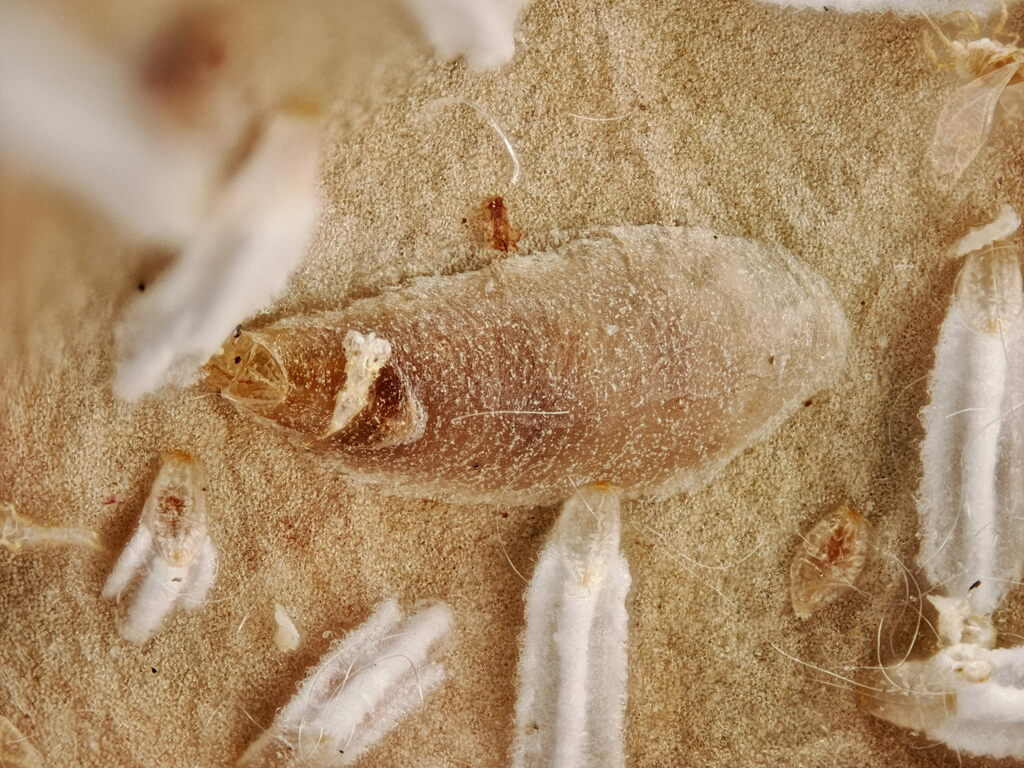
Symptoms by part
Leaves
Yellow spots appear on the upper surface where the insects are feeding underneath, eventually causing the leaves to drop prematurely.
Stems
Small, white, elongated male scales look like tiny flecks of white paint, while the larger, brown, pear shaped female scales cluster along the bark.
Causes
- High humidity and poor air circulation around the plant.
- Plants that are already stressed by drought or poor soil conditions.
- Overcrowded plantings that allow the tiny, mobile crawlers to move easily between neighbors.
Could be confused with
- Oystershell scale · Oystershell scale is typically grey or brown and lacks the distinct white, elongated male scales found on Euonymus scale.
- Fungal leaf spot · Fungal spots are usually flat and lack the raised, shell like physical structure of a scale insect.
Treatment
- Prune away and destroy heavily infested branches during the dormant season to reduce the overall population.
- Scrub infested stems with a soft brush and a mild soap solution to physically remove the protective shells.
- Apply fatty acids to the foliage and stems during the warm growing season when crawlers are active, follow the label.
Without chemicals
- Prune out severely infested branches to improve airflow.
- Maintain plant vigor with appropriate watering and feeding to help the plant withstand feeding pressure.
Chemical options
- Fatty acids applied directly to the crawlers during the warm growing season, follow the label.
Preventing it
- Choose resistant varieties when planting new shrubs.
- Space plants properly to ensure good air circulation and sunlight penetration.
- Inspect new plants thoroughly before introducing them to your garden.
Season
The warm growing season, specifically when the tiny, mobile crawlers emerge to settle on new growth.
Spread risk
High
Severity
High
When to act
Act as soon as you notice the white, fleck like male scales on the stems. If the infestation covers more than half of the plant or the plant is showing significant dieback, it is often best to remove and replace the specimen entirely.
Think it's Euonymus Scale?
This guide covers the general picture. Pocket Botanist looks at your actual plant from a photo and tells you what's really going on, how serious it is, and what to try first. Identification and a health check are free.


Questions people ask
- Can I just wash the scale off with water?
- A strong stream of water can dislodge some of the mobile crawlers, but it will not remove the established, shell protected adults.
- Will my plant recover after the scale is gone?
- If the infestation was caught early, the plant can recover with proper care, but branches that have already died back will not sprout new growth.
Plants it affects
This guide was generated with AI and is general information, not horticultural advice. Read about how we build these guides.