 Pocket Botanist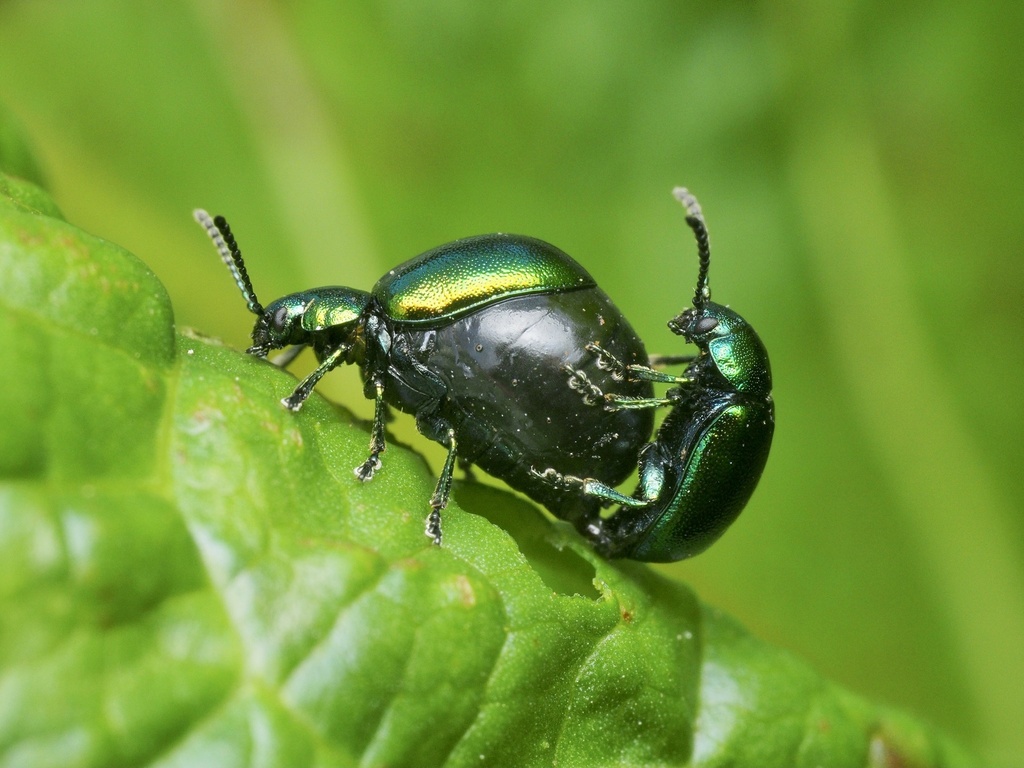
Symptoms by part
Leaves
Small, irregular holes or skeletonized patches where the green tissue has been eaten away, leaving only the veins behind.
Causes
- The presence of host plants like curly dock in the immediate area.
- Warm, humid weather conditions that favor the rapid development of beetle larvae.
Could be confused with
- Slugs and Snails · Slugs and snails leave behind telltale slimy trails on the leaf surface, which dock beetles do not.
- Caterpillars · Caterpillars often consume entire leaf edges or large sections at once, whereas dock beetle damage usually starts as small, scattered holes.
Treatment
- Handpick the adult beetles from the leaves during the early morning when they are less active.
- Remove and dispose of leaves that are heavily infested with larvae to reduce the local population.
- Use a strong jet of water from a hose to dislodge larvae from the undersides of the leaves.
Without chemicals
- Regularly clear away dock weeds from the garden to remove the primary food source.
- Encourage natural predators like ground beetles and birds that feed on the larvae.
Chemical options
- Spinosad, apply as a spray to the foliage when larvae are present, follow the label.
Preventing it
- Keep the area free of dock weeds to prevent the beetles from establishing a colony.
- Maintain healthy soil to ensure surrounding desirable plants are vigorous enough to withstand minor feeding.
Season
The warm growing season.
Spread risk
Moderate
Severity
Low
When to act
Act as soon as you notice significant skeletonizing of leaves to prevent the population from exploding. There is no need to remove the plant unless the dock itself is an unwanted weed you are trying to eradicate.
Think it's Dock Beetle?
This guide covers the general picture. Pocket Botanist looks at your actual plant from a photo and tells you what's really going on, how serious it is, and what to try first. Identification and a health check are free.


Questions people ask
- Will dock beetles kill my garden plants?
- No, they are highly host specific and almost exclusively feed on dock species, so they are unlikely to harm your flowers or vegetables.
- Are these beetles beneficial?
- In some cases, they are considered beneficial because they help control the spread of dock weeds, which can be invasive in pastures and lawns.
Plants it affects
This guide was generated with AI and is general information, not horticultural advice. Read about how we build these guides.