 Pocket Botanist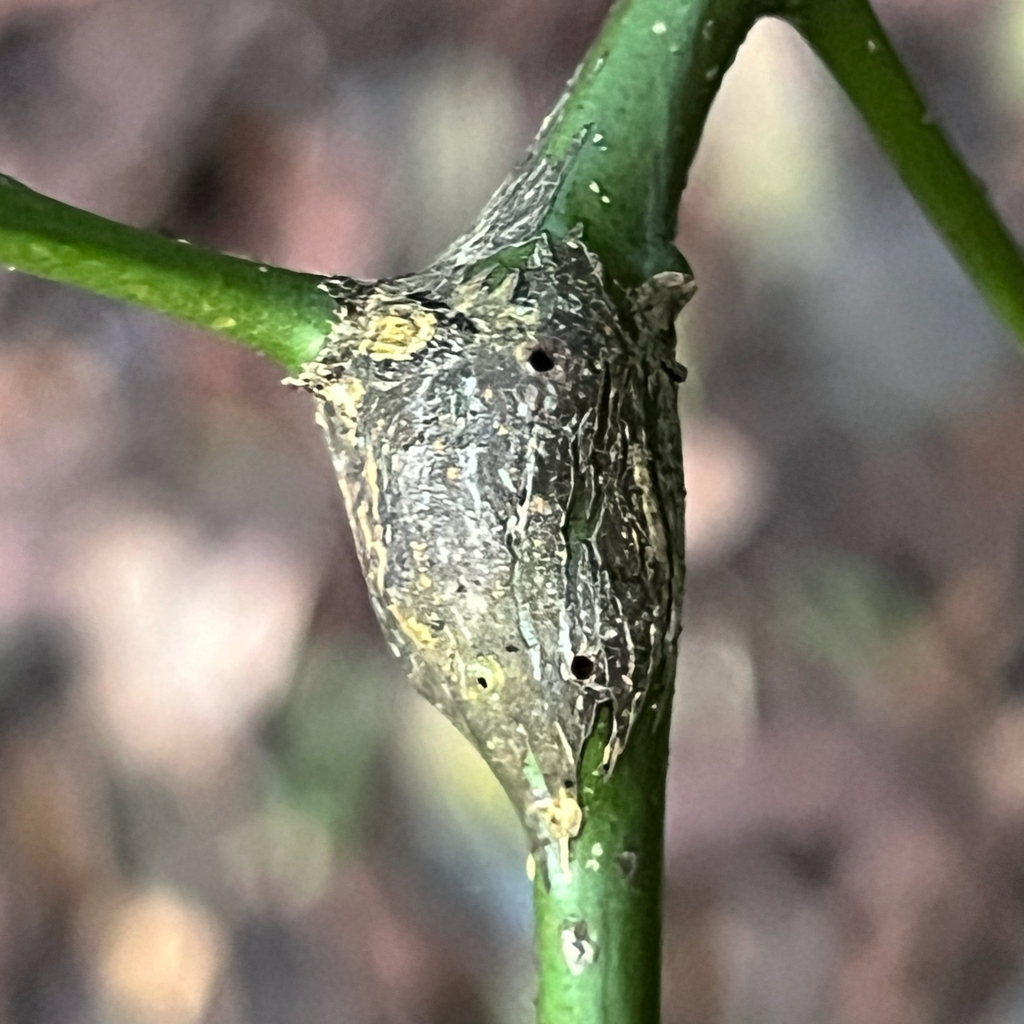
Symptoms by part
Stems
You will see distinct, woody, and lumpy swellings on the branches. These galls often look like elongated, raised bumps that can cause the stem to bend or twist.
Causes
- The presence of adult wasps during their brief egg laying phase.
- Young, succulent growth on citrus trees which is preferred by the female wasp for laying eggs.
Could be confused with
- Citrus Scab · Scab creates raised, corky, or wart like scabs on leaves and fruit rather than woody, elongated swellings on the stems.
- Natural Branch Nodes · Natural nodes are symmetrical and occur at regular intervals where leaves or branches emerge, whereas galls are irregular, lumpy, and often cause the stem to bulge unevenly.
Treatment
- Identify all galls on the tree branches during the dormant period before new growth begins.
- Prune off the infested stems at least 10 to 15 centimeters below the gall to ensure all larvae are removed.
- Place all pruned gall material into a sealed plastic bag and leave it in the sun for several weeks to kill the larvae before disposing of it in the trash.
- Avoid composting the infested branches as the larvae can survive the process.
Without chemicals
- Pruning out the galls before the adult wasps emerge.
- Solarizing the pruned galls in sealed bags to prevent the wasps from escaping.
Preventing it
- Avoid heavy pruning or excessive nitrogen fertilization in late winter, as this encourages the soft, succulent growth that the wasps prefer for egg laying.
- Keep your citrus trees healthy and vigorous to help them withstand minor infestations.
Season
The warm growing season.
Spread risk
Moderate
Severity
Moderate
When to act
Act immediately upon spotting galls by pruning them out during the dormant season. If a tree is heavily infested and severely weakened, you may need to consult a tree surgeon for professional removal.
Think it's Citrus Gall Wasp?
This guide covers the general picture. Pocket Botanist looks at your actual plant from a photo and tells you what's really going on, how serious it is, and what to try first. Identification and a health check are free.


Questions people ask
- Will the galls go away on their own?
- No, the galls are permanent woody growths and will remain on the tree until they are pruned off.
- Can I leave the pruned galls on the ground under the tree?
- Never leave pruned galls on the ground, as the wasps can emerge from the cut stems and reinfest your tree.
- Do I need to spray my tree to stop the wasps?
- Chemical sprays are generally ineffective against this pest because the larvae are protected inside the woody galls, making physical removal the only reliable method.
This guide was generated with AI and is general information, not horticultural advice. Read about how we build these guides.