 Pocket Botanist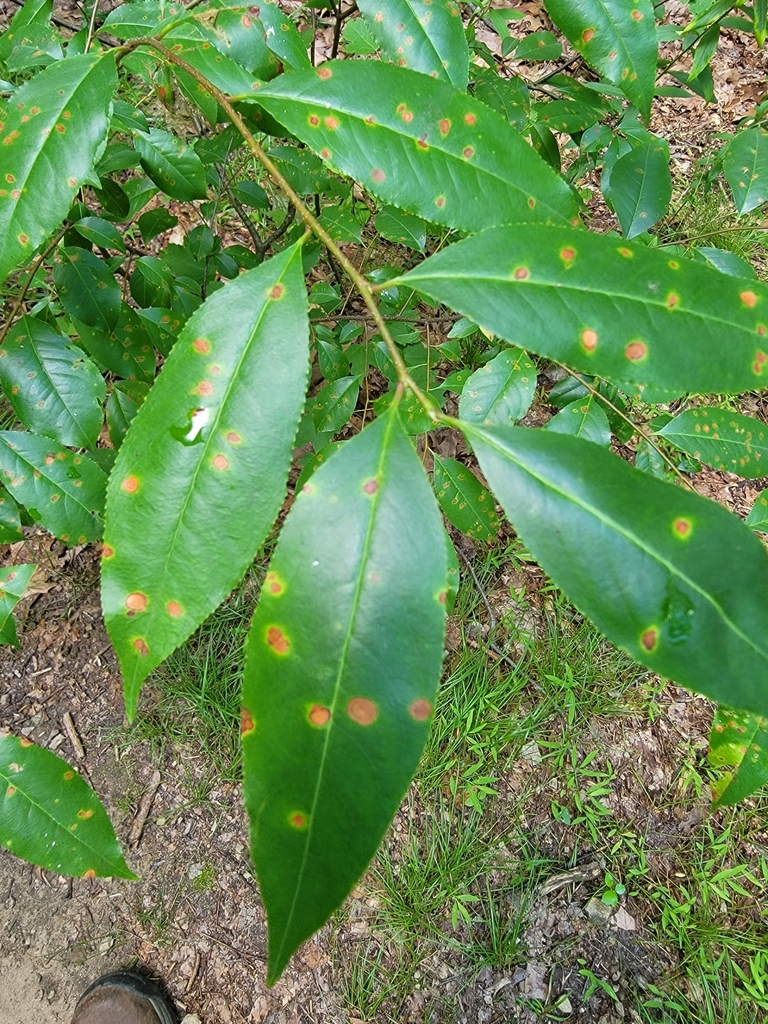
Symptoms by part
Leaves
Small, circular purple or reddish brown spots appear on the upper surface, which may turn white or gray on the underside as spores develop. Infected leaves often turn yellow and fall off the tree well before autumn.
Causes
- Prolonged periods of wet or humid weather during the growing season.
- Poor air circulation within the tree canopy.
- Overhead watering that keeps foliage wet for extended periods.
- Presence of infected fallen leaves from the previous year that harbor fungal spores.
Could be confused with
- Bacterial Canker · Bacterial canker typically causes shot hole patterns and oozing sap on branches, whereas leaf spot is primarily restricted to leaf tissue.
- Powdery Mildew · Powdery mildew presents as a white, dusty coating on the leaf surface, while leaf spot appears as distinct, sunken, or colored lesions.
Treatment
- 1. Rake and remove all fallen leaves from beneath the tree immediately to eliminate the primary source of spores.
- 2. Prune the tree canopy to improve airflow and allow sunlight to reach the inner branches.
- 3. Apply potassium bicarbonate to the foliage when symptoms first appear to inhibit fungal growth, follow the label.
Without chemicals
- Improve spacing between trees to increase air movement.
- Use drip irrigation instead of overhead sprinklers to keep leaves dry.
- Prune branches to open up the center of the tree.
- Remove and destroy all infected leaf litter at the end of the season.
Chemical options
- Potassium bicarbonate, spray on foliage at the first sign of spots, follow the label.
Preventing it
- Clear away all debris from under the tree every autumn.
- Ensure the tree is planted in a location with good sun exposure and wind flow.
- Water at the base of the tree rather than wetting the leaves.
- Thin out the canopy annually to prevent dense foliage growth.
Season
The warm growing season, especially during periods of frequent rain.
Spread risk
High
Severity
Moderate
When to act
Act as soon as you notice the first small spots on the leaves to prevent widespread defoliation. If the tree is large and requires extensive pruning to improve airflow, hire a professional tree surgeon to ensure the cuts are made correctly.
Think it's Cherry Leaf Spot?
This guide covers the general picture. Pocket Botanist looks at your actual plant from a photo and tells you what's really going on, how serious it is, and what to try first. Identification and a health check are free.


Questions people ask
- Will my tree die if it loses all its leaves in summer?
- It is unlikely to kill the tree in one year, but it severely stresses the plant and reduces its ability to store energy for the following spring.
- Can I compost the fallen leaves from an infected tree?
- No, you should not compost them unless your pile reaches high temperatures consistently, as the fungus can survive in the leaves and reinfect the tree next year.
- Does this disease affect the fruit?
- It primarily affects the leaves, but if the tree loses its foliage early, the fruit may fail to ripen properly or taste poor.
Plants it affects
This guide was generated with AI and is general information, not horticultural advice. Read about how we build these guides.