 Pocket Botanist
Symptoms by part
Stems
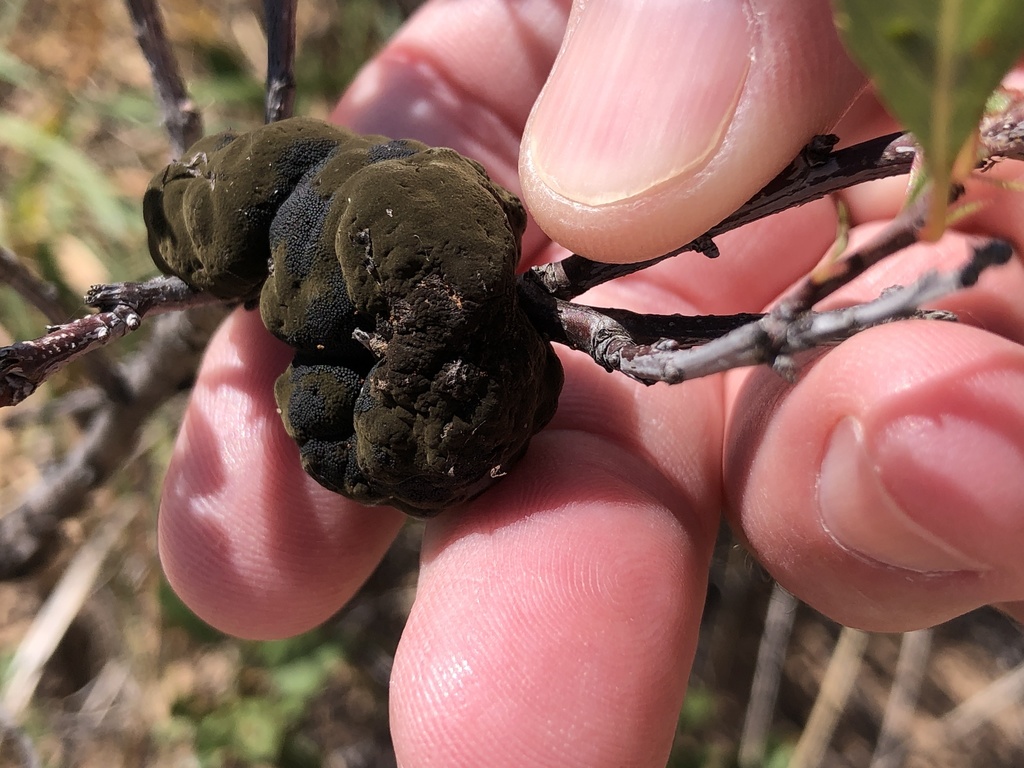
Early stages show small, light brown swellings on twigs that eventually turn into hard, black, elongated, and rough galls that look like burnt charcoal.
Causes
- High humidity and frequent rainfall during the spring.
- Poor air circulation within the tree canopy.
- Presence of existing fungal spores on nearby infected wild or ornamental cherry and plum trees.
Could be confused with
- Insect galls · Insect galls are usually more uniform in shape and lack the rough, cracked, charcoal like texture of Black Knot.
- Mechanical damage · Scars from physical injury or rubbing branches do not grow in size or develop the distinct, crusty, black fungal tissue characteristic of this disease.
Find out what's really wrong with your plant
Problems that look alike are easy to mix up. Pocket Botanist looks at a photo of your actual plant and tells you what's going on, how serious it is, and what to try first. Identification and a health check are free.



Scan with your phone's camera to get the app
Or go to pocketbotanist.app/get on your phone
Treatment
- Prune out all infected branches at least 4 to 8 inches below the visible knot during the dormant season.
- Sterilize your pruning shears with rubbing alcohol between every single cut to avoid spreading the fungus to healthy wood.
- Burn or bury all pruned material immediately, as the knots can continue to release spores even after being removed from the tree.
Without chemicals
- Prune the tree to improve airflow and sunlight penetration.
- Remove and destroy any wild plum or cherry trees growing nearby that show signs of infection.
- Ensure the tree is not overcrowded by other plants.
Chemical options
- Tebuconazole, apply as a preventative spray to the canopy during the early spring bud break, follow the label.
- Triticonazole, apply as a protective treatment during the active growth period, follow the label.
Preventing it
- Select and plant resistant varieties of plum and cherry trees.
- Inspect trees thoroughly every year during the dormant season for early signs of swelling.
- Keep trees healthy with proper watering and nutrition to help them resist infection.
Season
The warm growing season, particularly during wet spring weather when spores are actively released.
Spread risk
High
Severity
High
When to act
Act as soon as you spot any swelling or knots on the branches. If the main trunk is heavily infected or the tree is too large to prune safely, contact a professional tree surgeon for removal.
Keep your plants healthy from here
Save your plants in Pocket Botanist and you get care reminders timed for each one, plus a care history that shows what worked. Identification and a health check are free.
Questions people ask
- Can I save a branch that has a small knot on it?
- No, it is best to prune the entire branch well below the knot, as the fungus grows inside the wood beyond what you can see on the surface.
- Will the tree recover if I just cut off the black growths?
- Simply cutting off the growth is not enough because the fungus is systemic within the branch, so you must remove the entire section of wood below the infection.
Plants it affects
This guide was generated with AI on and is general information, not horticultural advice. Read about how we build these guides.