 Pocket Botanist
Plant guide
Rough cocklebur.
Xanthium strumarium
Pronounced ZAN-thee-um stroo-MARE-ee-um
Also known as Borad Cocklebur, Bur Weed, Burweed, Cocklebur, Clotbur, California-bur, Canada Cocklebur, Cocklebur, Cockleburr, Common Cocklebur



Scan with your phone's camera to get the app
Or go to pocketbotanist.app/get on your phone
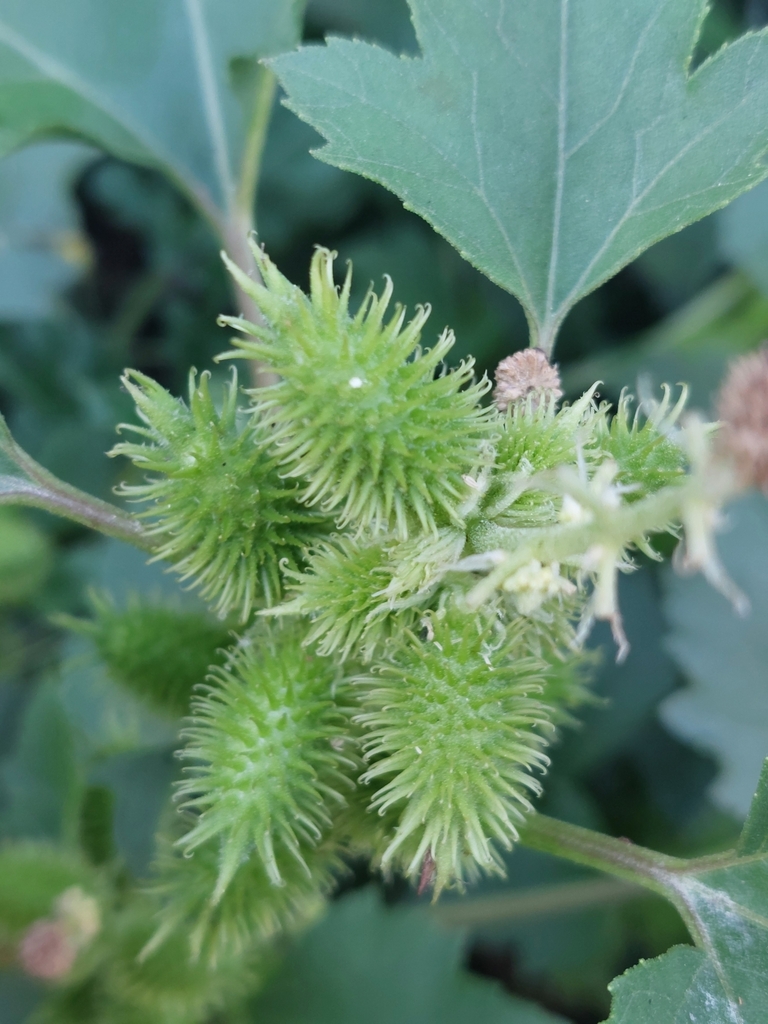
The rough cocklebur is a coarse annual plant often found in disturbed soils and along waterways. It produces distinct burrs that easily attach to clothing or animal fur for seed dispersal. This plant is considered an aggressive weed in many agricultural settings.

At a glance
- Care level
- Easy
- Plant type
- Annual herb
- Light
- Full sun
- Indoor light
- Direct sun
- Water
- Every 3 to 7 days
- Mature size
- 3 to 6 feet
- Growth rate
- Fast
- Hardiness
- USDA 3 to 10
- Bloom time
- Mid to late summer
Care
This plant thrives in full sun and moist, fertile soil. Watch for rapid spread, as the burrs are highly effective at dispersing seeds across a wide area. It requires minimal intervention and often grows as a volunteer in garden spaces.
- Watering
- Keep the soil consistently moist but not waterlogged.
- Feeding
- Apply a balanced fertilizer during the active growing season if the soil is poor.
- Pruning
- Remove burrs before they mature to prevent unwanted spread.
- Repotting
- This plant is an annual and typically completes its life cycle within one season.
- Soil
- Moist, nutrient rich soil
- Soil pH
- 6.0 to 7.5
- Temperature
- 5 to 35°C
- Humidity
- 40 to 70%
- Drought tolerance
- Moderate
- Lifespan
- Annual
- Deer and rabbits
- High
Safety
- People
- All parts of the plant, especially the seedlings, contain toxic carboxyatractyloside that causes severe liver damage if ingested.
- Pets
- This plant is toxic to pets if ingested, causing gastrointestinal distress and potential liver damage.
- Children
- The burrs are a choking hazard and the plant is highly toxic if eaten, so keep it away from curious children.
- Contact allergens
- The rough, hairy leaves can cause mechanical skin irritation or contact dermatitis in sensitive individuals.
- Airborne allergens
- The pollen is a known allergen that can trigger hay fever during the late summer flowering period.
- Edibility
- This plant is toxic and should not be consumed by humans or livestock.
How to identify it
- Coarse, triangular, lobed leaves
- Rough, hairy stems
- Spiny, oval shaped burrs
- Small, inconspicuous greenish flowers
- Height
- 0.3 to 1.5m
- Spread
- 0.3 to 0.9m
- Leaves
- green, deciduous
- Flowers
- green, yellow, 0.5 to 1.5cm
- Fruit
- brown, Autumn
Problems to watch for
- Rust · Fungal spores can cause orange or brown spots on the undersides of leaves during humid weather.
Check your rough cocklebur from a photo
Pocket Botanist looks at a photo of your plant and tells you what's wrong and what to try first.
Scan with your phone's camera to get the app
Or go to pocketbotanist.app/get on your phone
Growing it
- Propagation
- seed
- When to plant
- spring
- Overwintering
- The plant dies completely after the first hard frost, leaving only the seeds in the soil to wait for spring.
- In containers
- It is not recommended for containers as it is an aggressive weed that spreads easily.
Seed
- 1. Collect mature brown burrs in autumn.
- 2. Store in a cool, dry place over winter.
- 3. Sow directly into disturbed soil in late spring.
There is no benefit to planting this species in a garden setting due to its invasive nature.
Keep away from
Similar species
- Spiny Cocklebur · It is a related species that also produces hooked burrs but features sharp spines at the leaf nodes.
Science
- Family
- Asteraceae
- Genus
- Xanthium
- Order
- Asterales
- Class
- Magnoliopsida
- Native range
- North America
- Conservation
- It is considered an invasive weed in many parts of the world and is not of conservation concern.
It thrives in disturbed soils, riverbanks, and agricultural fields where it can outcompete native vegetation for light and nutrients.
- Value to wildlife
- seeds eaten by some birds
- Pollinators
- bees
- Uses
- botanical interest, historical medicinal use
Through the year
Ecological indicators
- Salinity
- 2/9
- Soil reaction
- 6/9
- Light
- 8/9
- Temperature
- 6/9
- Moisture
- 6/9
- Nutrients
- 7/9
Taxonomy resolved against GBIF.
Questions people ask
- Is this plant good for a garden?
- Generally no, as it is considered a noxious weed that competes aggressively with other plants.
- How do I get rid of it?
- Pull it up by the roots before it sets seed to prevent it from spreading further.
Where the name comes from
The genus name Xanthium comes from the Greek word xanthos, meaning yellow, referring to its historical use as a yellow dye. The species name strumarium refers to its historical use in treating swellings or scrofula.
Good to know
- The plant is a prolific seed producer, with a single burr containing two seeds that can germinate in different years.
- It is a short day plant, meaning it only flowers when nights become long enough in late summer.
- Its hooked burrs work much like those of burdock, the plant whose burrs inspired the invention of Velcro.
Also in
Keep your rough cocklebur growing
This page is a general guide. Save your plant in Pocket Botanist and you get care reminders timed for this plant, plus a care history that shows what worked.
Scan with your phone's camera to get the app
Or go to pocketbotanist.app/get on your phone
This guide was generated with AI on and checked against GBIF taxonomy. It is general information, not horticultural or veterinary advice. Read about how we build these guides.