 Pocket Botanist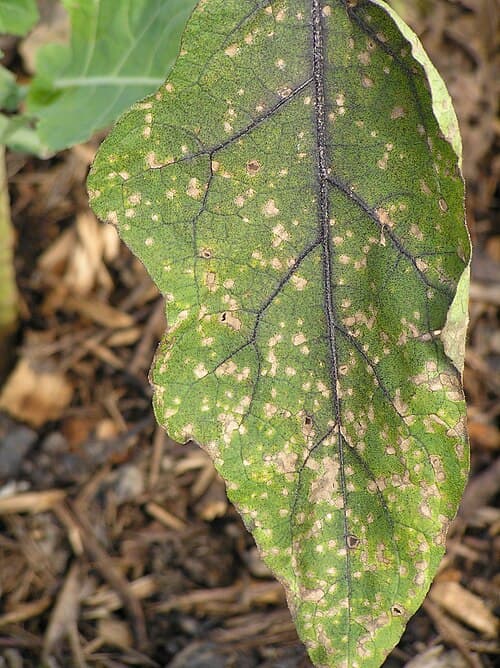

Check these first
- Rub the white spots to see if they wipe off like dust.
- Check if the plant is crowded by other vegetation.
- Inspect the undersides of the leaves for signs of insects.
Likely causes
Powdery Mildew
Most likelyHow to tell: You will see a white, floury coating on the leaves that can be wiped off with a finger. It usually starts on the lower leaves and spreads upward.
What to do: Prune away the most heavily infected leaves to improve airflow. Spray the remaining foliage with a mixture of one tablespoon of baking soda in a gallon of water.
Leaf Spot Fungi
PossibleHow to tell: These appear as distinct brown or black spots with yellow halos rather than a white dust. They often show up after long periods of wet weather.
What to do: Remove and destroy any affected leaves immediately to stop the spread. Avoid overhead watering to keep the foliage dry.
When to worry
It is serious if the spots cover more than half the leaf surface, as this prevents photosynthesis. Minor spotting is common in late summer and rarely kills the plant.
Stopping it coming back
Give your Mullein plenty of space to breathe and always water at the base of the plant rather than over the leaves.
Not sure which one it is? Photograph your great mullein.
This page lists the usual causes. Pocket Botanist looks at your actual leaf and tells you the likely cause, how serious it is, and what to try first. Identification and a health check are free.


Questions people ask
- Will the white spots kill my plant?
- Usually no, but it weakens the plant and makes it look unsightly. Treating it early helps the plant stay vigorous.
- Should I cut the whole plant down?
- No, just remove the infected leaves. The plant will continue to grow from the center.
More problems with Great Mullein
Back to the Great Mullein guide
This article was generated with AI from the plant’s care profile and is general information, not horticultural advice. Read about how we build these guides.