 Pocket Botanist
Plant guide
Gorse.
Ulex europaeus
Pronounced YOO-lex yoor-oh-PAY-us
Also known as Common gorse, European gorse, Furze, Gorse



Scan with your phone's camera to get the app
Or go to pocketbotanist.app/get on your phone
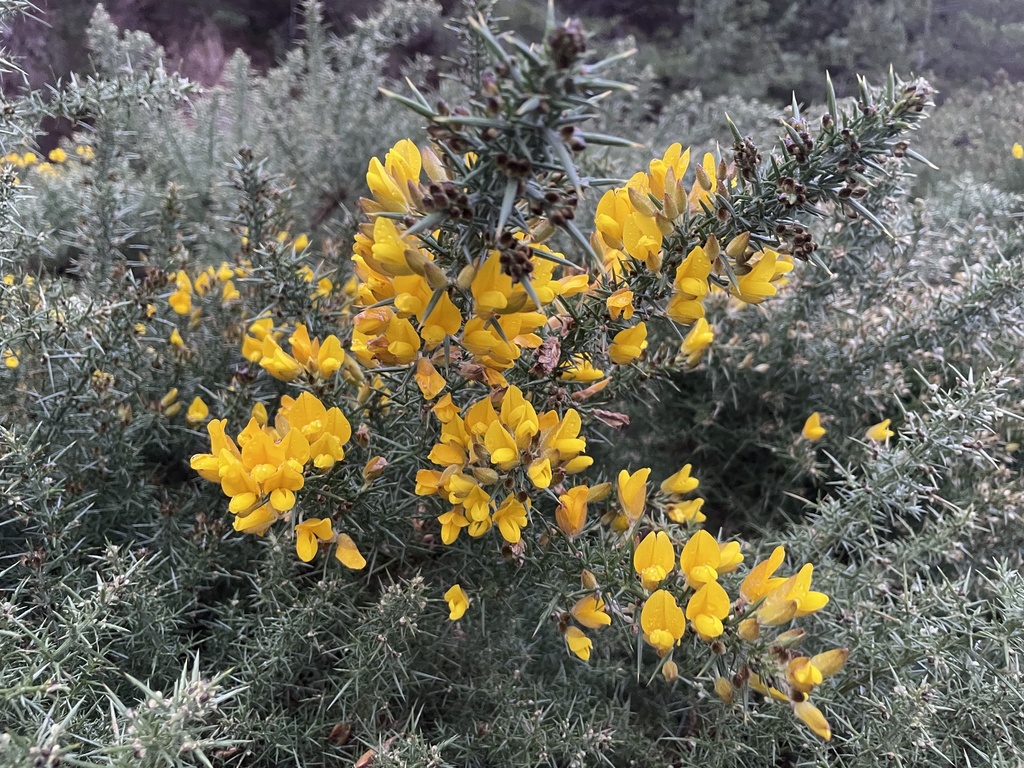
Gorse is a hardy, evergreen shrub known for its vibrant yellow flowers and sharp spines. It thrives in poor soil and is often found in open heathlands or coastal areas. You will love how it brings a splash of color to rugged landscapes.

At a glance
- Care level
- Easy
- Plant type
- Evergreen shrub
- Light
- Full sun
- Indoor light
- Direct sun
- Water
- Every 14 to 30 days
- Mature size
- 2 to 3 meters
- Growth rate
- Medium
- Hardiness
- USDA 6 to 9
- Bloom time
- Early spring to mid summer
Care
This shrub is incredibly low maintenance and prefers full sun to bloom well. Keep an eye out for excessive spread, as it can become invasive in certain climates. It rarely needs extra water once established.
- Watering
- Water only during prolonged dry spells once the plant is established.
- Feeding
- It rarely requires fertilizer as it thrives in nutrient poor soils.
- Pruning
- Prune lightly after flowering to maintain shape and encourage dense growth.
- Repotting
- Repot only if the plant becomes root bound in a container.
- Soil
- Well draining, acidic, sandy or rocky soil
- Soil pH
- 4.5 to 6.5
- Temperature
- -15 to 35°C
- Humidity
- 40 to 80%
Safety
- People
- All parts of the plant are considered toxic if consumed in large quantities.
- Pets
- Gorse is generally considered non toxic to cats and dogs, though its sharp spines can cause physical injury.
- Children
- The dense, sharp spines pose a significant risk of injury to children, so keep it away from play areas.
- Contact allergens
- The sharp spines can cause mechanical skin irritation and minor puncture wounds.
- Airborne allergens
- The pollen may cause mild hay fever symptoms in sensitive individuals during the peak flowering season.
- Edibility
- The plant is not considered edible and contains alkaloids that can be harmful if ingested.
How to identify it
- Dense clusters of yellow flowers
- Sharp, needle like green spines
- Dark green, woody stems
- Small, hairy seed pods
- Height
- 1 to 2.5m
- Spread
- 1 to 2.5m
- Leaves
- dark green, evergreen
- Flowers
- yellow, 1 to 2cm
- Fruit
- black, late summer
Problems to watch for
- Gorse Spider MiteCommon
- CankerUncommon
- Root RotUncommon
- Powdery MildewRare
Check your gorse from a photo
Pocket Botanist looks at a photo of your plant and tells you what's wrong and what to try first.
Scan with your phone's camera to get the app
Or go to pocketbotanist.app/get on your phone
Growing it
- Propagation
- seed, cuttings
- When to plant
- spring, autumn
Plant in areas where its aggressive spread will not interfere with more delicate garden species.
Grows well with
- Heather · They share similar soil and moisture requirements in heathland settings.
- Bell heather · These species naturally occur together in wild, open landscapes.
Similar species
- Western gorse · It is a smaller, more compact relative often found in similar habitats.
Science
- Family
- Fabaceae
- Genus
- Ulex
- Order
- Fabales
- Class
- Magnoliopsida
- Native range
- Western Europe and North Africa.
- Conservation
- It is considered an invasive species in many parts of the world outside its native range.
It survives in harsh, wind swept coastal environments by forming dense, protective thickets.
- Value to wildlife
- nectar source, nesting cover
- Pollinators
- bees, butterflies
- Uses
- ornamental shrub, hedging, wildlife habitat
Through the year
Ecological indicators
- Salinity
- 6/9
- Soil reaction
- 4/9
- Light
- 8/9
- Temperature
- 5/9
- Moisture
- 3/9
- Nutrients
- 1/9
Taxonomy resolved against GBIF.
Questions people ask
- Is gorse easy to grow?
- It is extremely hardy and requires very little maintenance once established.
- Can I plant it in a container?
- It is not recommended for containers due to its aggressive growth and sharp spines.
Where the name comes from
The genus name Ulex is the Latin name for a shrub, while europaeus indicates its native European distribution.
Good to know
- The flowers have a distinct coconut like fragrance.
- Gorse seeds can remain viable in the soil for up to 30 years.
- It has been used historically as fuel for bread ovens due to its high oil content.
Keep your gorse growing
This page is a general guide. Save your plant in Pocket Botanist and you get care reminders timed for this plant, plus a care history that shows what worked.
Scan with your phone's camera to get the app
Or go to pocketbotanist.app/get on your phone
This guide was generated with AI on and checked against GBIF taxonomy. It is general information, not horticultural or veterinary advice. Read about how we build these guides.