 Pocket Botanist
Plant guide
Clasping Venus looking glass.
Triodanis perfoliata
Pronounced try-oh-DAN-iss per-fo-lee-AH-tuh
Also known as Clasping Bellwort, Clasping Venus' Looking-glass, Clasping Venus' Lookingglass, Clasping Venus's-looking-glass, Clasping-leaf Venus' Looking-glass, ClaspingVenus'sLooking-glass, Claspingleaf Venus'-looking-glass, Common Venus' Lookingglass



Scan with your phone's camera to get the app
Or go to pocketbotanist.app/get on your phone
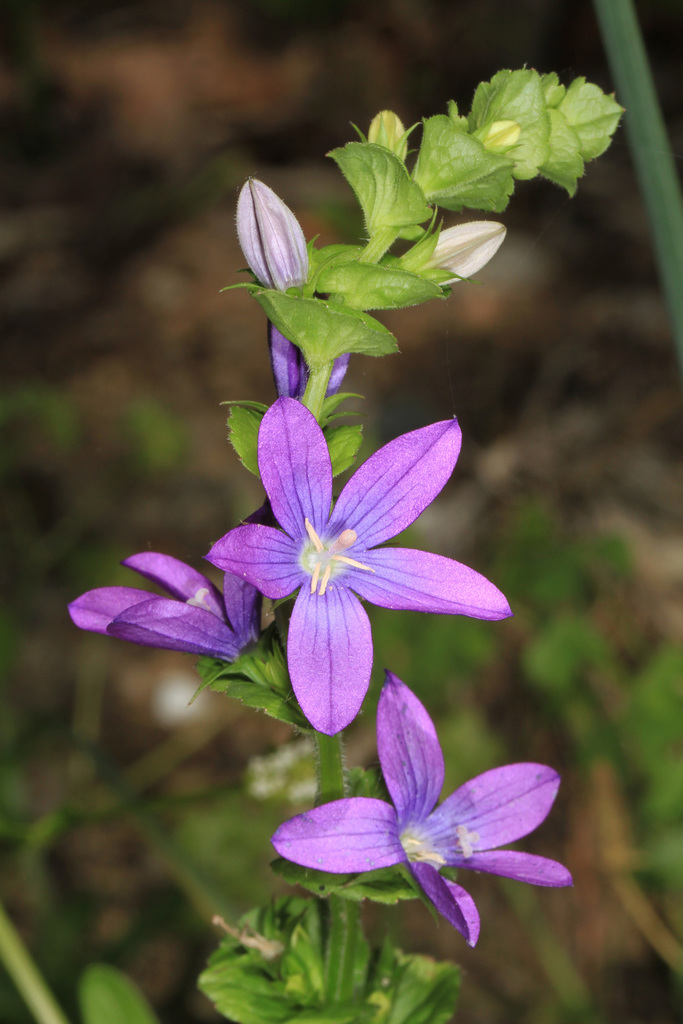
This charming native wildflower is a member of the bellflower family. It produces lovely violet blooms that open in the sun and close when it is cloudy. You will often find it popping up in meadows or along roadsides.

At a glance
- Care level
- Easy
- Plant type
- Annual wildflower
- Light
- Full sun to partial shade
- Indoor light
- Direct sun
- Water
- Every 3 to 7 days
- Mature size
- 2 feet
- Growth rate
- Fast
- Hardiness
- USDA 4 to 9
- Bloom time
- Late spring to mid summer
Care
Keep the soil consistently moist while the plant is establishing itself. Watch for wilting during dry spells, as this plant prefers a steady supply of water. Deadhead spent flowers if you want to encourage a longer blooming period.
- Watering
- Water whenever the top inch of soil feels dry to the touch.
- Feeding
- A light application of balanced fertilizer once during the growing season is plenty.
- Pruning
- Trim back dead stems after the plant finishes flowering to keep the area tidy.
- Repotting
- Since this is an annual, you will typically replace it each season rather than repotting.
- Soil
- Well draining sandy or loamy soil
- Soil pH
- 6.0 to 7.5
- Temperature
- -34 to 35°C
- Humidity
- 30 to 70%
- Drought tolerance
- Moderate
- Lifespan
- Annual, typically 1 year
- Deer and rabbits
- Moderate
Safety
- People
- There are no reports of significant toxicity, but it is not considered an edible plant.
- Children
- Keep away from small children as the plant is not food and may cause mild irritation if ingested.
- Contact allergens
- None known.
- Airborne allergens
- Pollen may cause mild reactions in sensitive individuals.
- Edibility
- This plant is not typically consumed and should be avoided as food.
How to identify it
- Heart shaped leaves clasping the stem
- Violet flowers with five petals
- Erect stems reaching up to two feet
- Small capsules containing tiny seeds
- Height
- 0.15 to 0.6m
- Spread
- 0.1 to 0.2m
- Leaves
- green, deciduous
- Flowers
- violet, blue, 1 to 2cm
- Fruit
- brown, Late summer
Problems to watch for
- Powdery mildew · White fungal growth on leaves during humid periods.
Check your clasping venus looking glass from a photo
Pocket Botanist looks at a photo of your plant and tells you what's wrong and what to try first.
Scan with your phone's camera to get the app
Or go to pocketbotanist.app/get on your phone
Growing it
- Propagation
- seed
- When to plant
- spring, autumn
- Overwintering
- As a winter annual, it survives the winter as a small rosette of leaves. No special protection is needed.
- In containers
- It is not well suited for containers due to its short life cycle and preference for open ground.
Plant in groups to create a drift of color that mimics a natural meadow.
Grows well with
- Blue-eyed Grass · They share similar light and moisture requirements in meadow settings.
- Wild Strawberry · This groundcover provides a nice contrast to the upright stems of the looking glass.
Similar species
- Small Venus' looking-glass · It is very similar but typically has smaller, less showy flowers.
Science
- Family
- Campanulaceae
- Genus
- Triodanis
- Order
- Asterales
- Class
- Magnoliopsida
- Native range
- Most of North America.
- Conservation
- It is widespread and common throughout its range.
It thrives in disturbed soils and open woodlands where it can quickly colonize bare ground.
- Value to wildlife
- nectar source
- Pollinators
- bees, butterflies
- Uses
- wildflower meadows, pollinator gardens, naturalized areas
Through the year
Ecological indicators
- Salinity
- 1/9
- Soil reaction
- 6/9
- Light
- 7/9
- Temperature
- 5/9
- Moisture
- 4/9
- Nutrients
- 3/9
Taxonomy resolved against GBIF.
Questions people ask
- Is it a weed?
- It is often considered a native wildflower, though it can appear in lawns or disturbed soil.
- Does it need full sun?
- It prefers full sun to light shade.
Where the name comes from
The genus name Triodanis comes from Greek for three teeth, referring to the calyx lobes, while perfoliata describes the leaves that seem to be pierced by the stem.
Good to know
- It is commonly called Venus looking glass because of its reflective, shiny appearance in some light.
- The leaves appear to be pierced by the stem, which is why it is called perfoliata.
- It is a winter annual that germinates in the fall and grows slowly through the winter.
Keep your clasping venus looking glass growing
This page is a general guide. Save your plant in Pocket Botanist and you get care reminders timed for this plant, plus a care history that shows what worked.
Scan with your phone's camera to get the app
Or go to pocketbotanist.app/get on your phone
This guide was generated with AI on and checked against GBIF taxonomy. It is general information, not horticultural or veterinary advice. Read about how we build these guides.