 Pocket Botanist
Plant guide
Small-leaf spiderwort.
Tradescantia fluminensis
Pronounced trad-es-KAN-tee-uh floo-min-EN-sis
Also known as Small-leaf Spiderwort, Small-leaf Wandering Jew, Wandering Jew, Wandering-Jew, small-leaved spiderwort, smallleaf spiderwort, spiderwort



Scan with your phone's camera to get the app
Or go to pocketbotanist.app/get on your phone
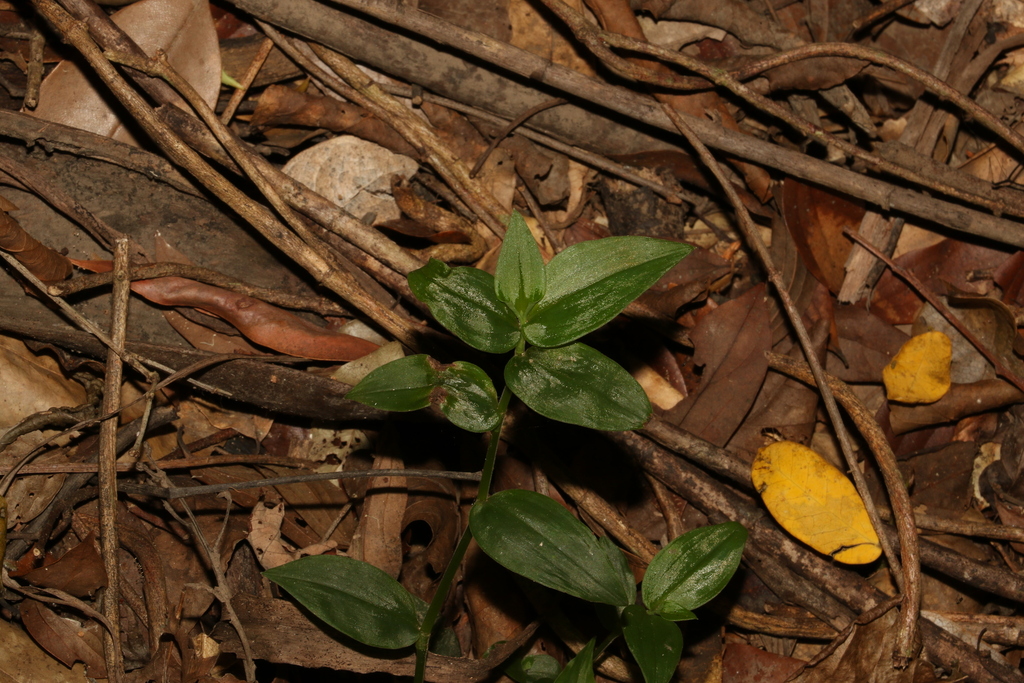
This trailing plant is a popular choice for hanging baskets because of its fast growth and lovely foliage. It's a classic houseplant that's super easy to propagate from stem cuttings. You'll love how it spills over the edges of its pot.
At a glance
- Care level
- Easy
- Plant type
- Perennial
- Light
- Bright indirect light is best for keeping the colors vibrant.
- Indoor light
- Bright indirect
- Water
- Every 5 to 10 days
- Mature size
- 1 to 2 feet long
- Growth rate
- Fast
- Hardiness
- USDA 9 to 11
- Bloom time
- Late spring to early summer
Care
Keep the soil consistently moist but never soggy to prevent root rot. If the stems get too leggy, just trim them back to encourage a bushier shape. Watch for yellowing leaves, which often signal that the plant is sitting in too much water.
- Watering
- Water when the top inch of soil feels dry to the touch.
- Feeding
- Use a balanced liquid fertilizer during the active growing season.
- Pruning
- Trim back long stems to maintain a compact and full appearance.
- Repotting
- Move to a slightly larger pot once the roots fill the current container.
- Soil
- Well draining potting mix
- Soil pH
- 6.0 to 7.0
- Temperature
- 5 to 30°C
- Humidity
- 40 to 70%
- Drought tolerance
- Low
- Lifespan
- Perennial, typically 3 to 5 years with regular propagation.
- Deer and rabbits
- Low
Signs it needs repotting
- Roots growing out of the drainage holes
- Water running straight through the pot without soaking in
- Stunted growth despite proper care
Safety
- People
- The sap can cause contact dermatitis in sensitive individuals due to calcium oxalate crystals.
- Pets
- This plant is considered mildly toxic to cats and dogs if ingested.
- Children
- Keep this plant away from small children as the sap can irritate the skin and the leaves may cause mouth irritation if chewed.
- Contact allergens
- The sap contains calcium oxalate crystals which can cause skin irritation or rashes upon contact.
- Airborne allergens
- There are no significant reports of airborne allergens for this species.
- Edibility
- This plant is not considered edible and may cause irritation if ingested.
How to identify it
- Oval shaped glossy green leaves
- Trailing stems with alternating leaves
- Small white three petaled flowers
- Stems root easily at nodes
- Height
- 0.1 to 0.3m
- Spread
- 0.3 to 1m
- Leaves
- green, evergreen
- Flowers
- white, 1 to 2cm
Problems to watch for
- Aphids · Small insects that cluster on new growth and suck plant juices.
- Root rot · Occurs when the soil stays too wet for too long, causing roots to decay.
Check your small-leaf spiderwort from a photo
Pocket Botanist looks at a photo of your plant and tells you what's wrong and what to try first.
Scan with your phone's camera to get the app
Or go to pocketbotanist.app/get on your phone
Growing it
- Propagation
- cuttings, division
- When to plant
- spring, summer, autumn
- Overwintering
- Bring containers indoors before the first frost. Keep in a bright, cool location and reduce watering during the winter months.
- In containers
- It is an excellent choice for hanging baskets or containers where its trailing stems can cascade over the edges.
Stem Cuttings
- 1. Snip a 4 to 6 inch stem section just below a leaf node.
- 2. Remove the lower leaves from the cutting.
- 3. Place the stem in a glass of water or directly into moist potting soil.
- 4. Roots will typically appear within a week or two.
Because this plant is so aggressive, it is best grown in containers rather than directly in the ground to prevent it from taking over your garden.
Grows well with
Similar species
- Purple Heart · It is a close relative with similar growth habits but striking purple foliage.
Science
- Family
- Commelinaceae
- Genus
- Tradescantia
- Order
- Commelinales
- Class
- Liliopsida
- Native range
- South America, specifically Brazil, Argentina, and Uruguay.
- Conservation
- It is considered a significant environmental weed in many regions and is often subject to eradication programs.
It grows as a trailing perennial in moist, shaded forest understories, spreading rapidly through rooting stem nodes.
- Value to wildlife
- nectar source
- Pollinators
- bees
- Uses
- groundcover, hanging basket plant, indoor houseplant
Through the year
Ecological indicators
- Salinity
- 2/9
- Soil reaction
- 6/9
- Light
- 3/9
- Temperature
- 7/9
- Moisture
- 7/9
- Nutrients
- 5/9
Taxonomy resolved against GBIF.
Questions people ask
- Is this plant safe for pets?
- No, it is known to be toxic to cats and dogs, often causing skin irritation.
- How often should I water it?
- Keep the soil consistently moist but not soggy, allowing the top inch to dry out slightly between waterings.
Where the name comes from
The genus honors the Tradescant family, while the species name fluminensis refers to the Rio de Janeiro region.
Good to know
- It is commonly known as wandering dude or inch plant because of how easily it roots from stem fragments.
- The genus is named after John Tradescant, a gardener to King Charles I of England.
- It thrives in deep shade where many other groundcovers struggle.
Also in
Keep your small-leaf spiderwort growing
This page is a general guide. Save your plant in Pocket Botanist and you get care reminders timed for this plant, plus a care history that shows what worked.
Scan with your phone's camera to get the app
Or go to pocketbotanist.app/get on your phone
This guide was generated with AI on and checked against GBIF taxonomy. It is general information, not horticultural or veterinary advice. Read about how we build these guides.