 Pocket Botanist
Plant guide
Poison ivy.
Toxicodendron radicans
Pronounced tok-see-koh-DEN-dron RAD-ih-kanz
Also known as Eastern Poison Ivy, Poison Ivy, Sister Ivy, central poison-ivy, climbing poison ivy



Scan with your phone's camera to get the app
Or go to pocketbotanist.app/get on your phone

Poison ivy is a hardy, woody vine or shrub that is infamous for causing itchy skin rashes. It is native to North America and thrives in a wide range of environments. You should avoid touching this plant at all costs.
At a glance
- Care level
- Easy
- Plant type
- Vine or shrub
- Light
- Full sun to deep shade
- Indoor light
- Bright indirect
- Water
- Every 7 to 14 days
- Mature size
- Up to 30 meters long
- Growth rate
- Fast
- Hardiness
- USDA 3 to 10
- Bloom time
- Late spring to early summer
Care
This plant is highly invasive and typically considered a weed. It requires no care and is best avoided entirely to prevent contact with its irritating oils. If you must remove it, wear protective clothing and never burn the plant material.
- Watering
- It is highly drought tolerant once established in the wild.
- Feeding
- This plant does not require any supplemental fertilizer.
- Pruning
- Pruning is not recommended due to the risk of severe skin contact.
- Repotting
- This plant is not suitable for container gardening.
- Soil
- Versatile in most soil types
- Soil pH
- 6.0 to 8.0
- Temperature
- -30 to 35°C
- Humidity
- 30 to 80%
Safety
- People
- Contact with any part of the plant causes severe contact dermatitis in most people.
- Pets
- This plant contains urushiol, which causes severe skin irritation and allergic reactions in humans. Dogs and cats rarely develop a rash because their fur protects them, but they can carry the oil on their coat and pass it to people. Eating the plant may cause mild stomach upset in pets.
- Children
- Children should be taught to identify and avoid this plant entirely, as even minimal contact with stems or leaves causes severe irritation.
- Contact allergens
- The plant contains urushiol, a potent resin that causes painful, blistering rashes upon skin contact.
- Airborne allergens
- Burning the plant releases urushiol into the air, which can cause life threatening lung inflammation if inhaled.
- Edibility
- All parts of this plant are highly toxic if ingested and can cause severe internal reactions.
How to identify it
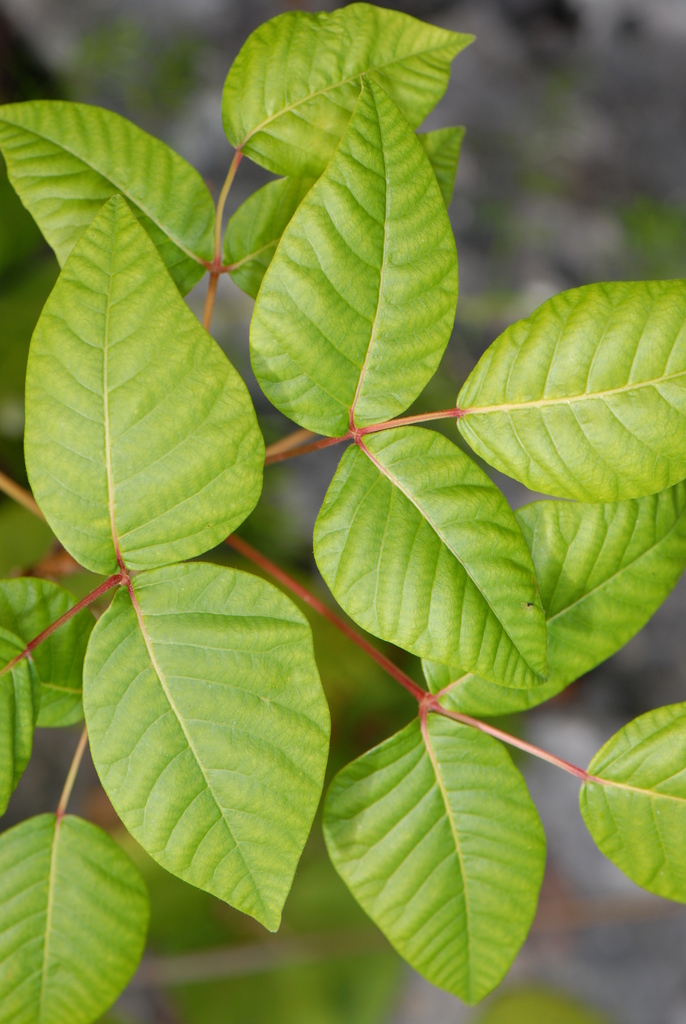
- Leaves of three leaflets
- Leaflets have smooth or notched edges
- Central leaflet has a longer stalk
- Hairy appearance on mature vines
- White or greenish berry clusters
- Height
- 0.3 to 15m
- Spread
- 0.3 to 10m
- Leaves
- green, red, orange, yellow, deciduous
- Flowers
- white, green, yellow, 0.2 to 0.5cm
- Fruit
- white, gray, Late summer to winter
Problems to watch for
- Leaf SpotCommon
- Powdery MildewCommon
- CaterpillarsUncommon
- RustUncommon
Check your poison ivy from a photo
Pocket Botanist looks at a photo of your plant and tells you what's wrong and what to try first.
Scan with your phone's camera to get the app
Or go to pocketbotanist.app/get on your phone
Growing it
- Propagation
- seed, rhizomes
- When to plant
- spring, fall
It is best to avoid planting this species entirely in managed landscapes due to its extreme toxicity.
Grows well with
- Virginia Creeper · They often grow together in the same woodland habitats.
Similar species
- Virginia Creeper · It is often mistaken for poison ivy but has five leaflets instead of three.
Science
- Family
- Anacardiaceae
- Genus
- Toxicodendron
- Order
- Sapindales
- Class
- Magnoliopsida
- Native range
- North America
- Conservation
- This plant is a common native species and is not of conservation concern.
It thrives in disturbed areas and forest edges, often outcompeting other plants by climbing trees to reach sunlight.
- Value to wildlife
- nectar source, winter food for birds, nesting material
- Pollinators
- bees, butterflies, beetles
- Uses
- wildlife habitat, erosion control
Through the year
Ecological indicators
- Salinity
- 2/9
- Soil reaction
- 5/9
- Light
- 5/9
- Temperature
- 5/9
- Moisture
- 5/9
- Nutrients
- 5/9
Taxonomy resolved against GBIF.
Questions people ask
- Will my dog get a rash?
- Dogs are generally protected by their fur, but they can carry the oil on their coat and transfer it to you.
- How do I kill it?
- Manual removal is difficult and risky, so systemic herbicides are often used by professionals.
Where the name comes from
The name Toxicodendron comes from the Greek words for poison and tree, while radicans refers to its rooting stems.
Good to know
- Poison ivy is not a true ivy but a member of the cashew family.
- The plant can grow as a ground cover, a shrub, or a high climbing vine.
- Urushiol oil is so potent that only a microscopic amount is needed to trigger a reaction.
- Birds eat the berries and disperse the seeds without being affected by the toxins.
Also in
Keep your poison ivy growing
This page is a general guide. Save your plant in Pocket Botanist and you get care reminders timed for this plant, plus a care history that shows what worked.
Scan with your phone's camera to get the app
Or go to pocketbotanist.app/get on your phone
This guide was generated with AI on and checked against GBIF taxonomy. It is general information, not horticultural or veterinary advice. Read about how we build these guides.