 Pocket Botanist
Plant guide
American germander.
Teucrium canadense
Pronounced TOO-kree-um kan-ah-DEN-see
Also known as American Germander, Canada Germander, Hairy Germander, Wild Germander, Wood Sage, creeping germander, germander, head betony



Scan with your phone's camera to get the app
Or go to pocketbotanist.app/get on your phone
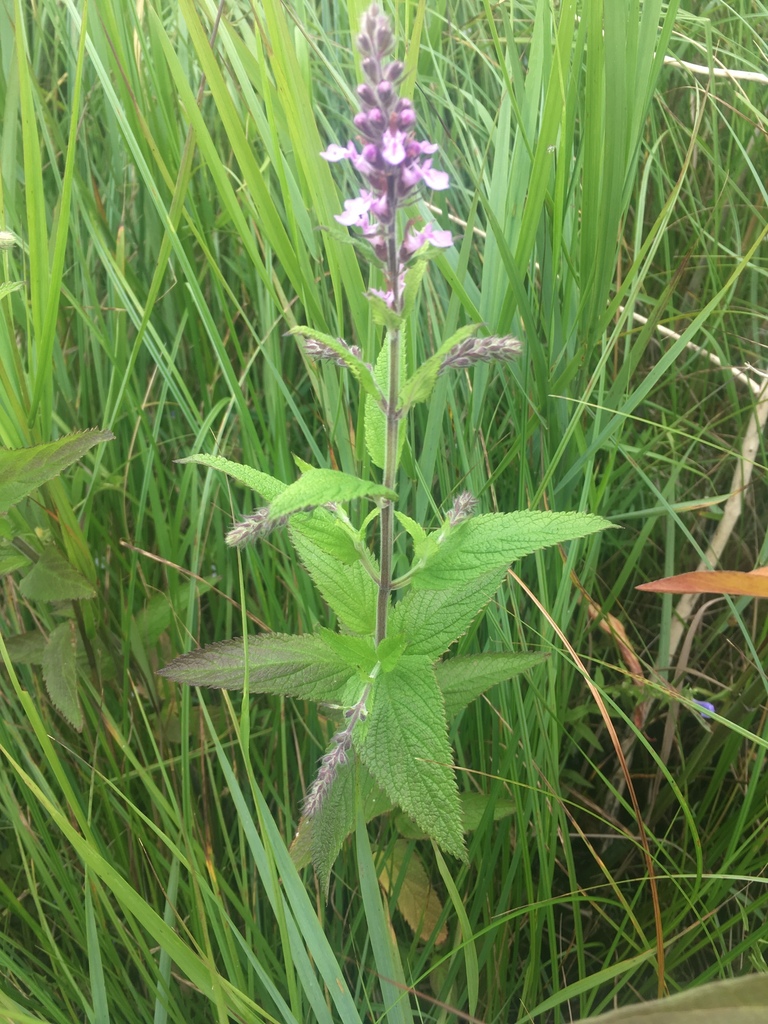
This hardy perennial is a wonderful native plant that spreads through underground runners. It produces lovely spikes of pinkish purple flowers that attract bees and butterflies to your garden. You will find it is quite adaptable to different soil conditions.

At a glance
- Care level
- Easy
- Plant type
- Perennial herb
- Light
- Full sun to partial shade
- Indoor light
- Bright indirect
- Water
- Every 3 to 7 days
- Mature size
- 2 to 3 feet tall
- Growth rate
- Fast
- Hardiness
- USDA 3 to 9
- Bloom time
- Early to mid summer
Care
Keep the soil consistently moist to mimic its natural habitat near streams or meadows. Watch for wilting during dry spells, as this plant prefers not to dry out completely. You can trim it back after flowering to encourage a tidier appearance.
- Watering
- Water whenever the top inch of soil feels dry to the touch.
- Feeding
- Apply a balanced liquid fertilizer once during the spring growth spurt.
- Pruning
- Cut back the stems after the flowers fade to keep the plant looking neat.
- Repotting
- Repot only if the plant becomes too crowded or if you need to divide the runners.
- Soil
- Moist, rich, well draining soil
- Soil pH
- 6.0 to 7.5
- Temperature
- -30 to 35°C
- Humidity
- 40 to 70%
Safety
- People
- This plant is generally considered non toxic, though it is not intended for consumption.
- Children
- It is safe for children to be around, though they should be discouraged from eating the plant matter.
- Contact allergens
- Some people might experience mild skin irritation from the fine hairs on the stems.
- Airborne allergens
- The pollen can be a minor irritant for those with severe seasonal allergies.
- Edibility
- While historically used in folk medicine, it is not considered a culinary herb and should be avoided.
How to identify it
- Square stems typical of mint family
- Opposite lance shaped serrated leaves
- Spikes of tubular pinkish purple flowers
- Wrinkled leaf texture
- Height
- 0.3 to 0.9m
- Spread
- 0.3 to 0.6m
- Leaves
- green, deciduous
- Flowers
- pink, lavender, purple, 1 to 2cm
Problems to watch for
- Powdery mildew · White fungal growth on leaves often caused by poor air circulation.
Check your american germander from a photo
Pocket Botanist looks at a photo of your plant and tells you what's wrong and what to try first.
Scan with your phone's camera to get the app
Or go to pocketbotanist.app/get on your phone
Growing it
- Propagation
- division, seed, cuttings
- When to plant
- spring, fall
Pair this with other moisture loving native perennials to create a lush rain garden effect.
Grows well with
- Purple Coneflower · They share similar sun and moisture requirements.
- Blue Vervain · This plant thrives in the same moist soil conditions.
Similar species
- Wood Sage · It is a close relative with similar growth habits.
Science
- Family
- Lamiaceae
- Genus
- Teucrium
- Order
- Lamiales
- Class
- Magnoliopsida
- Native range
- Most of North America.
- Conservation
- It is widespread and not of conservation concern.
It grows naturally in moist meadows, thickets, and along stream banks where it can spread freely.
- Value to wildlife
- nectar source, attracts native pollinators
- Pollinators
- bees, butterflies
- Uses
- pollinator garden, native plant restoration, border plant
Through the year
Ecological indicators
- Salinity
- 2/9
- Soil reaction
- 6/9
- Light
- 7/9
- Temperature
- 5/9
- Moisture
- 7/9
- Nutrients
- 5/9
Taxonomy resolved against GBIF.
Questions people ask
- Is it invasive?
- It can be aggressive in small gardens due to its rhizomatous spread.
- Does it need full sun?
- It prefers full sun but will tolerate light shade.
Where the name comes from
The genus name Teucrium honors Teucer, a king of Troy, while the species name canadense refers to its presence in Canada.
Good to know
- It is commonly called American germander.
- The plant spreads by underground rhizomes, making it a great ground cover in the right spot.
- It thrives in moist soils where other plants might struggle.
Keep your american germander growing
This page is a general guide. Save your plant in Pocket Botanist and you get care reminders timed for this plant, plus a care history that shows what worked.
Scan with your phone's camera to get the app
Or go to pocketbotanist.app/get on your phone
This guide was generated with AI on and checked against GBIF taxonomy. It is general information, not horticultural or veterinary advice. Read about how we build these guides.