 Pocket Botanist
Plant guide
Black bat flower.
Tacca chantrieri
Pronounced TAK-uh shan-tree-AIR-ee
Also known as Black bat flower, batflower, cat's-whiskers, devil-flower


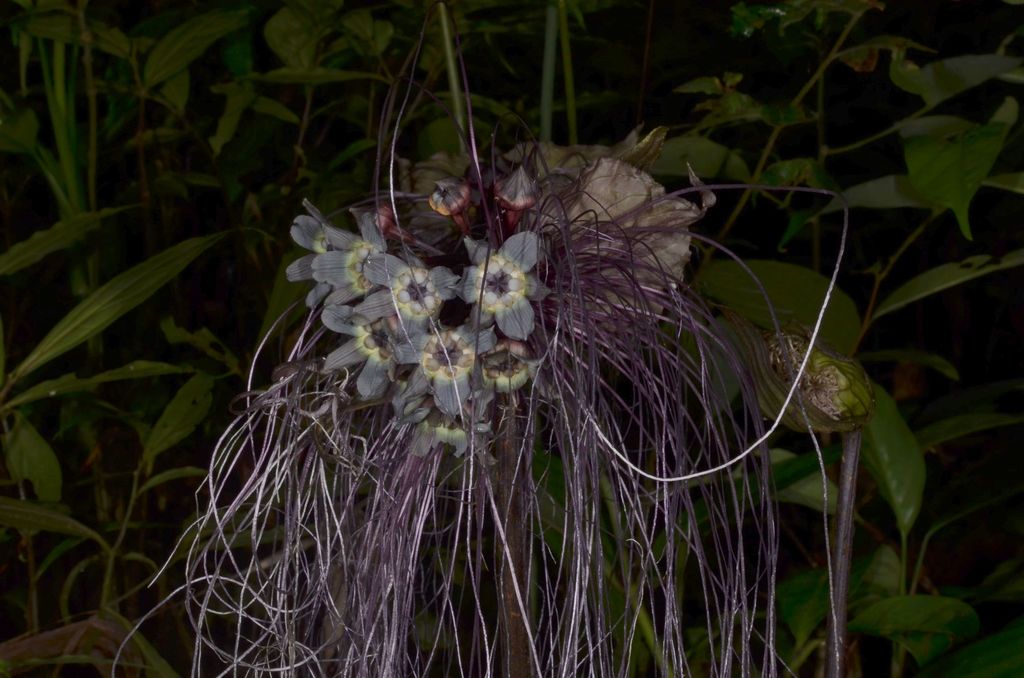
The black bat flower is a striking tropical plant known for its unique, dark, wing-like bracts that resemble a bat in flight. It thrives in humid, warm environments and makes a dramatic focal point for any indoor garden. You will love the mysterious, exotic look it brings to your home.
At a glance
- Care level
- Difficult
- Plant type
- Tropical perennial
- Light
- Partial shade
- Indoor light
- Bright indirect
- Water
- Every 3 to 7 days
- Mature size
- 3 feet
- Growth rate
- Slow
Care
Keep this plant in a high humidity environment to prevent the leaf edges from browning. Use a well-draining, airy potting mix and avoid letting the soil dry out completely. Watch for yellowing leaves, which often indicate the plant is too cold or the soil is too wet.
- Watering
- Keep the soil consistently moist but never soggy.
- Feeding
- Feed with a balanced liquid fertilizer during the active growing season.
- Pruning
- Trim away any dead or yellowing foliage to keep the plant tidy.
- Repotting
- Repot only when the plant becomes root-bound, as it prefers to be slightly snug.
- Soil
- Peat-based, well-draining mix
- Soil pH
- 5.5 to 6.5
Safety
- Pets
- This plant is generally considered non-toxic to cats and dogs.
How to identify it
- Large, dark purple, wing-like bracts
- Long, drooping, whisker-like filaments
- Deep green, glossy, lance-shaped leaves
- Clusters of small, dark flowers
Common problems
Science
- Family
- Dioscoreaceae
- Genus
- Tacca
- Order
- Dioscoreales
- Class
- Liliopsida
Taxonomy resolved against GBIF.
Also in
Is your black bat flower looking unwell?
This page is a general guide. Pocket Botanist diagnoses problems from a photo of your actual plant, works out watering for your light and conditions, and reminds you when care is due.
This guide was generated with AI and checked against GBIF taxonomy. It is general information, not horticultural or veterinary advice. Read about how we build these guides.