 Pocket Botanist
Plant guide
American senna.
Senna hebecarpa
Pronounced SEN-uh hee-beh-KAR-puh
Also known as American senna, northern wild senna, wild senna



Scan with your phone's camera to get the app
Or go to pocketbotanist.app/get on your phone

American senna is a lovely native perennial that brings a touch of wild beauty to the garden. It features bright yellow flowers and attractive, pinnately compound foliage. You will find it is a wonderful choice for supporting local pollinators.
At a glance
- Care level
- Easy
- Plant type
- Perennial shrub
- Light
- Full sun to partial shade
- Indoor light
- Direct sun
- Water
- Every 5 to 10 days
- Mature size
- 4 to 6 feet
- Growth rate
- Medium
- Hardiness
- USDA 4 to 8
- Bloom time
- Mid to late summer
Care
Plant this beauty in a spot with plenty of sun and well draining soil. Keep an eye out for yellowing leaves, which might suggest the soil is staying too wet. It is quite hardy once established and rarely needs much fuss.
- Watering
- Keep the soil consistently moist but never waterlogged.
- Feeding
- A light application of compost in early spring is usually plenty.
- Pruning
- Cut the stems back to the ground in late winter or early spring.
- Repotting
- This plant prefers to stay in the ground, but if container grown, move to a larger pot when roots become crowded.
- Soil
- Moist, well drained soil
- Soil pH
- 6.0 to 7.5
- Temperature
- -34 to 35°C
- Humidity
- 40 to 70%
- Drought tolerance
- Moderate
- Lifespan
- Perennial, typically 5 to 10 years.
- Deer and rabbits
- High
Signs it needs repotting
- Roots growing out of the drainage holes.
- Stunted growth during the active season.
Safety
- People
- All parts of the plant contain anthraquinones, which can cause severe stomach upset if ingested.
- Pets
- This plant is considered toxic to cats and dogs if ingested.
- Children
- Keep children away from the seed pods, as they are tempting to touch but toxic if eaten.
- Contact allergens
- Handling the foliage may cause mild skin irritation for sensitive individuals.
- Airborne allergens
- The pollen is generally not considered a significant airborne allergen.
- Edibility
- The seeds and pods are not for human consumption and can cause gastrointestinal distress.
How to identify it
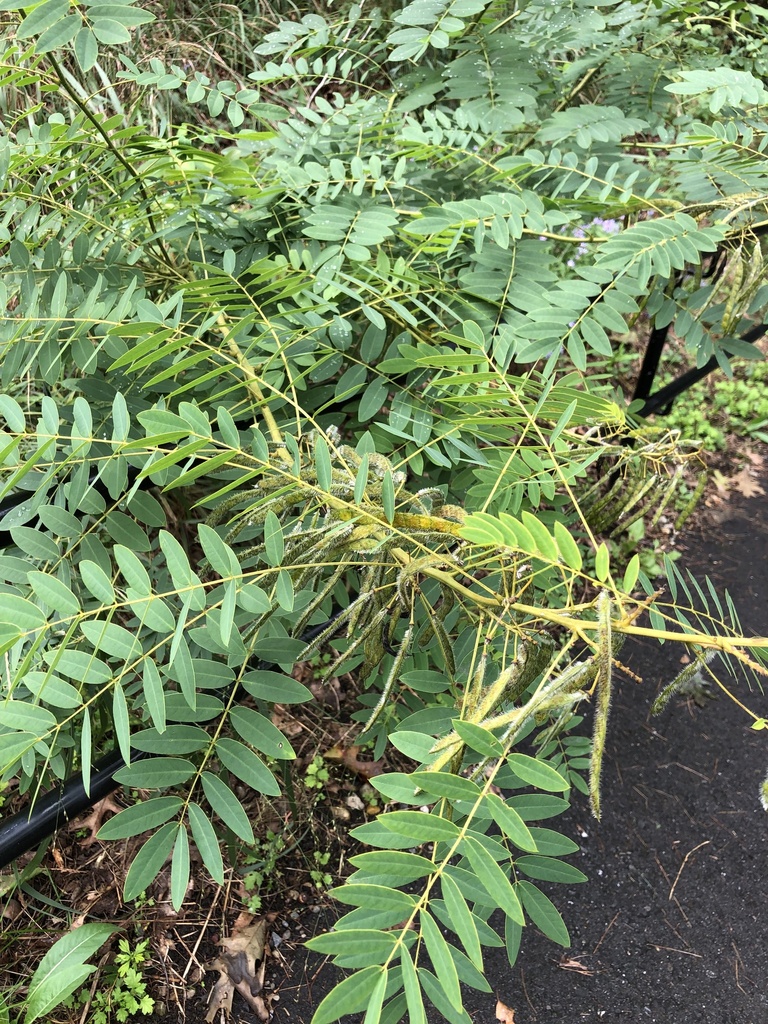
- Pinnately compound leaves with oval leaflets
- Bright yellow five petaled flowers
- Long slender seed pods
- Upright branching stems
- Height
- 1.2 to 1.8m
- Spread
- 0.6 to 1.2m
- Leaves
- green, deciduous
- Flowers
- yellow, 2 to 3cm
- Fruit
- brown, Autumn
Problems to watch for
- Leaf spot · Fungal spots appear on leaves during periods of high humidity and poor air circulation.
Check your american senna from a photo
Pocket Botanist looks at a photo of your plant and tells you what's wrong and what to try first.
Scan with your phone's camera to get the app
Or go to pocketbotanist.app/get on your phone
Growing it
- Propagation
- seed, division
- When to plant
- Spring, Autumn
- Overwintering
- Cut the dead stems back to the ground in late winter or early spring before new growth begins. No special protection is needed in its hardiness range.
- In containers
- It is not ideal for containers due to its large size and deep root system.
Seed Scarification
- 1. Nick the hard seed coat with a file or sandpaper.
- 2. Soak seeds in warm water for 24 hours.
- 3. Sow in moist soil and keep warm until germination.
Pair this plant with other moisture loving natives to create a low maintenance rain garden.
Grows well with
- Purple Coneflower · They share similar moisture needs and look beautiful together in a summer border.
- Joe Pye Weed · Both provide height and attract a wide variety of pollinators to the garden.
- Switchgrass · The grass provides a textural contrast and structural support for the senna.
Similar species
- Wild Senna · It is very similar in appearance but generally has smoother seed pods.
Science
- Family
- Fabaceae
- Genus
- Senna
- Order
- Fabales
- Class
- Magnoliopsida
- Native range
- Eastern and central North America.
- Conservation
- It is considered secure throughout most of its native range.
It thrives in moist, open woodlands and along stream banks where it can access consistent water.
- Value to wildlife
- nectar source, larval host plant
- Pollinators
- bees, butterflies
- Uses
- pollinator gardens, native plant borders, soil improvement
Through the year
Ecological indicators
- Salinity
- 1/9
- Soil reaction
- 6/9
- Light
- 7/9
- Temperature
- 5/9
- Moisture
- 6/9
- Nutrients
- 5/9
Taxonomy resolved against GBIF.
Questions people ask
- Does it need staking?
- It can get tall, so planting it in a sheltered spot or with neighbors helps keep it upright.
- Is it invasive?
- No, it is a well behaved native plant that stays in its clump.
Where the name comes from
The genus name Senna comes from the Arabic word sana, while the species name hebecarpa refers to the hairy fruit pods.
Good to know
- It is commonly known as American senna.
- The flowers are buzz pollinated by bumblebees.
- It is a host plant for the cloudless sulphur butterfly.
- The leaves fold up at night, a process known as nyctinasty.
Also in
Keep your american senna growing
This page is a general guide. Save your plant in Pocket Botanist and you get care reminders timed for this plant, plus a care history that shows what worked.
Scan with your phone's camera to get the app
Or go to pocketbotanist.app/get on your phone
This guide was generated with AI on and checked against GBIF taxonomy. It is general information, not horticultural or veterinary advice. Read about how we build these guides.