 Pocket Botanist
Plant guide
Christmas cactus.
Schlumbergera Lem.
Pronounced shlum-BER-ger-uh
Also known as Christmas cacti, Christmas cactuses



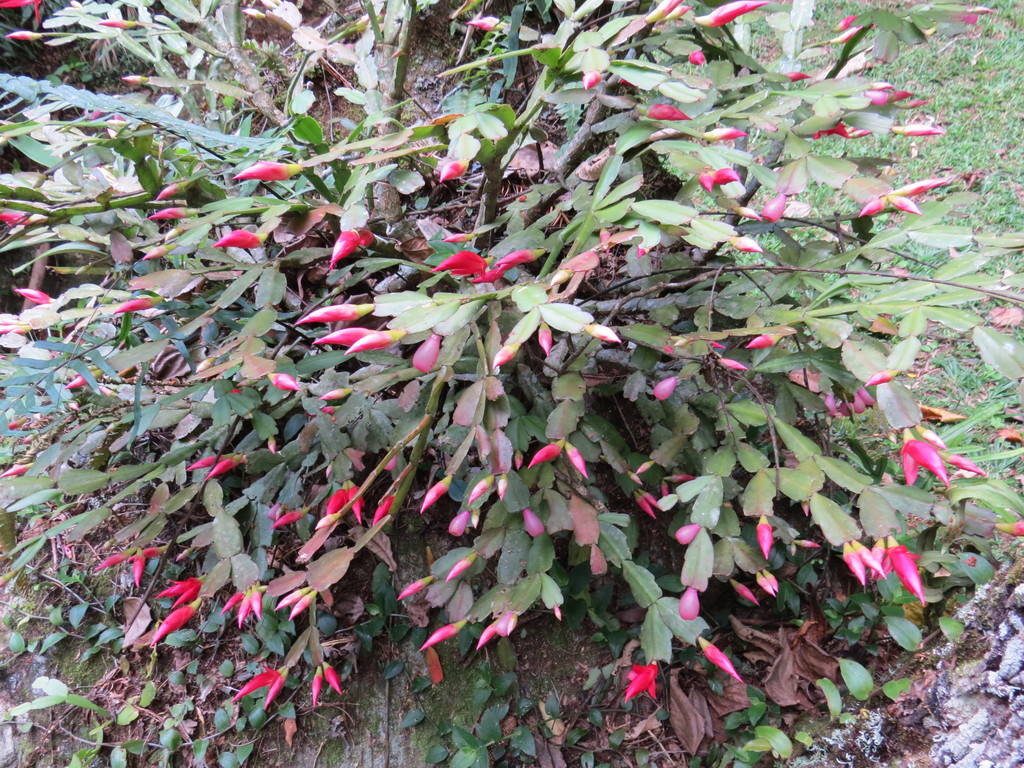
The Christmas cactus is a beautiful tropical epiphyte that produces stunning, tubular flowers during the winter months. It thrives in homes with bright, indirect light and consistent moisture. These plants are quite long lived and can be passed down through generations if cared for properly.
At a glance
- Care level
- Easy
- Plant type
- Epiphytic succulent
- Light
- Bright, indirect light.
- Indoor light
- Bright indirect
- Water
- Every 7 to 14 days
- Mature size
- 30 to 60 cm
- Growth rate
- Medium
- Hardiness
- USDA 10 to 12
- Bloom time
- Late autumn to early winter
Care
Keep the soil evenly moist but never soggy, as these plants dislike sitting in standing water. Watch for shriveled stems which indicate dehydration, or yellowing leaves which often point to overwatering. Providing a cooler spot in autumn helps encourage a heavy bloom display.
- Watering
- Water when the top few centimeters of soil feel dry to the touch.
- Feeding
- Use a balanced liquid fertilizer during the active growing season.
- Pruning
- Prune back stems after flowering to encourage a bushier shape.
- Repotting
- Repot every few years when the plant becomes root bound.
- Soil
- Well draining, peat based potting mix.
- Soil pH
- 5.5 to 6.5
- Temperature
- 10 to 25°C
- Humidity
- 50 to 70%
- Drought tolerance
- Low
- Lifespan
- Perennial, can live for 20 to 30 years.
- Deer and rabbits
- Moderate
Signs it needs repotting
- Roots growing out of the drainage holes.
- Water running straight through the pot.
- Stunted growth over several months.
Safety
- People
- The plant is generally considered non-toxic, but sap may cause minor skin irritation in sensitive individuals.
- Pets
- This plant is considered non toxic to cats and dogs.
- Children
- Keep out of reach of small children to prevent accidental ingestion of plant parts.
- Contact allergens
- The sap can cause mild skin irritation for some people.
- Airborne allergens
- There are no notable airborne allergens associated with this plant.
- Edibility
- While not considered highly toxic, ingestion can cause mild gastrointestinal upset in pets and humans.
How to identify it
- Segmented, flattened, leaf like stems
- Small teeth along stem edges
- Tubular, multi layered winter flowers
- Epiphytic growth habit
- Height
- 0.15 to 0.3m
- Spread
- 0.3 to 0.6m
- Leaves
- green, evergreen
- Flowers
- red, pink, white, orange, purple, 3 to 8cm
- Fruit
- pink, red, Spring
Problems to watch for
- Bud DropCommon
- MealybugsCommon
- Root RotCommon
- Fungus GnatsUncommon
- Leaf DropUncommon
- Spider MitesUncommon
By symptom
Check your christmas cactus from a photo
Pocket Botanist looks at a photo of your plant and tells you what's wrong and what to try first.
Growing it
- Propagation
- cuttings, seed
- When to plant
- spring
- Overwintering
- Keep indoors away from cold drafts and heaters. Reduce watering slightly during the winter rest period.
- In containers
- They thrive in containers and prefer being slightly root bound in a well-draining potting mix.
Stem Cuttings
- 1. Twist off a healthy Y-shaped stem segment.
- 2. Let the cut end callous for 24 hours.
- 3. Insert the calloused end into moist, well-draining soil.
- 4. Keep in bright, indirect light until roots form.
Group plants with similar humidity needs to create a small, self-regulating microclimate.
Grows well with
- Peace Lily — They share similar requirements for indirect light and consistent moisture.
- Ferns — Ferns help create a humid microclimate beneficial for epiphytic cacti.
Similar species
- Easter Cactus — It has similar growth habits but blooms in spring.
Science
- Family
- Cactaceae
- Genus
- Schlumbergera
- Order
- Caryophyllales
- Class
- Magnoliopsida
- Native range
- Coastal mountains of southeastern Brazil.
- Conservation
- Some species are threatened in their native habitats due to deforestation.
These plants grow in the humid, shaded canopy of tropical forests, clinging to tree branches.
- Value to wildlife
- nectar source
- Pollinators
- hummingbirds
- Uses
- houseplant, hanging basket specimen
Through the year
Ecological indicators
- Salinity
- 2/9
- Soil reaction
- 5/9
- Light
- 4/9
- Nutrients
- 3/9
- Temperature
- 7/9
- Moisture
- 5/9
Taxonomy resolved against GBIF.
Questions people ask
- Why is my plant dropping buds?
- Sudden changes in temperature or moving the plant while in bud often causes drop.
- How do I get it to bloom?
- Provide 12 to 14 hours of total darkness each night for 6 weeks in autumn.
Where the name comes from
Named after Frederic Schlumberger, a French cactus collector, the genus name honors his contribution to botany.
Good to know
- They are native to the coastal mountains of Brazil.
- They require short days and cool nights to trigger blooming.
- The segments are actually modified stems called cladodes.
- They can live for decades with proper care.
Keep your christmas cactus growing
This page is a general guide. Save your plant in Pocket Botanist and you get care reminders timed for this plant, plus a care history that shows what worked.
This guide was generated with AI and checked against GBIF taxonomy. It is general information, not horticultural or veterinary advice. Read about how we build these guides.