 Pocket Botanist
Plant guide
Lizard's tail.
Saururus cernuus
Pronounced saw-ROO-rus SER-noo-us
Also known as Lizard's Tail, lizard's-tail, water-dragon



Scan with your phone's camera to get the app
Or go to pocketbotanist.app/get on your phone

Lizard's tail is a lovely aquatic perennial that thrives in shallow water or boggy soil. It's a native plant that brings a natural, wild feel to pond edges and rain gardens. You'll love how its unique, nodding flower spikes add texture to your landscape.
At a glance
- Care level
- Easy
- Plant type
- Aquatic perennial
- Light
- Full sun to partial shade
- Indoor light
- Bright indirect
- Water
- Every 1 to 2 days
- Mature size
- 3 to 4 feet
- Growth rate
- Fast
- Hardiness
- USDA 3 to 9
- Bloom time
- Early to mid summer
Care
Keep the soil consistently wet or submerge the base in shallow water. Watch for wilting if the soil dries out completely. Trim back dead stems in late autumn to keep the patch tidy.
- Watering
- The soil must remain constantly saturated or submerged.
- Feeding
- Apply a balanced aquatic plant fertilizer during the active growing season.
- Pruning
- Cut back the entire plant to the ground after the first hard frost.
- Repotting
- Divide the rhizomes every few years to prevent overcrowding in containers.
- Soil
- Heavy clay or organic muck
- Soil pH
- 6.0 to 8.0
- Temperature
- -25 to 35°C
- Humidity
- 60 to 90%
- Drought tolerance
- Low
- Lifespan
- Perennial, typically 5 to 10 years.
- Fragrance
- Light
- Deer and rabbits
- High
Signs it needs repotting
- Roots growing out of the drainage holes.
- The plant becomes crowded and stops blooming.
- The soil medium breaks down and loses structure.
Safety
- People
- The plant contains compounds that can cause skin irritation upon contact and digestive distress if eaten.
- Children
- Keep children away from the plant as the foliage and stems can be irritating if handled or chewed.
- Contact allergens
- The sap can cause mild skin irritation in sensitive individuals.
- Airborne allergens
- Pollen may cause mild reactions in those with severe seasonal allergies.
- Edibility
- This plant is not considered edible and may cause stomach upset if ingested.
How to identify it
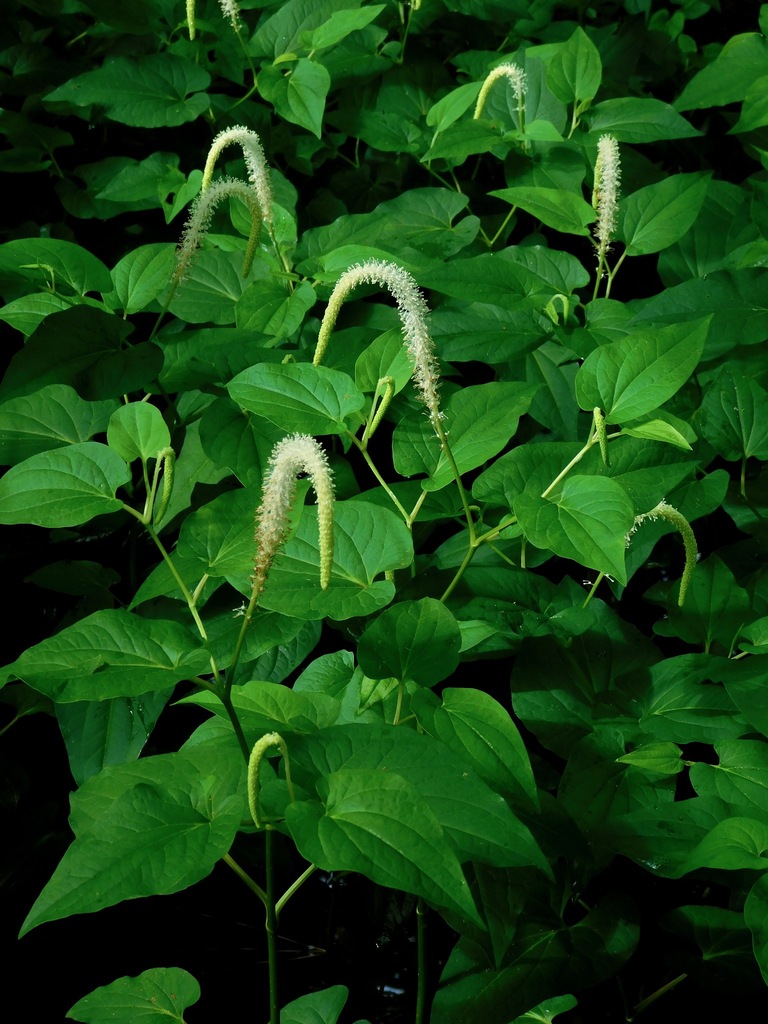
- Heart shaped green leaves
- Nodding spikes of white flowers
- Fragrant foliage when crushed
- Spreads via underground rhizomes
- Height
- 0.6 to 1.2m
- Spread
- 0.3 to 0.6m
- Leaves
- green, deciduous
- Flowers
- white, 10 to 15cm
- Fruit
- brown, Late summer
Problems to watch for
- Aphids · Small insects that suck sap from new growth.
Check your lizard's tail from a photo
Pocket Botanist looks at a photo of your plant and tells you what's wrong and what to try first.
Scan with your phone's camera to get the app
Or go to pocketbotanist.app/get on your phone
Growing it
- Propagation
- division, seed, cuttings
- When to plant
- spring, early summer
- Overwintering
- In cold climates, the foliage will die back naturally. If in a container, ensure the roots do not freeze solid by sinking the pot deeper in the water.
- In containers
- It grows very well in containers placed in shallow water, provided the pot is at least 20 centimeters wide.
Division
- 1. Carefully dig up a clump in spring.
- 2. Separate the rhizomes using a sharp knife.
- 3. Replant the sections in moist soil or shallow water.
Group this plant with other moisture lovers to create a lush, self sustaining bog garden.
Grows well with
- Blue Flag Iris · They share similar moisture requirements and bloom at complementary times.
- Cardinal Flower · This plant adds a bold splash of red to contrast with the white lizard's tail flowers.
Similar species
- Water Arum · It also thrives in wet, boggy conditions and has a unique flower structure.
Science
- Family
- Saururaceae
- Genus
- Saururus
- Order
- Piperales
- Class
- Magnoliopsida
- Native range
- Eastern and central North America.
- Conservation
- It is not currently listed as endangered, but it is sensitive to wetland habitat loss.
It grows in swamps and along stream banks, where it helps stabilize soil and filter water.
- Value to wildlife
- nectar source, cover for aquatic insects
- Pollinators
- bees, butterflies, beetles
- Uses
- rain gardens, pond margins, bog gardens, naturalizing
Through the year
Ecological indicators
- Salinity
- 1/9
- Soil reaction
- 5/9
- Light
- 6/9
- Temperature
- 5/9
- Moisture
- 9/9
- Nutrients
- 5/9
Taxonomy resolved against GBIF.
Questions people ask
- Does it need to be in water?
- It thrives in shallow water or very wet, boggy soil.
- How do I control its spread?
- You can plant it in a container before sinking it into the pond to restrict its rhizomes.
Where the name comes from
The genus name Saururus comes from the Greek words for lizard and tail, describing the shape of the flower spike. The species name cernuus means nodding, referring to the way the flower tip droops.
Good to know
- It is a great choice for areas with standing water.
- The leaves often turn a lovely shade of red in the fall.
- It spreads by underground rhizomes to form colonies.
Also in
Keep your lizard's tail growing
This page is a general guide. Save your plant in Pocket Botanist and you get care reminders timed for this plant, plus a care history that shows what worked.
Scan with your phone's camera to get the app
Or go to pocketbotanist.app/get on your phone
This guide was generated with AI on and checked against GBIF taxonomy. It is general information, not horticultural or veterinary advice. Read about how we build these guides.