 Pocket Botanist
Plant guide
Clustered dock.
Rumex conglomeratus
Pronounced ROO-mex kon-glom-er-AY-tus
Also known as Clustered Dock, Dock



Scan with your phone's camera to get the app
Or go to pocketbotanist.app/get on your phone
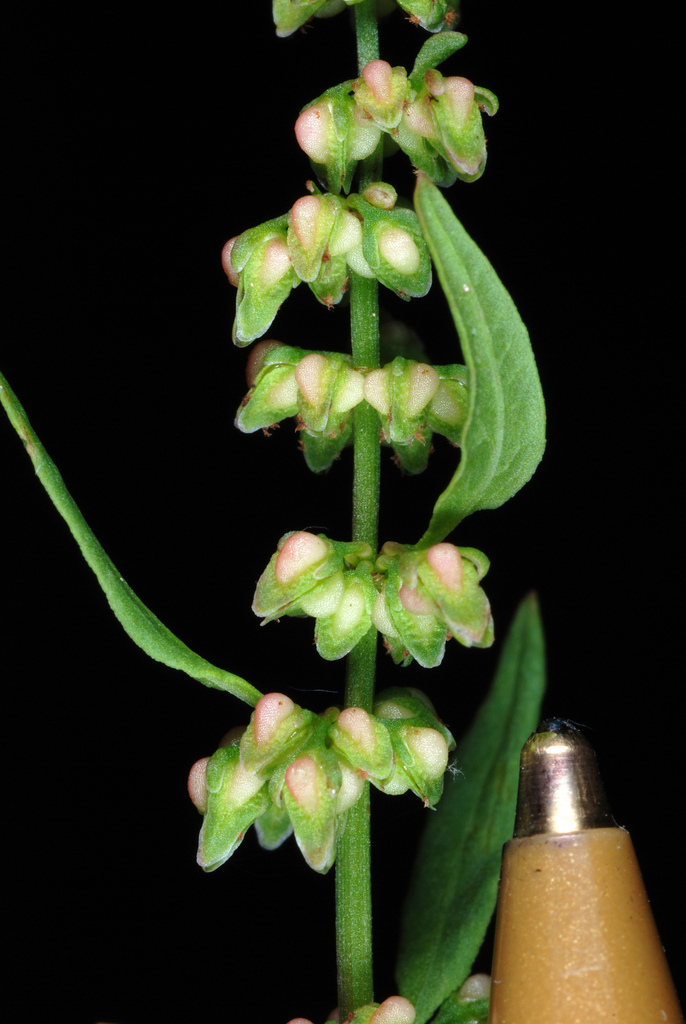
Clustered dock is a hardy perennial herb often found in damp meadows and along stream banks. It produces tall, slender stems with small, greenish flowers that turn reddish brown as they mature. It is quite common in disturbed soils and can be a bit of a nuisance in gardens.
At a glance
- Care level
- Easy
- Plant type
- Perennial herb
- Light
- Full sun to partial shade
- Indoor light
- Direct sun
- Water
- Every 2 to 5 days
- Mature size
- 3 feet
- Growth rate
- Fast
- Hardiness
- USDA 5 to 9
- Bloom time
- Late spring to mid summer
Care
Keep the soil consistently moist as this plant thrives in wet conditions. Watch for aphids on the flower spikes and trim back the stalks after flowering to prevent unwanted seed spread.
- Watering
- Keep the soil damp at all times to mimic its natural waterside habitat.
- Feeding
- A light application of balanced fertilizer in spring is usually enough.
- Pruning
- Cut back the flower stalks after they fade to keep the plant tidy.
- Repotting
- Repot only if the plant becomes root bound in its container.
- Soil
- Moist to wet clay or loam
- Soil pH
- Neutral to slightly acidic
- Temperature
- -29 to 35°C
- Humidity
- 40 to 80%
- Drought tolerance
- Low
- Lifespan
- Perennial, typically 3 to 5 years
- Deer and rabbits
- Moderate
Safety
- People
- Contains oxalates that may cause irritation if ingested in large amounts.
- Pets
- This plant contains soluble oxalates which can be harmful to cats and dogs if ingested in large quantities.
- Children
- The plant is not particularly dangerous, but the seeds and leaves should not be consumed by small children.
- Contact allergens
- Handling the foliage can cause mild skin irritation in sensitive individuals.
- Airborne allergens
- The wind dispersed pollen may cause allergic reactions in some people.
- Edibility
- The leaves contain oxalic acid, which can be harmful in large quantities or for individuals with kidney issues.
How to identify it
- Whorled clusters of small flowers
- Lance shaped leaves with wavy margins
- Stems often reddish or purplish
- Swollen tubercles on fruit valves
- Height
- 0.3 to 1m
- Spread
- 0.3 to 0.6m
- Leaves
- green, semi-evergreen
- Flowers
- green, reddish, 0.2 to 0.5cm
- Fruit
- brown, reddish, Late summer to autumn
Problems to watch for
- Rust fungus · Appears as orange or brown pustules on the undersides of leaves.
Check your clustered dock from a photo
Pocket Botanist looks at a photo of your plant and tells you what's wrong and what to try first.
Scan with your phone's camera to get the app
Or go to pocketbotanist.app/get on your phone
Growing it
- Propagation
- seed
- When to plant
- spring, autumn
- Overwintering
- No special care is needed as it is hardy in most temperate climates. Simply clear away dead foliage in early spring to make room for new growth.
- In containers
- It is not typically grown in containers due to its deep taproot and need for constant moisture.
Seed
- 1. Collect mature brown seeds in late summer.
- 2. Sow seeds directly into moist soil outdoors in autumn.
- 3. Keep the area consistently damp until germination occurs in spring.
Group this plant with other moisture loving species to create a naturalistic bog garden effect.
Grows well with
- Marsh Marigold · They both thrive in the same wet, boggy soil conditions.
- Yellow Flag Iris · This iris provides a nice structural contrast in similar wet habitats.
Similar species
- Curly Dock · It is a close relative with similar growth habits but wavy leaf margins.
Science
- Family
- Polygonaceae
- Genus
- Rumex
- Order
- Caryophyllales
- Class
- Magnoliopsida
- Native range
- Europe, Western Asia, and North Africa.
- Conservation
- It is a common and widespread species with no special conservation concerns.
It colonizes damp, nutrient rich soils and tolerates occasional flooding.
- Value to wildlife
- larval host plant, seed source for birds
- Pollinators
- bees, beetles
- Uses
- wildlife garden, erosion control, wetland restoration
Through the year
Ecological indicators
- Salinity
- 2/9
- Soil reaction
- 6/9
- Light
- 7/9
- Temperature
- 5/9
- Moisture
- 8/9
- Nutrients
- 6/9
Taxonomy resolved against GBIF.
Questions people ask
- Is this plant invasive?
- It can be aggressive in wet, disturbed areas but is generally considered a naturalized weed rather than a primary invasive threat.
- Does it need much water?
- Yes, it prefers consistently moist to wet soil conditions.
Where the name comes from
Rumex is the ancient Latin name for sorrel, while conglomeratus describes the dense clusters of fruit.
Good to know
- The specific epithet conglomeratus refers to the clustered arrangement of the flower whorls.
- It is commonly known as clustered dock.
- This plant thrives in compacted soil where other species struggle.
Also in
Keep your clustered dock growing
This page is a general guide. Save your plant in Pocket Botanist and you get care reminders timed for this plant, plus a care history that shows what worked.
Scan with your phone's camera to get the app
Or go to pocketbotanist.app/get on your phone
This guide was generated with AI on and checked against GBIF taxonomy. It is general information, not horticultural or veterinary advice. Read about how we build these guides.