 Pocket Botanist
Plant guide
Purple bell vine.
Rhodochiton atrosanguineus
Pronounced roh-doh-KY-ton at-roh-san-GWIN-ee-us
Also known as Purple Bell Vine, Purple Bells



Scan with your phone's camera to get the app
Or go to pocketbotanist.app/get on your phone
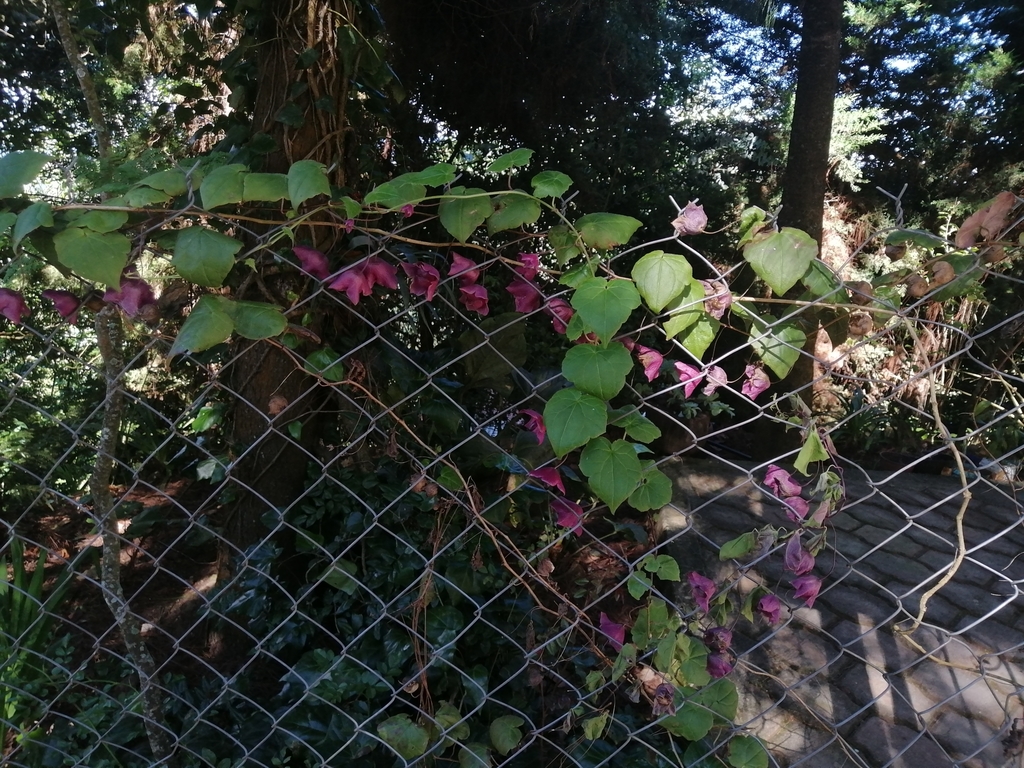
The purple bell vine is a charming climber known for its unique, lantern like flowers. It is a tender perennial often grown as an annual in cooler climates. You will love how its dark, pendulous blooms add a touch of elegance to any trellis.
At a glance
- Care level
- Moderate
- Plant type
- Vining perennial
- Light
- Full sun to partial shade
- Indoor light
- Bright indirect
- Water
- Every 3 to 7 days
- Mature size
- 8 to 10 feet
- Growth rate
- Fast
- Hardiness
- USDA 9 to 11
- Bloom time
- Mid summer to late autumn
Care
Provide a sturdy support structure for the vines to climb. Keep the soil consistently moist but not soggy, and watch for yellowing leaves which can indicate overwatering. Ensure good air circulation to prevent fungal issues.
- Watering
- Water whenever the top inch of soil feels dry to the touch.
- Feeding
- Apply a balanced liquid fertilizer every two weeks during the growing season.
- Pruning
- Trim back long stems to encourage bushier growth and more blooms.
- Repotting
- Repot in early spring if the plant becomes root bound.
- Soil
- Well draining, fertile potting mix
- Soil pH
- 6.0 to 7.0
- Temperature
- 5 to 30°C
- Humidity
- 50 to 70%
- Drought tolerance
- Low
- Lifespan
- Tender perennial, often grown as an annual.
- Deer and rabbits
- Moderate
Signs it needs repotting
- Roots growing out of the drainage holes.
- Water running straight through the pot without soaking in.
Safety
- People
- There is no significant evidence of toxicity to humans, but it is best kept away from pets and small children.
- Children
- The plant is not toxic, but its vining habit can be a tripping hazard if allowed to sprawl on the ground.
- Contact allergens
- The foliage can be slightly fuzzy, which may cause mild skin irritation in sensitive individuals.
- Airborne allergens
- There are no known significant respiratory allergens associated with this plant.
- Edibility
- This plant is not considered edible and should not be consumed.
How to identify it
- Heart shaped, mid green leaves
- Dark purple, bell shaped calyx
- Long, tubular deep red corolla
- Twining stems for climbing
- Flowers hang downward on pedicels
- Height
- 2 to 3m
- Spread
- 0.3 to 0.6m
- Leaves
- green, deciduous
- Flowers
- purple, black, 3 to 5cm
Problems to watch for
- Aphids · Small sap sucking insects that cluster on new growth.
- Whitefly · Tiny white insects that congregate on the undersides of leaves.
Check your purple bell vine from a photo
Pocket Botanist looks at a photo of your plant and tells you what's wrong and what to try first.
Scan with your phone's camera to get the app
Or go to pocketbotanist.app/get on your phone
Growing it
- Propagation
- seed, cuttings
- When to plant
- spring
- Overwintering
- Bring containers indoors before the first frost. Keep the plant in a bright, cool room and reduce watering significantly until spring.
- In containers
- It is excellent for containers, requiring at least a 30 centimeter pot with a tall trellis.
Seed
- 1. Sow seeds in early spring in a seed starting mix.
- 2. Keep the tray at 20 degrees Celsius until germination.
- 3. Transplant seedlings once they have two sets of true leaves.
Cuttings
- 1. Take soft wood cuttings in late summer.
- 2. Place them in a moist potting medium.
- 3. Cover with a plastic bag to maintain humidity until rooted.
Plant low growing annuals at the base of your vine to keep the root zone cool and moist.
Grows well with
Similar species
- Maurandya · A related vining plant with similar growth habits and requirements.
Science
- Family
- Plantaginaceae
- Genus
- Rhodochiton
- Order
- Lamiales
- Class
- Magnoliopsida
- Native range
- Cloud forests of Mexico.
- Conservation
- It is not currently listed as endangered or threatened in its native habitat.
It naturally grows as a climber in the humid, shaded understory of Mexican cloud forests.
- Value to wildlife
- nectar source
- Pollinators
- hummingbirds, bees
- Uses
- vertical gardening, hanging baskets, trellis climber
Through the year
Ecological indicators
- Salinity
- 2/9
- Soil reaction
- 6/9
- Light
- 6/9
- Temperature
- 7/9
- Moisture
- 6/9
- Nutrients
- 5/9
Taxonomy resolved against GBIF.
Questions people ask
- Can I grow this in a pot?
- Yes, it thrives in containers as long as you provide a sturdy trellis for it to climb.
- Does it need full sun?
- It prefers bright, indirect light or partial shade to keep the roots cool.
Where the name comes from
The genus name Rhodochiton comes from the Greek words for rose and cloak, referring to the colorful calyx, while atrosanguineus means dark blood red.
Good to know
- The common name purple bell vine comes from the unique bell shaped calyx.
- It is often grown as an annual in cooler climates.
- The dark, almost black flowers provide a striking contrast against the green foliage.
Keep your purple bell vine growing
This page is a general guide. Save your plant in Pocket Botanist and you get care reminders timed for this plant, plus a care history that shows what worked.
Scan with your phone's camera to get the app
Or go to pocketbotanist.app/get on your phone
This guide was generated with AI on and checked against GBIF taxonomy. It is general information, not horticultural or veterinary advice. Read about how we build these guides.