 Pocket Botanist
Plant guide
Rhipsalis.
Rhipsalis
Pronounced rip-SAL-iss



Scan with your phone's camera to get the app
Or go to pocketbotanist.app/get on your phone

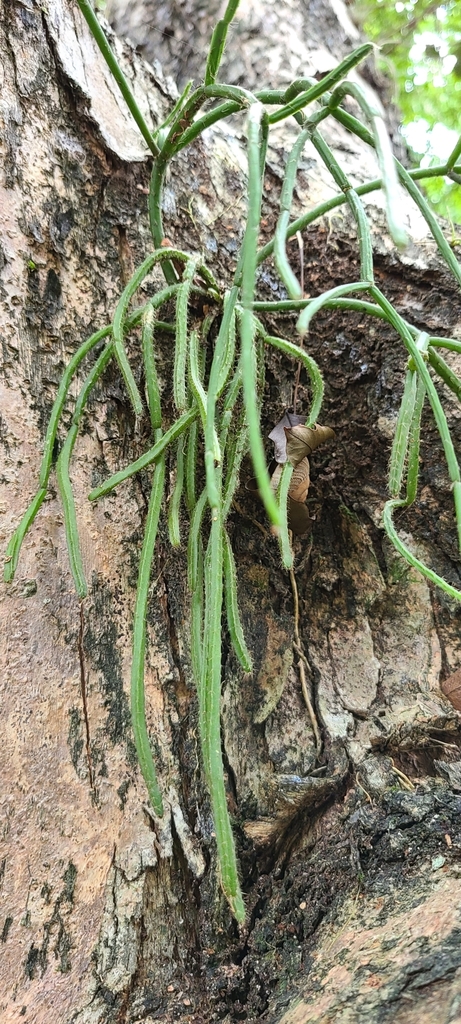
Rhipsalis are unique, trailing cacti that grow naturally in tropical forests rather than deserts. They thrive in hanging baskets where their stems can cascade beautifully. These plants prefer filtered light and consistent moisture compared to their arid cousins.
At a glance
- Care level
- Easy
- Plant type
- Epiphytic succulent
- Light
- Bright indirect light
- Indoor light
- Bright indirect
- Water
- Every 7 to 14 days
- Mature size
- 60 to 100 cm
- Growth rate
- Medium
- Hardiness
- USDA 10 to 12
- Bloom time
- Late winter to spring
Care
Keep the soil lightly moist but never soggy, as these epiphytes appreciate higher humidity. Watch for shriveling stems, which indicate the plant needs more water, or mushy stems, which signal root rot. Provide bright, indirect light to encourage healthy growth and occasional flowering.
- Watering
- Water when the top few centimeters of soil feel dry to the touch.
- Feeding
- Use a balanced liquid fertilizer diluted to half strength during the growing season.
- Pruning
- Trim back long stems once a year to maintain a bushy shape.
- Repotting
- Repot only when the plant becomes root bound or the soil breaks down.
- Soil
- Well draining orchid bark mix
- Soil pH
- 5.5 to 6.5
- Temperature
- 10 to 27°C
- Humidity
- 50 to 80%
- Drought tolerance
- Low
- Lifespan
- Perennial, typically 5 to 10 years with proper care.
- Fragrance
- Light
- Deer and rabbits
- Moderate
Signs it needs repotting
- Roots growing out of the drainage holes.
- The plant has stopped growing despite good care.
- The soil breaks down and no longer drains well.
Safety
- People
- The plant is generally considered non-toxic to humans, though ingestion of plant material is not recommended.
- Pets
- This plant is considered non-toxic to cats and dogs.
- Children
- Keep out of reach of small children as the small berries could pose a choking hazard if ingested.
- Contact allergens
- The fine, hair-like bristles on some species can cause mild skin irritation upon contact.
- Airborne allergens
- There are no known significant respiratory allergens associated with this plant.
- Edibility
- While not typically toxic, the berries are not considered food and may cause digestive upset.
How to identify it
- Trailing or pendulous succulent stems
- Stems often cylindrical or ribbon like
- Tiny inconspicuous flowers
- Small translucent berry fruits
- Lack of prominent spines
- Height
- 0.3 to 0.9m
- Spread
- 0.3 to 0.6m
- Leaves
- green, light green, evergreen
- Flowers
- white, cream, yellow, 0.5 to 1.5cm
- Fruit
- white, pink, red, Summer
Problems to watch for
- MealybugsCommon
- Root RotCommon
- Fungus GnatsUncommon
- Spider MitesUncommon
Check your rhipsalis from a photo
Pocket Botanist looks at a photo of your plant and tells you what's wrong and what to try first.
Scan with your phone's camera to get the app
Or go to pocketbotanist.app/get on your phone
Growing it
- Propagation
- cuttings, seed
- When to plant
- spring, summer
- Overwintering
- Move indoors if temperatures drop below 10 degrees Celsius. Reduce watering during the winter months as the plant's growth slows down.
- In containers
- They are perfect for hanging baskets or pots that allow their stems to trail, with a minimum pot size of 15 centimeters.
Stem Cuttings
- 1. Snip a healthy stem segment that is at least 10 centimeters long.
- 2. Let the cut end callous over for 2 days in a dry spot.
- 3. Place the calloused end into a well-draining cactus mix.
- 4. Keep the soil lightly moist until roots develop.
Group these with other tropical plants to create a microclimate that helps maintain necessary humidity levels.
Grows well with
- Orchids · They share similar light and humidity requirements as epiphytes.
- Ferns · They enjoy the same high humidity and filtered light conditions.
- Bromeliads · These plants thrive in similar tropical environments and look great together.
Similar species
- Hatiora · They share a similar branching, leafless habit and epiphytic nature.
- Epiphyllum · These are also epiphytic cacti that prefer similar growing conditions.
Science
- Family
- Cactaceae
- Genus
- Rhipsalis
- Order
- Caryophyllales
- Class
- Magnoliopsida
- Native range
- Tropical regions of Central and South America, the Caribbean, and parts of Africa and Asia.
- Conservation
- Some species are threatened by habitat loss in their native rainforest environments.
As epiphytes, they capture moisture and nutrients from the air and decaying organic matter trapped in tree bark.
- Value to wildlife
- nectar source, provides habitat
- Pollinators
- bees, butterflies
- Uses
- hanging baskets, indoor ornamental, epiphytic displays
Through the year
Ecological indicators
- Salinity
- 2/9
- Soil reaction
- 5/9
- Light
- 4/9
- Moisture
- 6/9
- Nutrients
- 3/9
- Temperature
- 8/9
Taxonomy resolved against GBIF.
Questions people ask
- Does Rhipsalis need direct sun?
- No, they prefer bright, indirect light and can burn in harsh, direct sun.
- How often should I water my Rhipsalis?
- Water when the top inch of soil feels dry, but do not let the plant sit in standing water.
Where the name comes from
The name Rhipsalis comes from the Greek word rhips, meaning wickerwork, referring to the plant's slender, reed-like stems.
Good to know
- These are often called mistletoe cacti because their growth habit and berries resemble mistletoe.
- They are epiphytes, meaning they grow on trees rather than in the ground in their natural habitat.
- They prefer filtered light rather than the direct sun many other cacti require.
- Their stems are segmented and can easily break off, which is a natural way for them to propagate in the wild.
Keep your rhipsalis growing
This page is a general guide. Save your plant in Pocket Botanist and you get care reminders timed for this plant, plus a care history that shows what worked.
Scan with your phone's camera to get the app
Or go to pocketbotanist.app/get on your phone
This guide was generated with AI on and checked against GBIF taxonomy. It is general information, not horticultural or veterinary advice. Read about how we build these guides.