 Pocket Botanist
Plant guide
Pin oak.
Quercus palustris
Pronounced KWER-kus pa-LUS-tris
Also known as Pin Oak, Pin oak, Swamp Spanish oak, oak, pin-oak, swamp oak, swamp pin oak, water-spanish-oak



Scan with your phone's camera to get the app
Or go to pocketbotanist.app/get on your phone

The pin oak is a beautiful, fast growing deciduous tree known for its distinct pyramidal shape. It is a popular choice for large landscapes because of its tolerance for wet soil conditions. You will love how its lower branches often droop toward the ground as it matures.
At a glance
- Care level
- Easy
- Plant type
- Deciduous tree
- Light
- Full sun
- Indoor light
- Direct sun
- Water
- Every 7 to 14 days
- Mature size
- 70 feet
- Growth rate
- Fast
- Hardiness
- USDA 4 to 8
- Bloom time
- Mid to late spring
Care
Plant this tree in an open space where it has plenty of room to spread its wide canopy. Keep an eye out for yellowing leaves, which can indicate iron chlorosis in high pH soils. Make sure it gets consistent moisture while it is getting established in your yard.
- Watering
- Water deeply during dry spells to keep the root zone moist.
- Feeding
- Apply a balanced fertilizer in early spring if growth seems sluggish.
- Pruning
- Remove dead or crossing branches during the dormant winter season.
- Repotting
- This tree is meant for outdoor planting and should not be kept in containers long term.
- Soil
- Moist, acidic, well drained
- Soil pH
- Acidic
- Temperature
- -35 to 35°C
- Humidity
- 40 to 70%
Safety
- People
- The foliage and acorns contain tannins that can cause digestive upset if ingested in large quantities.
- Children
- The acorns are a choking hazard for small children and should be kept out of reach.
- Contact allergens
- The leaves and bark are generally safe, but some individuals may experience mild skin irritation from contact with the rough bark.
- Airborne allergens
- The wind-borne pollen is a significant allergen for many people during the spring flowering season.
- Edibility
- Acorns contain tannins that must be leached thoroughly before they are safe for human consumption.
How to identify it
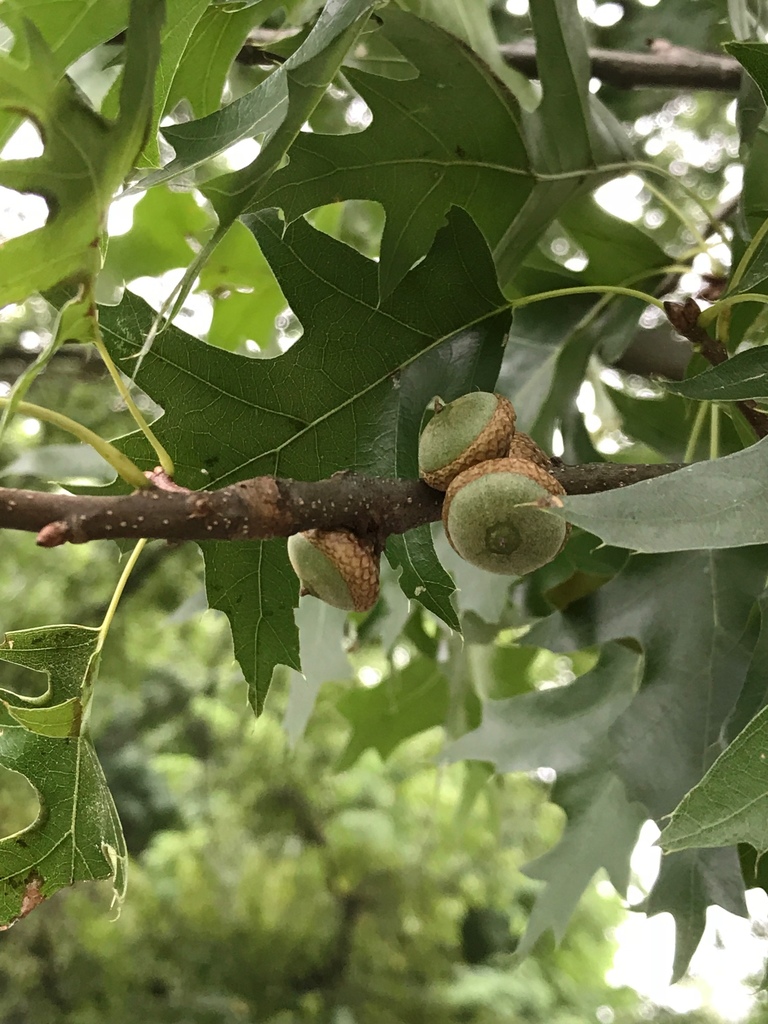
- Deeply lobed leaves with bristle tips
- Pyramidal shape when young
- Lower branches often droop downward
- Small round acorns with shallow caps
- Smooth gray bark on young trees
- Height
- 15 to 22m
- Spread
- 10 to 15m
- Leaves
- green, deciduous
- Flowers
- yellowish, green, 1 to 2cm
- Fruit
- brown, Autumn
Problems to watch for
- Oak wilt · A fungal disease that blocks the tree's water-conducting vessels.
- Chlorosis · Yellowing of leaves caused by iron deficiency in high pH soils.
Check your pin oak from a photo
Pocket Botanist looks at a photo of your plant and tells you what's wrong and what to try first.
Scan with your phone's camera to get the app
Or go to pocketbotanist.app/get on your phone
Growing it
- Propagation
- seed
- When to plant
- Spring, Autumn
Plant these trees in areas with consistent moisture to avoid the stress that leads to disease.
Grows well with
- Red maple · They share similar moisture requirements and thrive in the same woodland settings.
- River birch · This tree also enjoys the moist, rich soils that the pin oak prefers.
Similar species
- Scarlet oak · It has a similar leaf shape but prefers drier, upland sites.
- Northern red oak · It is a close relative with a similar growth habit but larger acorns.
Science
- Family
- Fagaceae
- Genus
- Quercus
- Order
- Fagales
- Class
- Magnoliopsida
- Native range
- Eastern and central United States.
- Conservation
- This species is common and not of conservation concern.
It thrives in floodplains and low-lying areas where it can tolerate periodic standing water.
- Value to wildlife
- larval host plant, acorn food source
- Pollinators
- bees, beetles
- Uses
- shade tree, ornamental specimen, wildlife habitat
Through the year
Ecological indicators
- Salinity
- 2/9
- Soil reaction
- 4/9
- Light
- 7/9
- Temperature
- 5/9
- Moisture
- 7/9
- Nutrients
- 5/9
Taxonomy resolved against GBIF.
Questions people ask
- Why are my pin oak leaves turning yellow?
- It is likely suffering from iron chlorosis due to alkaline soil.
- How fast does a pin oak grow?
- It is a fast grower, often adding 60 to 90 centimeters per year.
Where the name comes from
The name palustris means of the swamp, referring to its preference for moist habitats, while pin oak refers to its short, twiggy branchlets.
Good to know
- Pin oaks are often used in landscaping because of their symmetrical, pyramidal shape.
- They are very tolerant of wet, poorly drained soils compared to other oak species.
- The lower branches often droop toward the ground as the tree matures.
- They grow relatively fast for an oak tree.
Keep your pin oak growing
This page is a general guide. Save your plant in Pocket Botanist and you get care reminders timed for this plant, plus a care history that shows what worked.
Scan with your phone's camera to get the app
Or go to pocketbotanist.app/get on your phone
This guide was generated with AI on and checked against GBIF taxonomy. It is general information, not horticultural or veterinary advice. Read about how we build these guides.