 Pocket Botanist
Plant guide
Honey mesquite.
Prosopis glandulosa
Pronounced pro-SO-pis glan-dyoo-LO-suh
Also known as honey mesquite



Scan with your phone's camera to get the app
Or go to pocketbotanist.app/get on your phone
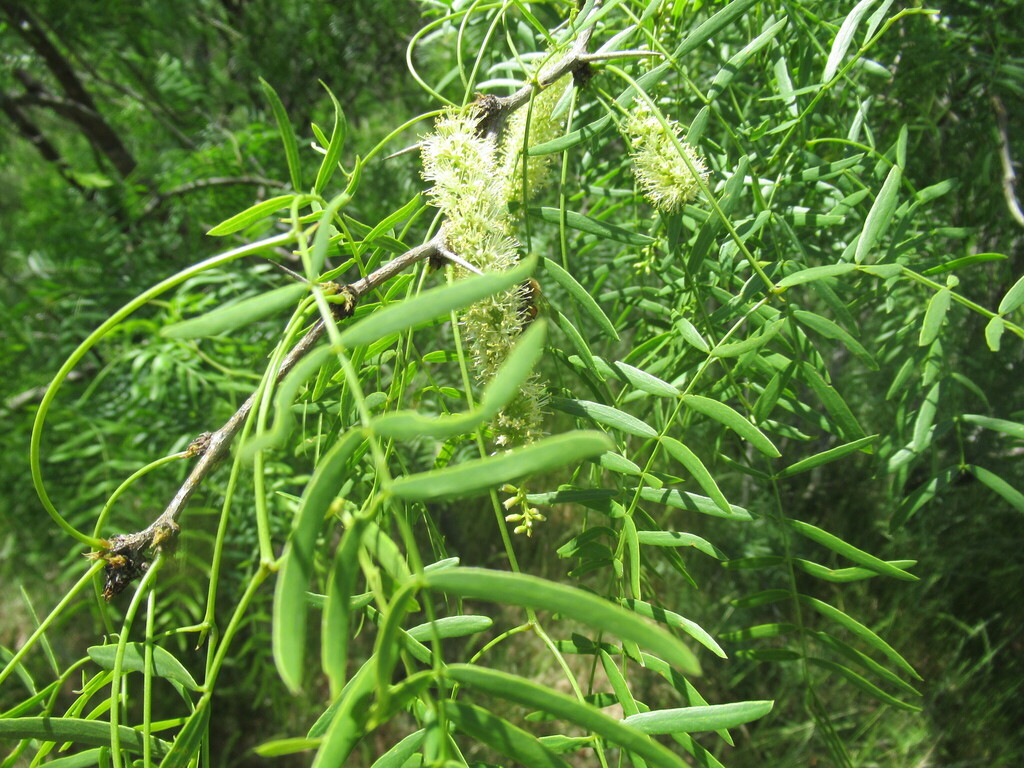
The honey mesquite is a hardy, drought tolerant tree native to the southwestern United States. It is well known for its deep root system and ability to thrive in harsh, arid environments. You will love how its feathery foliage adds a soft texture to your landscape.
At a glance
- Care level
- Easy
- Plant type
- Deciduous tree
- Light
- Full sun
- Indoor light
- Direct sun
- Water
- Every 14 to 30 days
- Mature size
- 20 to 30 feet
- Growth rate
- Medium
- Hardiness
- USDA 6 to 10
- Bloom time
- Late spring to early summer
Care
This tree is incredibly self sufficient once it gets established in your soil. Watch for yellowing leaves, which might mean you are overwatering it in poorly draining soil. Keep an eye on its spread, as it can be quite vigorous in the right conditions.
- Watering
- Deep, infrequent watering is best to encourage a strong root system.
- Feeding
- It rarely needs fertilizer, but a light application of balanced feed in early spring can help if growth is sluggish.
- Pruning
- Prune during the dormant winter season to maintain a desired shape or remove crossing branches.
- Repotting
- If kept in a container, move it to a larger pot every few years when it becomes root bound.
- Soil
- Well draining sandy or rocky soil
- Soil pH
- 6.5 to 8.5
- Temperature
- -15 to 45°C
- Humidity
- 10 to 40%
- Drought tolerance
- High
- Lifespan
- Perennial, typically 50 to 100 years.
- Fragrance
- Light
- Deer and rabbits
- High
Signs it needs repotting
- Roots growing out of drainage holes.
- Water running straight through the pot.
Safety
- People
- The plant is generally non-toxic, though the thorns can cause mechanical injury.
- Children
- Keep children away from the sharp, woody thorns found on the branches.
- Contact allergens
- The sharp thorns can cause skin punctures and irritation.
- Airborne allergens
- The pollen can trigger seasonal allergies in sensitive individuals.
- Edibility
- The pods are edible but must be processed correctly to avoid digestive issues.
How to identify it
- Feathery bipinnate compound leaves
- Sharp thorns along the branches
- Long, straw colored seed pods
- Deeply furrowed, dark brown bark
- Height
- 3 to 9m
- Spread
- 3 to 9m
- Leaves
- green, blue-green, deciduous
- Flowers
- yellow, cream, 5 to 10cm
- Fruit
- tan, brown, Late summer
Problems to watch for
- Mistletoe · A parasitic plant that attaches to branches and can weaken the tree.
Check your honey mesquite from a photo
Pocket Botanist looks at a photo of your plant and tells you what's wrong and what to try first.
Scan with your phone's camera to get the app
Or go to pocketbotanist.app/get on your phone
Growing it
- Propagation
- seed, cuttings
- When to plant
- spring, fall
- Overwintering
- No special care is needed as it is well adapted to cold winters within its range. Simply ensure the soil is well drained to prevent root rot during wet winter months.
- In containers
- Not recommended for containers due to its aggressive root system and large mature size.
Seed
- 1. Scarify the hard seed coat with sandpaper.
- 2. Soak seeds in warm water for 24 hours.
- 3. Plant in well-draining soil and keep warm.
Group this tree with other desert natives to create a low-water, high-wildlife habitat.
Grows well with
- Desert Marigold · They share similar water needs and thrive in the same sunny, arid conditions.
- Ocotillo · This plant provides a beautiful structural contrast while requiring identical care.
Similar species
- Mesquite (bayahonda) · It is very similar in appearance and ecological function but is often larger.
Science
- Family
- Fabaceae
- Genus
- Prosopis
- Order
- Fabales
- Class
- Magnoliopsida
- Native range
- Southwestern United States and Northern Mexico.
- Conservation
- It is considered an invasive species in some regions, so check local regulations before planting.
It survives in arid environments by utilizing deep taproots to access groundwater and fixing nitrogen to thrive in poor soils.
- Value to wildlife
- nectar source, larval host plant, provides cover
- Pollinators
- bees, butterflies, beetles
- Uses
- shade tree, erosion control, wildlife habitat, native landscaping
Through the year
Ecological indicators
- Salinity
- 4/9
- Soil reaction
- 7/9
- Light
- 9/9
- Temperature
- 8/9
- Moisture
- 1/9
- Nutrients
- 2/9
Taxonomy resolved against GBIF.
Questions people ask
- Does it need much water?
- Once established, it is extremely drought tolerant and rarely needs supplemental water.
- Can I grow it in a pot?
- It is not ideal for containers due to its massive root system and large size.
Where the name comes from
The name Prosopis comes from the Greek word for a type of burdock, while glandulosa refers to the small glands found on the leaves.
Good to know
- Mesquite wood is highly prized for smoking meats due to its intense flavor.
- The tree fixes nitrogen in the soil, which helps surrounding plants grow.
- Native Americans historically used the pods as a staple food source.
- It can survive extreme drought by entering a dormant state.
Also in
Keep your honey mesquite growing
This page is a general guide. Save your plant in Pocket Botanist and you get care reminders timed for this plant, plus a care history that shows what worked.
Scan with your phone's camera to get the app
Or go to pocketbotanist.app/get on your phone
This guide was generated with AI on and checked against GBIF taxonomy. It is general information, not horticultural or veterinary advice. Read about how we build these guides.