 Pocket Botanist
Plant guide
Split rock.
Pleiospilos nelii
Pronounced ply-oh-SPY-los NEL-ee-eye
Also known as Splitrock Quaggafig



Scan with your phone's camera to get the app
Or go to pocketbotanist.app/get on your phone
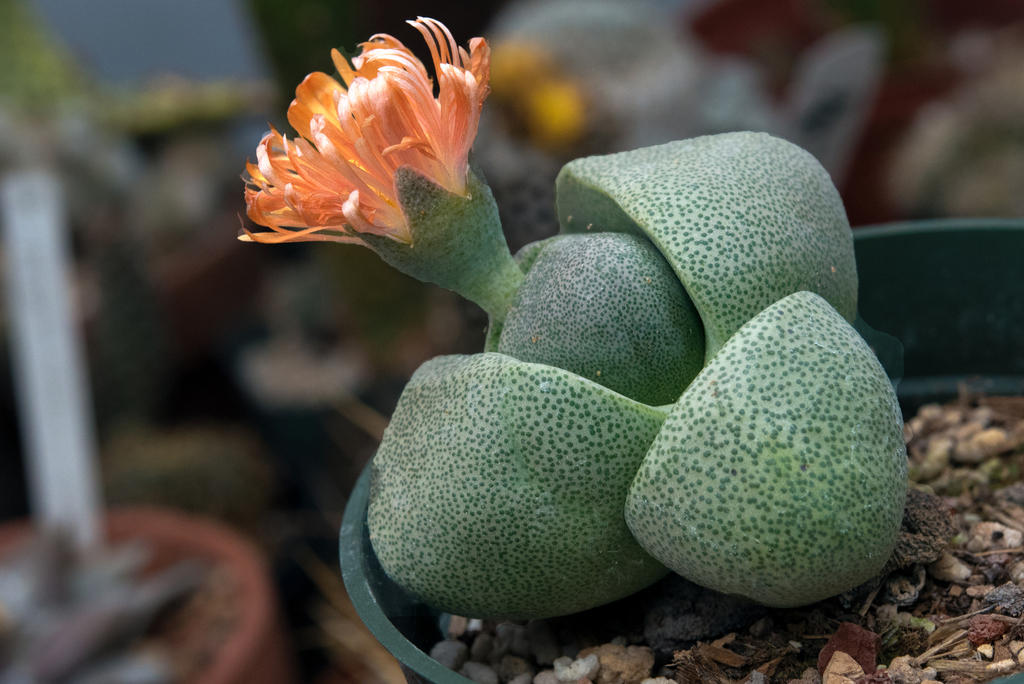
This fascinating succulent looks just like a pair of stones nestled in the soil. It's a desert native that stores water in its thick, fleshy leaves. You'll love its unique, compact appearance.

At a glance
- Care level
- Moderate
- Plant type
- Succulent
- Light
- Full sun
- Indoor light
- Direct sun
- Water
- Every 14 to 30 days
- Mature size
- 3 to 4 inches
- Growth rate
- Slow
- Hardiness
- USDA 9 to 11
- Bloom time
- Late winter to early spring
Care
Keep this plant very dry, especially during its dormant period. Watch for mushy leaves, which indicate you're watering way too much. It needs plenty of sun to keep its shape and bloom.
- Watering
- Only water when the soil is completely dry and the plant shows signs of thirst.
- Feeding
- Feed sparingly with a balanced succulent fertilizer during the active growing season.
- Pruning
- Only remove dead or shriveled leaves once they have completely dried up.
- Repotting
- Repot only when the plant has clearly outgrown its current container.
- Soil
- Well-draining succulent mix
- Soil pH
- 6.0 to 7.5
- Temperature
- 5 to 35°C
- Humidity
- 10 to 40%
- Drought tolerance
- High
- Lifespan
- Perennial, typically 5 to 10 years
- Fragrance
- Light
- Deer and rabbits
- Moderate
Signs it needs repotting
- The plant has outgrown its current pot.
- The soil has become compacted and drains poorly.
Safety
- People
- It is generally considered non-toxic, but ingestion is not recommended.
- Pets
- This plant is considered non-toxic to cats and dogs.
- Children
- The plant is not dangerous, but its small size and stone-like appearance might tempt children to handle or ingest it.
- Contact allergens
- There are no known skin irritants associated with this plant.
- Airborne allergens
- There are no known airborne allergens associated with this plant.
- Edibility
- This plant is not intended for consumption and may cause digestive upset.
How to identify it
- Two thick, stone-like leaves
- Dotted surface texture
- Grayish green or brownish color
- Daisy-like yellow or orange flowers
- Height
- 0.05 to 0.1m
- Spread
- 0.05 to 0.12m
- Leaves
- gray-green, spotted, evergreen
- Flowers
- yellow, orange, 5 to 8cm
- Fruit
- brown, Late spring
Problems to watch for
- Root RotCommon
- EdemaUncommon
- MealybugsUncommon
- Spider MitesUncommon
Check your split rock from a photo
Pocket Botanist looks at a photo of your plant and tells you what's wrong and what to try first.
Scan with your phone's camera to get the app
Or go to pocketbotanist.app/get on your phone
Growing it
- Propagation
- seed
- When to plant
- spring
- Overwintering
- Keep the plant completely dry during the winter months to prevent rot. Ensure it stays in a bright, cool location.
- In containers
- It grows well in small, shallow pots with excellent drainage, such as terracotta.
Seed
- 1. Sow seeds on the surface of a well-draining succulent mix.
- 2. Lightly cover with fine grit or sand.
- 3. Keep the soil slightly moist until germination occurs.
- 4. Gradually reduce water as the seedlings mature.
Group this plant with other slow-growing succulents that require minimal water to avoid overwatering accidents.
Grows well with
- Lithops · They share similar light and water requirements in a rock garden setting.
- Aloe · These succulents thrive in the same arid conditions.
Similar species
- Split Rock · It has a very similar appearance and growth habit.
Science
- Family
- Aizoaceae
- Genus
- Pleiospilos
- Order
- Caryophyllales
- Class
- Magnoliopsida
- Native range
- South Africa
- Conservation
- It is not currently listed as endangered in its native habitat.
It survives in harsh, dry environments by storing water in its thick, fleshy leaves.
- Value to wildlife
- nectar source
- Pollinators
- bees
- Uses
- ornamental, rock garden, container plant
Through the year
Ecological indicators
- Salinity
- 2/9
- Soil reaction
- 6/9
- Light
- 8/9
- Temperature
- 7/9
- Moisture
- 1/9
- Nutrients
- 2/9
Taxonomy resolved against GBIF.
Questions people ask
- How often should I water it?
- Water sparingly, only when the soil is completely dry and the leaves show slight signs of wrinkling.
- Why is my plant splitting?
- It is normal for the plant to split as it produces new leaves from the center.
Where the name comes from
The name Pleiospilos comes from Greek words meaning many spots, referring to the leaf markings.
Good to know
- It is a succulent that mimics the surrounding rocks to avoid being eaten by herbivores.
- The plant typically only has two or four leaves at a time.
- It is native to the arid regions of South Africa.
- The flowers open in the afternoon and close at night.
Also in
Keep your split rock growing
This page is a general guide. Save your plant in Pocket Botanist and you get care reminders timed for this plant, plus a care history that shows what worked.
Scan with your phone's camera to get the app
Or go to pocketbotanist.app/get on your phone
This guide was generated with AI on and checked against GBIF taxonomy. It is general information, not horticultural or veterinary advice. Read about how we build these guides.