 Pocket Botanist
Plant guide
Spur flower.
Plectranthus
Pronounced plek-TRAN-thus
Also known as Plectranthus, spurflowers



Scan with your phone's camera to get the app
Or go to pocketbotanist.app/get on your phone

Plectranthus are lovely, fast growing plants that bring a tropical feel to your home or garden. They are known for their textured foliage and sometimes fragrant leaves. Most varieties are quite easy to keep happy with just a little attention.
At a glance
- Care level
- Easy
- Plant type
- Perennial herb or subshrub
- Light
- Bright indirect light is best, though some varieties handle partial shade.
- Indoor light
- Bright indirect
- Water
- Every 5 to 10 days
- Mature size
- 1 to 3 feet
- Growth rate
- Fast
- Hardiness
- USDA 10 to 12
- Bloom time
- Late summer to autumn
Care
Keep the soil consistently moist but never soggy to prevent root rot. Watch for wilting leaves as a sign they need a drink, and pinch back the stems to encourage a bushier shape. They thrive in warm spots with good air circulation.
- Watering
- Water when the top inch of soil feels dry to the touch.
- Feeding
- Feed with a balanced liquid fertilizer during the active growing season.
- Pruning
- Pinch back tips regularly to maintain a compact, bushy form.
- Repotting
- Repot in spring if the plant becomes root bound or the soil loses its structure.
- Soil
- Well draining, peat based potting mix.
- Soil pH
- 6.0 to 7.0
- Temperature
- 10 to 30°C
- Humidity
- 40 to 60%
- Drought tolerance
- Moderate
- Lifespan
- Perennial, typically 3 to 5 years with proper care.
- Fragrance
- Light
- Deer and rabbits
- Moderate
Signs it needs repotting
- Roots growing out of the drainage holes
- Water running straight through the pot
- Stunted growth during the active season
Safety
- People
- The plant is generally considered non-toxic, but ingestion is not recommended as it can cause mild digestive irritation.
- Pets
- Most Plectranthus species are considered non toxic to cats and dogs.
- Children
- Keep out of reach of small children to prevent accidental ingestion of leaves.
- Contact allergens
- Some people may experience mild skin irritation from the aromatic oils in the leaves.
- Airborne allergens
- There are no significant reports of respiratory allergies associated with this plant.
- Edibility
- Most Plectranthus species are not considered edible and some may cause stomach upset if ingested.
How to identify it
- Square stems typical of mint family
- Opposite leaves often with serrated edges
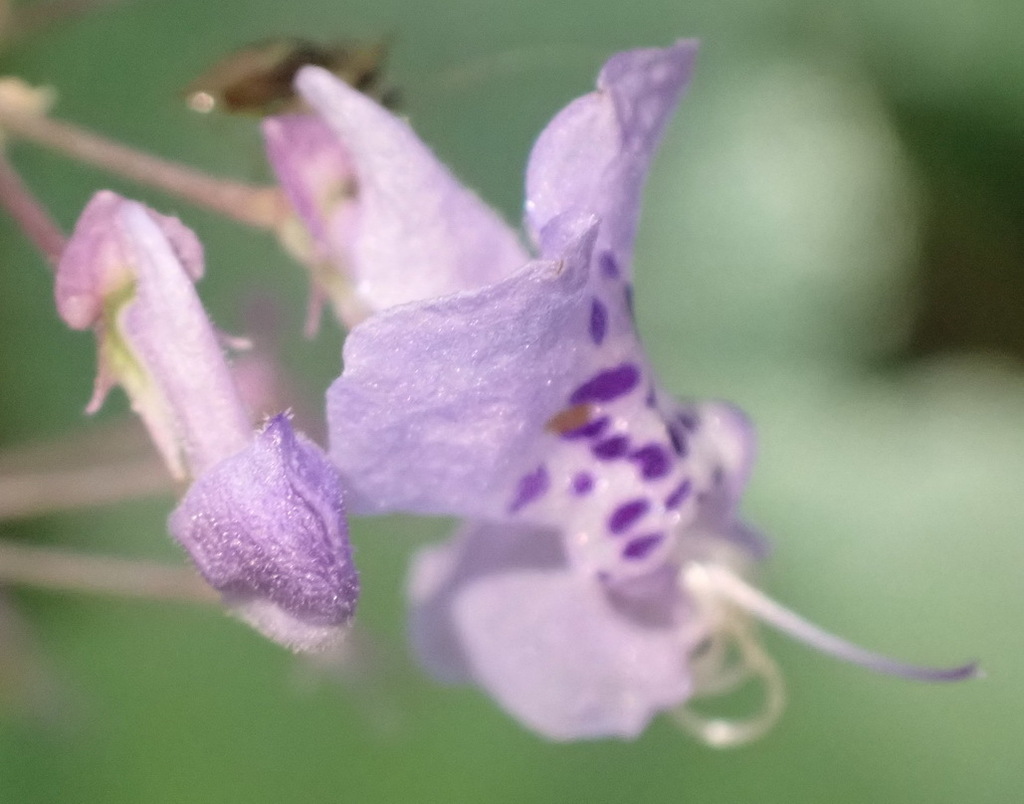
- Small tubular flowers in terminal spikes
- Aromatic foliage when crushed
- Often succulent or semi succulent stems
- Height
- 0.3 to 1m
- Spread
- 0.3 to 0.9m
- Leaves
- green, variegated, purple, evergreen
- Flowers
- purple, blue, white, 1 to 2cm
Problems to watch for
- Mealybugs · Small white cottony insects that cluster in leaf axils.
- Root rot · Caused by overwatering or poorly draining soil.
Check your spur flower from a photo
Pocket Botanist looks at a photo of your plant and tells you what's wrong and what to try first.
Scan with your phone's camera to get the app
Or go to pocketbotanist.app/get on your phone
Growing it
- Propagation
- cuttings, division
- When to plant
- spring, early summer
- Overwintering
- Bring containers indoors before the first frost. Place them in a bright window and reduce watering until spring.
- In containers
- They thrive in containers, making them excellent choices for hanging baskets or mixed patio pots with good drainage.
Stem Cuttings
- 1. Snip a 4 inch stem cutting just below a leaf node.
- 2. Remove the lower leaves from the cutting.
- 3. Place the cutting in a glass of water or moist potting mix.
- 4. Keep in bright, indirect light until roots appear.
Group them with other shade-loving foliage plants to create a dense, tropical look.
Grows well with
Similar species
- Swedish Ivy · A very popular trailing relative often used in hanging baskets.
- Cuban Oregano · A succulent-leaved relative known for its strong, savory scent.
Science
- Family
- Lamiaceae
- Genus
- Plectranthus
- Order
- Lamiales
- Class
- Magnoliopsida
- Native range
- Tropical and subtropical regions of Africa, Asia, and Australia.
- Conservation
- Not currently of conservation concern.
These plants typically grow in the understory of forests where they rely on filtered light and consistent moisture.
- Value to wildlife
- nectar source
- Pollinators
- bees, butterflies
- Uses
- container plant, houseplant, shade garden filler
Through the year
Ecological indicators
- Salinity
- 2/9
- Soil reaction
- 6/9
- Light
- 4/9
- Temperature
- 8/9
- Moisture
- 5/9
- Nutrients
- 5/9
Taxonomy resolved against GBIF.
Questions people ask
- How often should I water my Plectranthus?
- Water when the top inch of soil feels dry to the touch.
- Does it need direct sun?
- Most prefer bright, indirect light or partial shade.
Where the name comes from
The genus name is derived from the Greek words plektron, meaning spur, and anthos, meaning flower, referring to the shape of the corolla.
Good to know
- The name Plectranthus comes from the Greek words for spur and flower.
- They are members of the mint family and share the characteristic square stems.
- Some species are commonly called Swedish Ivy despite not being true ivy.
Also in
Keep your spur flower growing
This page is a general guide. Save your plant in Pocket Botanist and you get care reminders timed for this plant, plus a care history that shows what worked.
Scan with your phone's camera to get the app
Or go to pocketbotanist.app/get on your phone
This guide was generated with AI on and checked against GBIF taxonomy. It is general information, not horticultural or veterinary advice. Read about how we build these guides.