 Pocket Botanist
Plant guide
Great Basin bristlecone pine.
Pinus longaeva
Pronounced PY-nus lon-GAY-vah
Also known as Bristlecone Pine, Great Basin Bristlecone Pine, Intermountain Bristlecone Pine, ancient bristlecone pine, ancient pine, western bristlecone pine


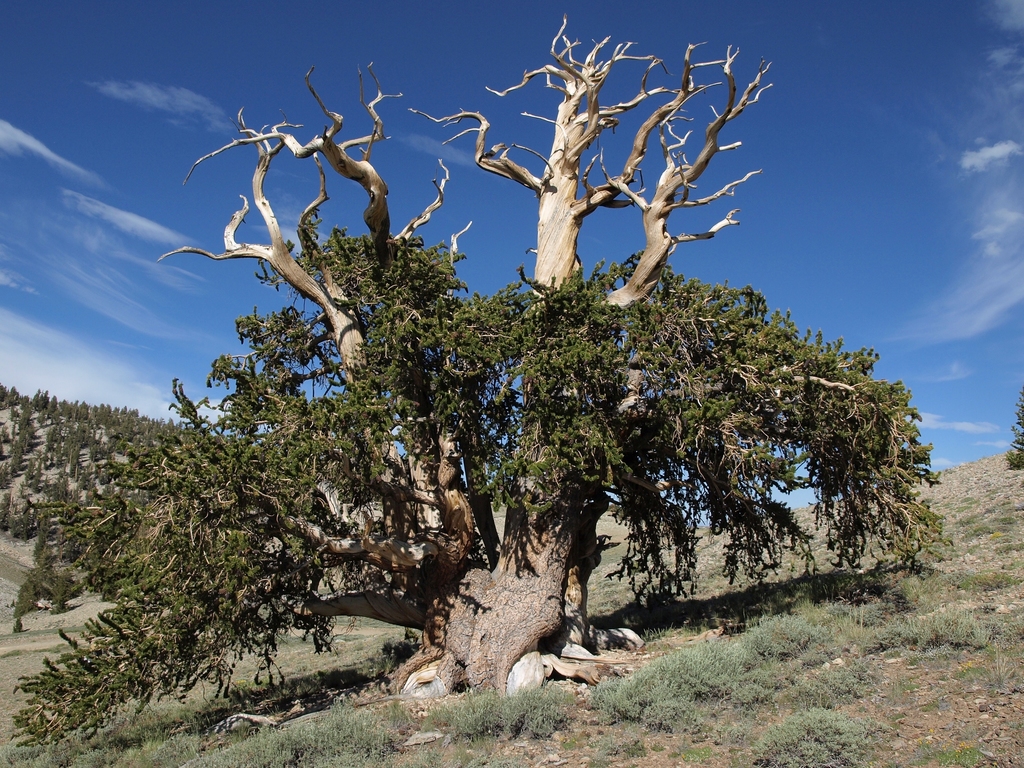
The bristlecone pine is a legendary survivor known for its incredible longevity in harsh, high altitude environments. It grows very slowly and develops a gnarled, beautiful appearance over many centuries. These trees are truly nature's ancient masterpieces.

At a glance
- Care level
- Difficult
- Plant type
- Coniferous evergreen tree
- Light
- Full sun
- Indoor light
- Direct sun
- Water
- Every 7 to 14 days
- Mature size
- 15 to 30 feet
- Growth rate
- Slow
- Hardiness
- USDA 4 to 7
- Bloom time
- Late spring to early summer
Care
This tree requires excellent drainage and cool temperatures to mimic its native mountain habitat. Watch for needle browning which often indicates poor airflow or excessive humidity. It is best suited for outdoor rock gardens rather than indoor containers.
- Watering
- Allow the soil to dry out significantly between waterings to prevent root rot.
- Feeding
- Apply a balanced, slow release fertilizer once in early spring.
- Pruning
- Remove dead or damaged branches during the dormant winter season.
- Repotting
- Repot only when absolutely necessary as these trees dislike root disturbance.
- Soil
- Rocky, well-draining soil
- Soil pH
- Neutral to slightly alkaline
- Temperature
- -40 to 30°C
- Humidity
- 10 to 40%
- Drought tolerance
- High
- Lifespan
- Perennial, can live for thousands of years.
- Fragrance
- Light
- Deer and rabbits
- High
Signs it needs repotting
- Roots circling the bottom of the pot
- Water draining through too quickly
- Stunted growth over several seasons
Safety
- People
- The plant is not considered toxic to humans.
- Children
- The sharp needles may pose a minor puncture risk to small children.
- Contact allergens
- The resin can cause mild skin irritation in sensitive individuals.
- Airborne allergens
- The pollen is a common airborne allergen during the spring release.
- Edibility
- The seeds are edible but not typically harvested for food due to their small size and the tree's protected status.
How to identify it
- Needles in bundles of five
- White resin flecks on needles
- Gnarled and twisted trunk shape
- Cones have long, bristle like spines
- Height
- 5 to 15m
- Spread
- 3 to 8m
- Leaves
- dark green, evergreen
- Flowers
- yellow, red, 1 to 2cm
- Fruit
- brown, Autumn
Common problems
- Needle cast — Fungal infections that cause needles to yellow and drop prematurely.
- Bark beetles — Insects that bore into the trunk and can weaken or kill the tree.
Growing it
- Propagation
- seed
- When to plant
- spring, autumn
- Overwintering
- No special protection is needed as it is fully adapted to extreme cold and winter conditions.
- In containers
- It is occasionally used for bonsai but requires specialized care to mimic its natural, harsh environment.
Seed
- 1. Collect seeds from mature cones in autumn.
- 2. Cold stratify the seeds for 60 to 90 days in a refrigerator.
- 3. Sow in a well draining, rocky soil mix.
- 4. Keep in a cool, bright location with minimal water.
This tree prefers to grow in isolation or with other hardy alpine species that do not compete for limited soil nutrients.
Grows well with
- Limber Pine — They often share the same harsh, high altitude habitat.
Similar species
- Great Basin Bristlecone Pine — This is the primary species known for extreme longevity.
Science
- Family
- Pinaceae
- Genus
- Pinus
- Order
- Pinales
- Class
- Pinopsida
- Native range
- High mountains of the southwestern United States.
- Conservation
- While not globally endangered, many populations are protected in national parks and wilderness areas.
It survives in nutrient poor, rocky soils by growing slowly and conserving energy in extreme alpine climates.
- Value to wildlife
- seeds provide food for birds, nesting habitat
- Pollinators
- bees
- Uses
- ornamental specimen, bonsai, scientific research
Through the year
Ecological indicators
- Salinity
- 1/9
- Soil reaction
- 7/9
- Light
- 8/9
- Temperature
- 2/9
- Moisture
- 2/9
- Nutrients
- 1/9
Taxonomy resolved against GBIF.
Questions people ask
- Can I grow this in my backyard?
- It is very difficult to grow outside of its native high altitude, rocky environment.
- How fast does it grow?
- It is an incredibly slow grower, often adding only a few centimeters per year.
Where the name comes from
The specific epithet longaeva means long lived, referring to the extreme longevity of the species.
Good to know
- They grow very slowly in harsh, high altitude conditions.
- The wood is extremely dense and resinous, which helps it resist decay for centuries.
- They are often found growing on rocky, alkaline soils where few other plants survive.
- Their twisted, gnarled appearance is a result of centuries of wind and ice exposure.
Also in
Is your great basin bristlecone pine looking unwell?
This page is a general guide. Pocket Botanist diagnoses problems from a photo of your actual plant, works out watering for your light and conditions, and reminds you when care is due.
This guide was generated with AI and checked against GBIF taxonomy. It is general information, not horticultural or veterinary advice. Read about how we build these guides.