 Pocket Botanist
Plant guide
Chinese Money Plant.
Pilea involucrata Lindl.
Pronounced py-LEE-uh pep-er-oh-mee-OY-deez
Also known as Pilea involucrata, Clearweed, Clearweeds



Scan with your phone's camera to get the app
Or go to pocketbotanist.app/get on your phone

This charming plant is famous for its perfectly round, coin shaped leaves that sit atop long stems. It is a favorite for indoor spaces because it is quite easy to propagate and share with friends. You will love how it adds a playful touch to any sunny windowsill.
At a glance
- Care level
- Easy
- Plant type
- Perennial
- Light
- Bright, indirect light
- Indoor light
- Bright indirect
- Water
- Every 7 to 10 days
- Mature size
- 12 inches tall
- Growth rate
- Medium
- Hardiness
- USDA 11 to 12
- Bloom time
- Rarely blooms indoors, but may produce tiny flowers in spring.
Care
Keep your plant in bright, indirect light and rotate the pot regularly to ensure it grows evenly. Watch for drooping leaves, which often signal that the plant is thirsty. If the leaves start to yellow, you might be giving it too much water.
- Watering
- Water when the top inch of soil feels dry to the touch.
- Feeding
- Apply a balanced liquid fertilizer once a month during the growing season.
- Pruning
- Trim away any yellow or damaged leaves to keep the plant looking tidy.
- Repotting
- Move to a slightly larger pot once the plant becomes root bound.
- Soil
- Well draining potting mix
- Soil pH
- 6.0 to 7.0
- Temperature
- 15 to 24°C
- Humidity
- 40 to 60%
- Drought tolerance
- Moderate
- Lifespan
- Perennial, typically 5 to 10 years indoors.
- Deer and rabbits
- Moderate
Signs it needs repotting
- Roots growing out of drainage holes
- Water running straight through the pot
- Plant growth slows significantly
Safety
- People
- This plant is considered non toxic to humans.
- Pets
- This plant is considered non toxic to cats and dogs.
- Children
- Keep out of reach of small children to prevent accidental ingestion of soil or plant parts.
- Edibility
- This plant is not intended for consumption.
How to identify it
- Perfectly round, flat green leaves
- Long, slender petioles
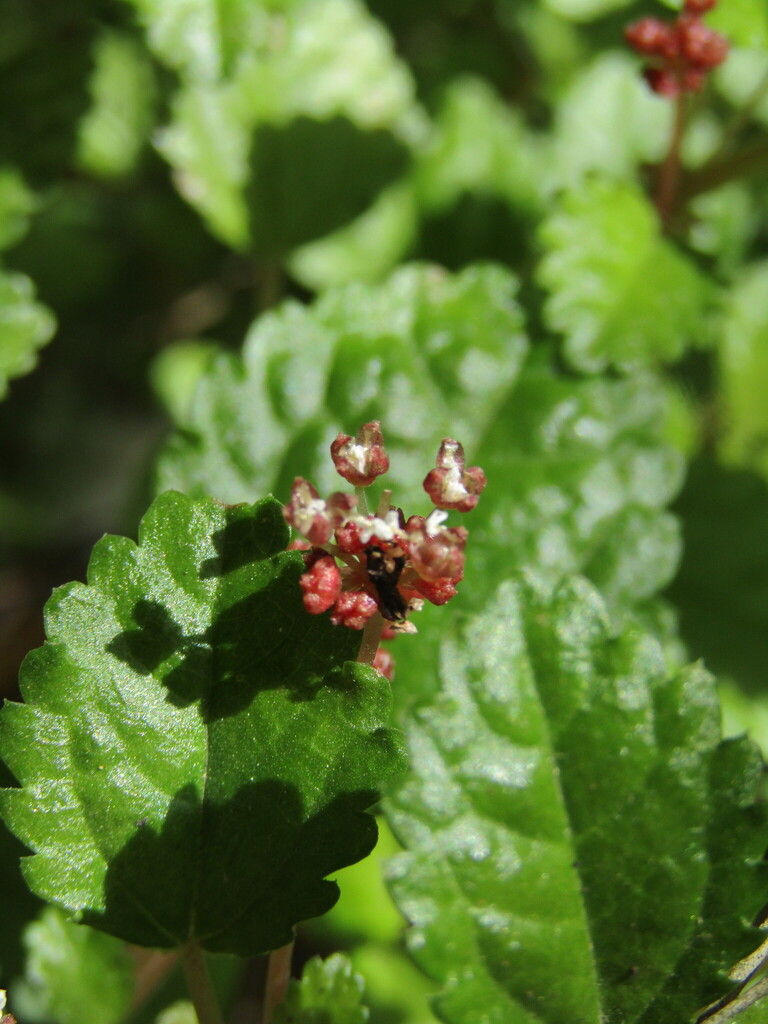
- Small white flowers occasionally
- Compact, upright growth habit
- Height
- 0.2 to 0.3m
- Spread
- 0.2 to 0.3m
- Leaves
- green, evergreen
- Flowers
- white, green, 0.1 to 0.5cm
Problems to watch for
- Root rot · Caused by overwatering or poor drainage.
- Leaf drop · Often a sign of inconsistent watering or low light.
Check your chinese money plant from a photo
Pocket Botanist looks at a photo of your plant and tells you what's wrong and what to try first.
Scan with your phone's camera to get the app
Or go to pocketbotanist.app/get on your phone
Growing it
- Propagation
- cuttings, division
- When to plant
- spring, summer
- Overwintering
- Keep the plant away from cold drafts and heaters during the winter months. Reduce watering slightly as growth slows down.
- In containers
- It thrives in containers and prefers a pot that is not too large for its root system.
Offsets
- 1. Identify a small offset growing from the base of the mother plant.
- 2. Use a clean knife to cut the offset from the main stem.
- 3. Place the offset in water or moist soil until roots develop.
Group plants with similar water needs together to make maintenance easier.
Grows well with
- Peperomia · They share similar light and moisture requirements.
- Spider Plant · They look great together and have similar care needs.
Similar species
- Chinese Money Plant · This is the most popular species in the genus.
Science
- Family
- Urticaceae
- Genus
- Pilea
- Order
- Rosales
- Class
- Magnoliopsida
- Native range
- Southern China
- Conservation
- It is not currently listed as endangered in its native habitat.
It grows naturally in moist, shaded forest floors in mountainous regions.
- Uses
- houseplant, tabletop decor
Through the year
Ecological indicators
- Salinity
- 2/9
- Soil reaction
- 6/9
- Light
- 5/9
- Temperature
- 7/9
- Moisture
- 5/9
- Nutrients
- 4/9
Taxonomy resolved against GBIF.
Questions people ask
- Why are my leaves curling?
- This is often a sign of too much direct sunlight or extreme temperature changes.
- How often should I water it?
- Water when the top inch of soil feels dry to the touch.
Where the name comes from
The name Pilea comes from the Latin word pileus, meaning felt cap, referring to the shape of the flower parts. The specific epithet peperomioides means it resembles a Peperomia.
Good to know
- It is native to the Yunnan province in China.
- The leaves are perfectly round and sit on long petioles.
- It needs to be rotated regularly to keep it growing straight.
Keep your chinese money plant growing
This page is a general guide. Save your plant in Pocket Botanist and you get care reminders timed for this plant, plus a care history that shows what worked.
Scan with your phone's camera to get the app
Or go to pocketbotanist.app/get on your phone
This guide was generated with AI on and checked against GBIF taxonomy. It is general information, not horticultural or veterinary advice. Read about how we build these guides.