 Pocket Botanist
Plant guide
Norway spruce.
Picea abies
Pronounced PY-see-uh AY-beez
Also known as Common Spruce, Norway Spruce, Norway Spruce, European Spruce



Scan with your phone's camera to get the app
Or go to pocketbotanist.app/get on your phone

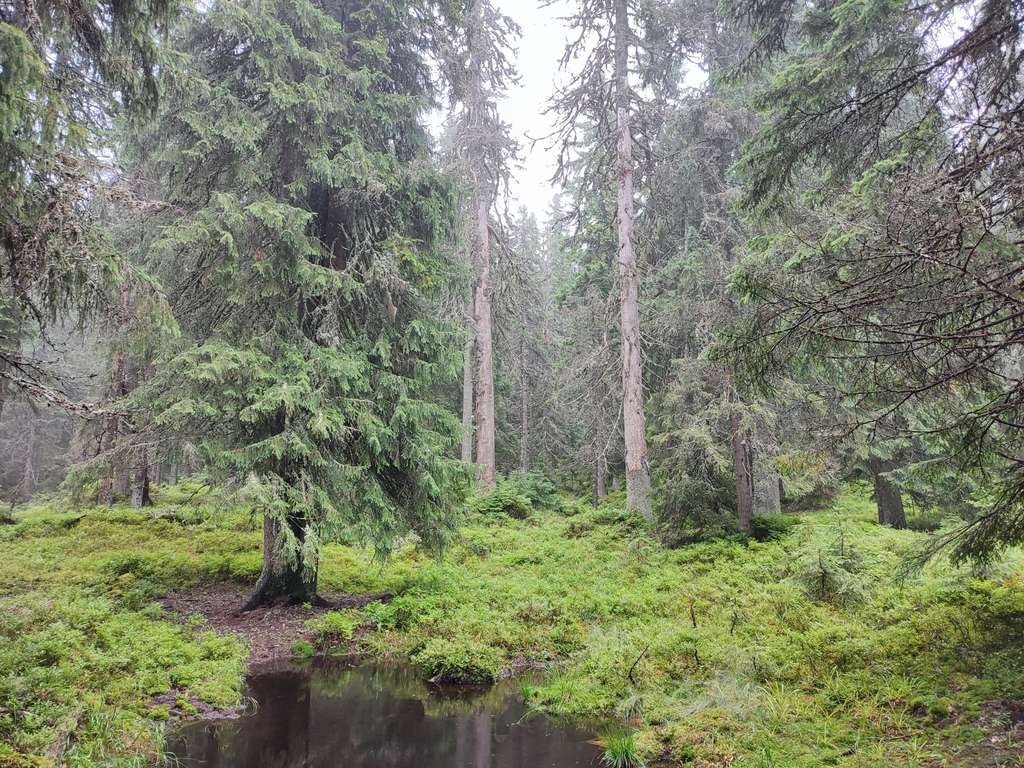
The Norway spruce is a classic, fast growing evergreen that brings a stately presence to any landscape. It is well loved for its iconic conical shape and sweeping, pendulous branches. You will find it thrives best in cooler climates with plenty of room to stretch out.
At a glance
- Care level
- Easy
- Plant type
- Coniferous evergreen tree
- Light
- Full sun
- Indoor light
- Direct sun
- Water
- Every 7 to 14 days
- Mature size
- 40 to 60 feet tall
- Growth rate
- Fast
- Hardiness
- USDA 2 to 7
- Bloom time
- Mid to late spring
Care
Plant this tree in a spot where it can receive full sun and has enough space to reach its full size. Keep an eye out for needle drop or browning, which can signal that the soil is too dry or the drainage is poor. It is a very hardy tree that generally takes care of itself once established.
- Watering
- Water deeply during the first few years to help the roots establish.
- Feeding
- Apply a balanced slow release fertilizer in early spring.
- Pruning
- Prune only to remove dead or damaged branches in late winter.
- Repotting
- Repotting is generally not needed for landscape trees, but container specimens need fresh soil every few years.
- Soil
- Moist, well drained, acidic soil
- Soil pH
- Acidic to neutral
- Temperature
- -40 to 30°C
- Humidity
- 40 to 70%
- Drought tolerance
- Moderate
- Lifespan
- Long-lived, often 200 to 400 years.
- Fragrance
- Light
- Deer and rabbits
- Moderate
Signs it needs repotting
- Roots circling the bottom of the pot.
- Water running straight through the soil without soaking in.
Safety
- People
- The plant is generally non-toxic, though the sharp needles can cause mechanical injury.
- Children
- The sharp, stiff needles pose a puncture risk to small children who might try to climb or handle the branches.
- Contact allergens
- Handling the needles can cause minor skin irritation for some people.
- Airborne allergens
- The pollen can be a mild respiratory irritant during the spring release.
- Edibility
- The needles are sometimes used for tea, but ensure they are not from a toxic yew tree before harvesting.
How to identify it
- Conical shape with pendulous branches
- Dark green, needle like foliage
- Large, cylindrical, light brown cones
- Rough, scaly, reddish brown bark
- Height
- 15 to 35m
- Spread
- 6 to 10m
- Leaves
- dark green, evergreen
- Flowers
- red, yellow, 1 to 2cm
- Fruit
- brown, Autumn
Problems to watch for
- Spruce spider mite · Tiny mites that suck sap and cause needles to turn yellow or brown.
- Rhizosphaera needle cast · A fungal infection that causes needles to turn brown and drop prematurely.
Check your norway spruce from a photo
Pocket Botanist looks at a photo of your plant and tells you what's wrong and what to try first.
Scan with your phone's camera to get the app
Or go to pocketbotanist.app/get on your phone
Growing it
- Propagation
- seed, cuttings
- When to plant
- spring, autumn
- Overwintering
- No special protection is needed as it is fully hardy in cold climates. Ensure the soil remains moist before the ground freezes.
- In containers
- It is not suitable for containers due to its immense size and deep root requirements.
Seed
- Collect cones in late autumn.
- Dry cones to release seeds.
- Cold stratify seeds for 30 days.
- Sow in moist soil.
Plant shade tolerant groundcovers beneath the canopy to manage the moisture and acidity of the needle mulch.
Grows well with
Similar species
- Blue Spruce · It has a similar growth habit but features distinct blue-toned needles.
- Sitka Spruce · It is another large conifer often used in similar forestry applications.
Science
- Family
- Pinaceae
- Genus
- Picea
- Order
- Pinales
- Class
- Pinopsida
- Native range
- Northern, Central, and Eastern Europe.
- Conservation
- This species is widespread and not of conservation concern.
It thrives in cool, moist climates and often forms dense forests that provide critical thermal cover for wildlife.
- Value to wildlife
- nesting habitat, winter shelter, seed source
- Pollinators
- bees
- Uses
- ornamental specimen, windbreak, timber, privacy screen
Through the year
Ecological indicators
- Salinity
- 1/9
- Soil reaction
- 5/9
- Light
- 6/9
- Temperature
- 3/9
- Moisture
- 6/9
- Nutrients
- 5/9
Taxonomy resolved against GBIF.
Questions people ask
- How fast does it grow?
- It is a fast grower, often adding 60 to 90 centimeters per year once established.
- Can I keep it in a pot?
- It is not suitable for long term container growth due to its massive size.
Where the name comes from
The name Picea is the Latin word for pitch, referring to the resin, while abies refers to the fir-like appearance.
Good to know
- Norway spruce can live for several hundred years in the right conditions.
- The wood is highly valued for making musical instruments like violins.
- It is the national tree of Norway.
- Some root systems have been carbon dated to be thousands of years old.
Keep your norway spruce growing
This page is a general guide. Save your plant in Pocket Botanist and you get care reminders timed for this plant, plus a care history that shows what worked.
Scan with your phone's camera to get the app
Or go to pocketbotanist.app/get on your phone
This guide was generated with AI on and checked against GBIF taxonomy. It is general information, not horticultural or veterinary advice. Read about how we build these guides.