 Pocket Botanist
Plant guide
Distant phacelia.
Phacelia distans
Pronounced fah-SEE-lee-uh DIS-tanz
Also known as blue eyed scorpion weed, common phacelia, distant phacelia



Scan with your phone's camera to get the app
Or go to pocketbotanist.app/get on your phone
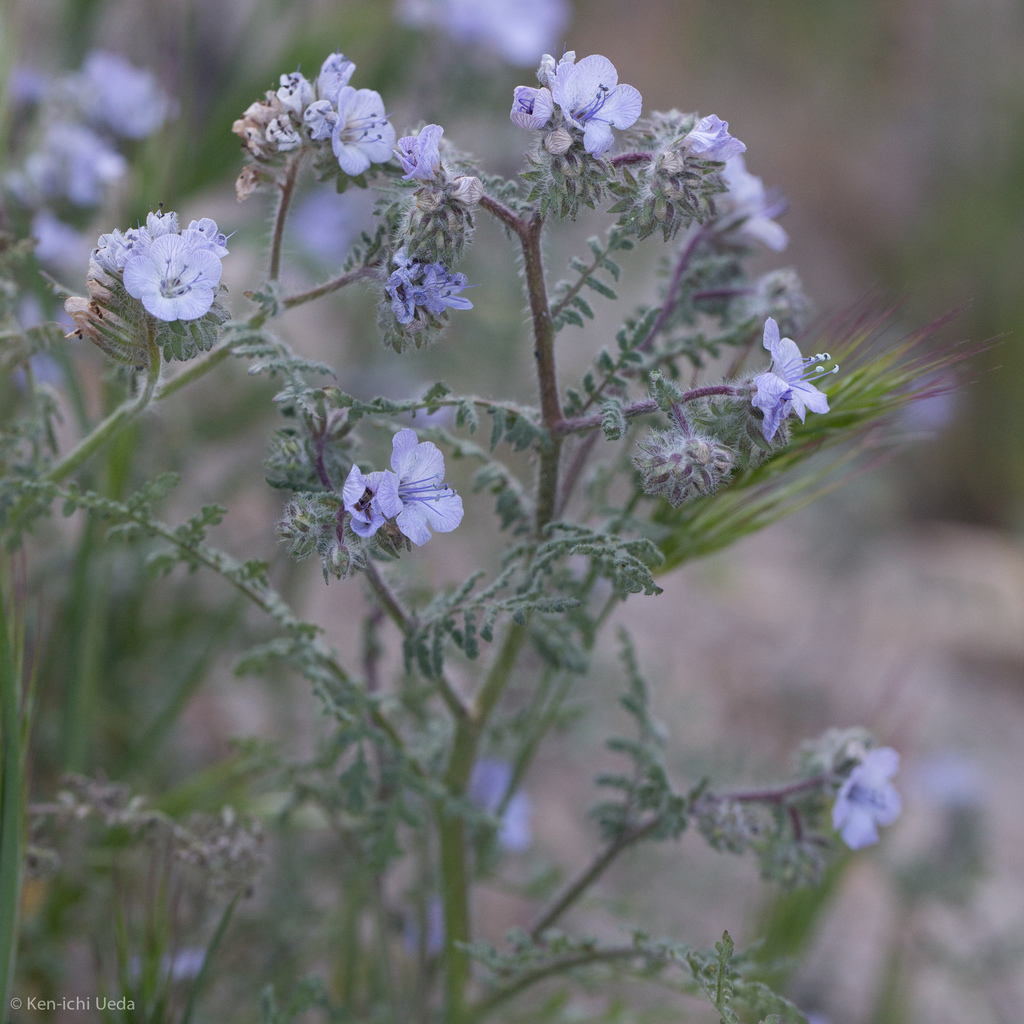
This lovely annual wildflower is native to the western United States and brings a touch of the desert to your garden. It produces beautiful, fern like foliage and clusters of delicate, bell shaped flowers that bees absolutely adore. It is a fantastic choice if you want to support local pollinators in a sunny spot.
At a glance
- Care level
- Easy
- Plant type
- Annual wildflower
- Light
- Full sun
- Indoor light
- Direct sun
- Water
- Every 7 to 14 days
- Mature size
- 1 to 2 feet
- Growth rate
- Fast
- Hardiness
- USDA 8 to 10
- Bloom time
- Early to late spring
Care
Plant these in a spot with plenty of sunshine and well draining soil to keep them happy. Watch for wilting if the soil stays too dry for too long, but be careful not to overwater them. They are quite self sufficient once established and will often drop seeds to return next year.
- Watering
- Water deeply when the top inch of soil feels dry to the touch.
- Feeding
- These plants generally do not require supplemental fertilizer when grown in native soil.
- Pruning
- Deadhead spent flowers to encourage a longer blooming period.
- Repotting
- As an annual, this plant completes its life cycle in one season and does not require repotting.
- Soil
- Sandy or rocky, well draining soil
- Soil pH
- Neutral to slightly alkaline
- Temperature
- -7 to 35°C
- Humidity
- 20 to 50%
- Drought tolerance
- High
- Lifespan
- Annual, completes life cycle in one season.
- Deer and rabbits
- Moderate
Safety
- People
- The glandular hairs on the stems and leaves can cause contact dermatitis in sensitive individuals.
- Children
- Keep children away from the foliage as the glandular hairs can cause skin irritation.
- Contact allergens
- The glandular hairs on the foliage can cause skin irritation or rashes upon contact.
- Airborne allergens
- Pollen may cause mild reactions in those with seasonal allergies.
- Edibility
- This plant is not intended for consumption and may cause irritation.
How to identify it
- Fern like, deeply divided leaves
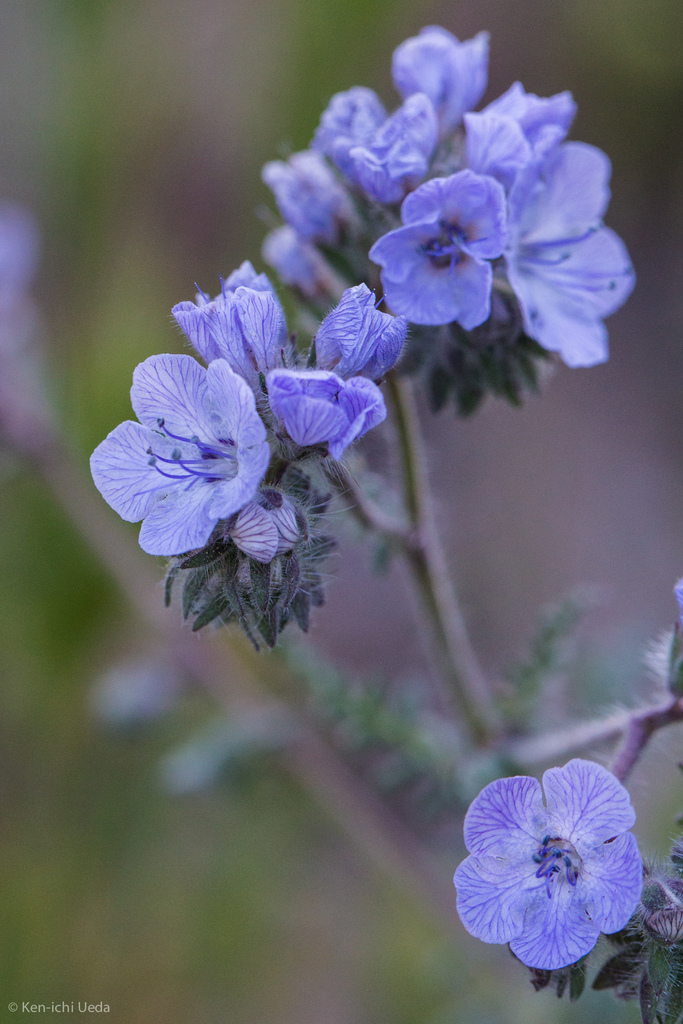
- Clusters of bell shaped flowers
- Flowers range from blue to lavender
- Covered in fine, soft hairs
- Typically grows in upright stalks
- Height
- 0.2 to 0.6m
- Spread
- 0.15 to 0.4m
- Leaves
- green, gray-green, deciduous
- Flowers
- blue, lavender, white, 0.5 to 1.5cm
Problems to watch for
- Powdery mildew · White fungal growth on leaves often caused by poor air circulation.
Check your distant phacelia from a photo
Pocket Botanist looks at a photo of your plant and tells you what's wrong and what to try first.
Scan with your phone's camera to get the app
Or go to pocketbotanist.app/get on your phone
Growing it
- Propagation
- seed
- When to plant
- fall, early winter
- Overwintering
- This plant germinates in winter and grows through the cool season. No special protection is needed in its native climate.
- In containers
- It can grow in containers, but prefers being in the ground for root development.
Direct Sowing
- 1. Clear a patch of soil in a sunny location.
- 2. Scatter seeds thinly over the surface.
- 3. Lightly rake them into the soil.
- 4. Water gently to settle the seeds.
Group this with other drought-tolerant California natives to create a low-maintenance pollinator patch.
Grows well with
- California Poppy · They share similar water needs and bloom at the same time.
- Blue-eyed Grass · These plants look lovely together in a naturalized meadow setting.
Similar species
- Lacy Phacelia · It has a similar appearance but is often used as a cover crop.
Science
- Family
- Hydrophyllaceae
- Genus
- Phacelia
- Order
- Boraginales
- Class
- Magnoliopsida
- Native range
- Western North America, particularly California and the southwestern United States.
- Conservation
- This plant is common in its native range and is not currently of conservation concern.
It thrives in open, sunny areas and is well-adapted to dry, Mediterranean-style climates.
- Value to wildlife
- nectar source, pollen source
- Pollinators
- bees, butterflies
- Uses
- pollinator garden, wildflower meadow, erosion control
Through the year
Ecological indicators
- Salinity
- 2/9
- Soil reaction
- 6/9
- Light
- 8/9
- Temperature
- 6/9
- Moisture
- 2/9
- Nutrients
- 3/9
Taxonomy resolved against GBIF.
Questions people ask
- When should I plant the seeds?
- Sow seeds in the fall or early winter so they can germinate with the winter rains.
- Does it need a lot of water?
- It prefers well-drained soil and does not need much water once established.
Where the name comes from
The genus name Phacelia comes from the Greek word for bundle, referring to the clustered flowers. The species name distans refers to the spaced out arrangement of the flowers along the stem.
Good to know
- It is commonly known as distant phacelia because of the spacing of its flowers.
- It is a fantastic plant for attracting native bees to your backyard.
- The plant is an annual that completes its life cycle in a single season.
Also in
Keep your distant phacelia growing
This page is a general guide. Save your plant in Pocket Botanist and you get care reminders timed for this plant, plus a care history that shows what worked.
Scan with your phone's camera to get the app
Or go to pocketbotanist.app/get on your phone
This guide was generated with AI on and checked against GBIF taxonomy. It is general information, not horticultural or veterinary advice. Read about how we build these guides.