 Pocket Botanist
Guide botanique
Jumpseed.
Persicaria virginiana
Prononciation per-si-KAIR-ee-uh ver-jin-ee-AY-nuh
Aussi appelée American jumpseed, Virginia knotweed, Virginia smartweed, jumpseed



Jumpseed is a charming woodland perennial that adds a soft, natural feel to shaded garden beds. It is known for its slender spikes of tiny flowers that bloom in late summer. You will love how it brings a touch of the forest floor right to your home landscape.
En un coup d'œil
- Niveau d'entretien
- Facile
- Type de plante
- Perennial
- Lumière
- Partial shade to full shade
- Lumière en intérieur
- Lumière moyenne
- Arrosage
- Tous les 3 à 7 jours
- Taille adulte
- 2 to 3 feet
- Croissance
- Moyenne
- Rusticité
- USDA 4 à 9
- Floraison
- Late summer to early autumn
Entretien
Keep the soil consistently moist to mimic its natural woodland home. Watch for wilting leaves, which signal that the plant needs a drink. It is quite hardy and generally stays happy with minimal fuss.
- Arrosage
- Keep the soil evenly moist but not waterlogged.
- Engrais
- Apply a balanced organic fertilizer during the active growing season.
- Taille
- Cut back the dead foliage in late winter or early spring.
- Rempotage
- Repot only when the plant becomes root bound or needs a larger container.
- Sol
- Rich, moist, well draining soil
- pH du sol
- 6.0 to 7.0
- Température
- -20 à 30°C
- Humidité
- 40 à 70%
- Résistance à la sécheresse
- Faible
- Durée de vie
- Perennial, typically 5 to 10 years
- Résistance aux chevreuils et lapins
- Moyenne
Signes qu'il faut rempoter
- Roots growing out of drainage holes
- Water running straight through the pot
- Stunted growth
Sécurité
- Humains
- There are no reports of significant toxicity to humans.
- Enfants
- The plant is not known to be dangerous to children, but ingestion of any non food plant should be discouraged.
- Allergènes de contact
- The sap may cause mild skin irritation in sensitive individuals.
- Allergènes aéroportés
- Pollen is generally not considered a significant allergen.
- Comestibilité
- This plant is not considered edible and should be avoided for consumption.
Comment l'identifier
- Slender spikes of small white flowers
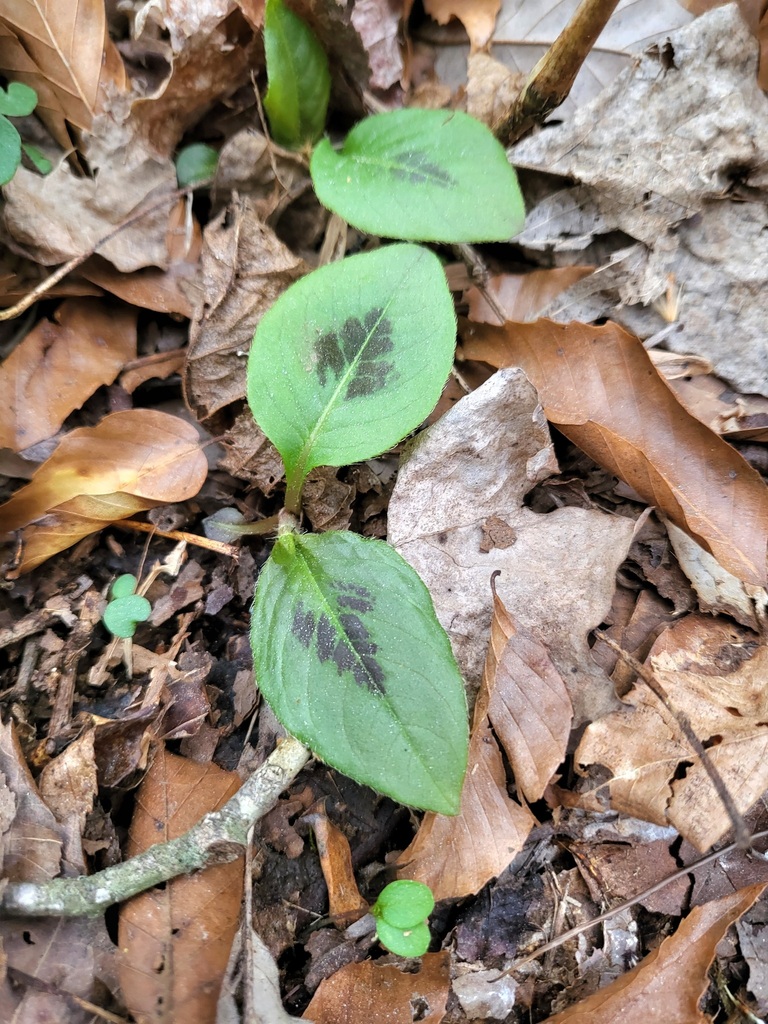
- Broad, ovate leaves with dark markings
- Stems that grow in a zigzag pattern
- Seeds that eject when touched
- Hauteur
- 0,6 à 1m
- Envergure
- 0,45 à 0,9m
- Feuilles
- green, burgundy, deciduous
- Fleurs
- white, red, 0,5 à 1cm
- Fruits
- brown, Autumn
Problèmes courants
- Japanese beetles — These beetles may feed on the foliage during midsummer.
La cultiver
- Multiplication
- division, seed
- Quand planter
- spring, autumn
- Hivernage
- Cut the foliage back to the ground after the first hard frost. Apply a light layer of mulch to protect the crown in colder regions.
- En pot
- It grows well in large containers that can retain moisture.
Division
- Dig up the clump in early spring.
- Separate the root mass into smaller sections.
- Replant immediately in moist soil.
Pair this with other moisture loving shade plants to create a lush, low maintenance woodland display.
Bonnes associations
- Hosta — They share similar shade and moisture requirements.
- Christmas fern — The textures contrast beautifully in a woodland setting.
Espèces similaires
- renouée du Japon — They are related but the Japanese species is highly invasive.
Science
- Famille
- Polygonaceae
- Genre
- Persicaria
- Ordre
- Caryophyllales
- Classe
- Magnoliopsida
- Région d'origine
- Eastern and central North America.
- Préservation
- This species is widespread and not of conservation concern.
It grows naturally in moist, shaded woodland habitats where it competes for light under the canopy.
- Intérêt pour la faune
- nectar source
- Pollinisateurs
- abeilles, papillons
- Utilisations
- woodland gardens, shade borders, ground cover
Au fil des saisons
Repères écologiques
- Salinité
- 1/9
- Réaction du sol
- 6/9
- Lumière
- 3/9
- Température
- 5/9
- Humidité
- 7/9
- Nutriments
- 5/9
Taxonomie vérifiée avec le GBIF.
Ce qu'on demande souvent
- Is it invasive?
- It can spread by self seeding but is generally well behaved compared to other knotweeds.
- Does it need full sun?
- No, it prefers partial to full shade to keep its leaves from scorching.
D'où vient le nom
The genus name Persicaria refers to the peach like leaves, while the specific epithet virginiana indicates its discovery in Virginia.
Bon à savoir
- It is commonly known as jumpseed because the seeds are ejected forcefully when touched.
- The variegated cultivars like Painter's Palette are very popular for brightening dark corners.
- It thrives in moist soil and can tolerate some standing water.
Aussi dans
Ta plante a mauvaise mine ?
Cette page est un guide général. Pocket Botanist diagnostique les problèmes directement à partir d'une photo de ta plante, adapte l'arrosage à sa luminosité et te prévient quand il faut t'en occuper.
Ce guide a été généré par IA et vérifié avec la taxonomie du GBIF. Il s'agit d'informations générales, et non de conseils horticoles ou vétérinaires. Découvre comment nous concevons ces guides.