 Pocket Botanist
Plant guide
Boston ivy.
Parthenocissus tricuspidata
Pronounced par-then-oh-SIS-us try-kuss-pi-DAY-tuh
Also known as Boston ivy, Boston-ivy, Grape ivy, Japanese creeper, Japanese ivy, Japanese-creeper, Japanese-ivy



Scan with your phone's camera to get the app
Or go to pocketbotanist.app/get on your phone

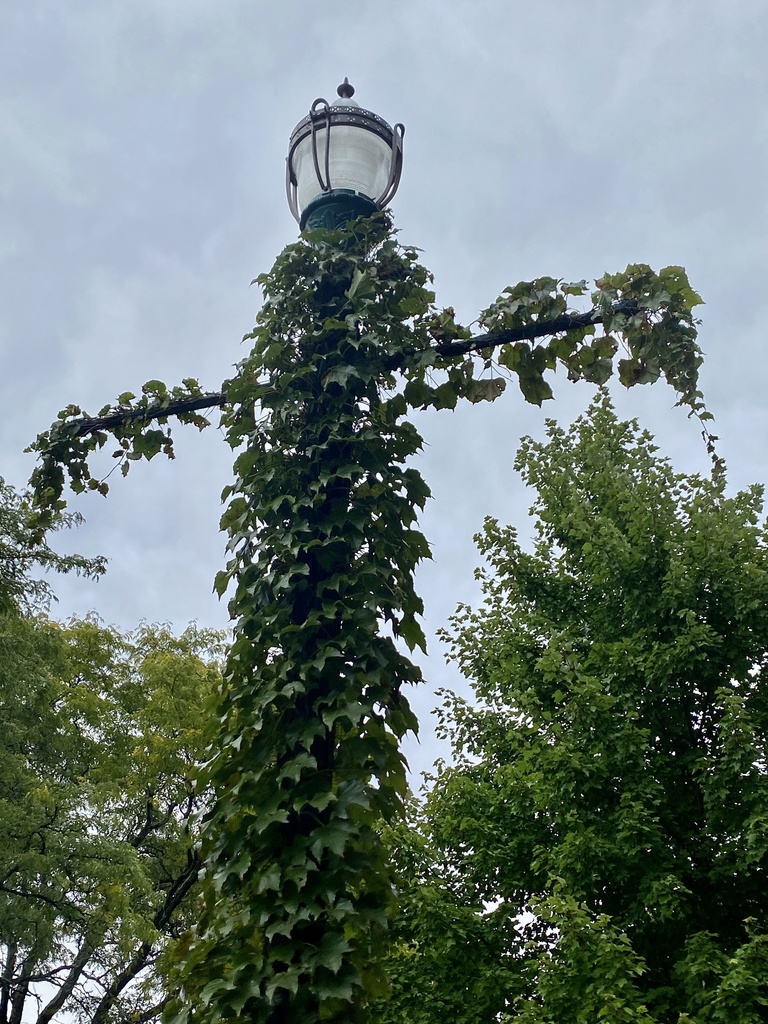
Boston ivy is a vigorous, deciduous woody vine that is famous for its ability to climb walls with ease. It puts on a spectacular show in autumn when its leaves turn brilliant shades of red and orange. It is a fantastic choice if you want to cover a large fence or masonry wall quickly.
At a glance
- Care level
- Easy
- Plant type
- Deciduous woody vine
- Light
- Full sun to partial shade
- Indoor light
- Bright indirect
- Water
- Every 7 to 14 days
- Mature size
- 30 to 50 feet
- Growth rate
- Fast
- Hardiness
- USDA 4 to 9
- Bloom time
- Early to mid summer
Care
Plant this vine in a spot where it has plenty of room to spread, as it grows very quickly. Keep an eye on the tendrils to ensure they are not damaging delicate siding or mortar. If the leaves start to yellow, it may be getting too much direct, harsh sun or sitting in soggy soil.
- Watering
- Water deeply once the top inch of soil feels dry to the touch.
- Feeding
- Apply a balanced fertilizer once in early spring to support new growth.
- Pruning
- Prune back in late winter to control size or remove dead stems.
- Repotting
- If growing in a container, move to a larger pot every few years as it becomes root bound.
- Soil
- Well draining loam
- Soil pH
- 6.0 to 7.5
- Temperature
- -25 to 35°C
- Humidity
- 40 to 70%
- Drought tolerance
- Moderate
- Lifespan
- Perennial, can live for many decades.
- Deer and rabbits
- Moderate
Signs it needs repotting
- Roots growing out of the drainage holes.
- Water running straight through the pot without soaking in.
Safety
- People
- The plant contains calcium oxalate crystals which can cause irritation if handled or eaten.
- Pets
- This plant contains calcium oxalate crystals which can cause irritation if ingested by cats or dogs.
- Children
- Keep children away from the berries as they are mildly toxic and look tempting to small hands.
- Contact allergens
- The sap can cause skin irritation or dermatitis in sensitive individuals.
- Airborne allergens
- The pollen is not considered a significant allergen for most people.
- Edibility
- The berries are not for human consumption and may cause stomach upset if ingested.
How to identify it
- Three lobed or simple leaves
- Glossy green foliage
- Small adhesive tendril discs
- Dark blue berries in autumn
- Vibrant red fall color
- Height
- 9 to 15m
- Spread
- 3 to 6m
- Leaves
- green, red, purple, deciduous
- Flowers
- green, yellow, 0.5 to 1cm
- Fruit
- blue, black, Autumn
Problems to watch for
- Leaf spot · Fungal spots appear on leaves during humid, wet weather.
- Scale insects · Small sap sucking insects that can weaken the vine over time.
Check your boston ivy from a photo
Pocket Botanist looks at a photo of your plant and tells you what's wrong and what to try first.
Scan with your phone's camera to get the app
Or go to pocketbotanist.app/get on your phone
Growing it
- Propagation
- cuttings, seed, layering
- When to plant
- spring, autumn
- Overwintering
- No special care is needed as it is fully hardy, but you can prune it back while dormant in late winter.
- In containers
- It is not ideal for containers due to its massive size and vigorous root system.
Hardwood Cuttings
- Take 6 inch cuttings in late winter.
- Place in a pot with moist potting soil.
- Keep in a cool, bright spot until spring growth appears.
Plant at the base of a sturdy wall or fence to allow the vine to climb naturally.
Grows well with
Similar species
- Virginia Creeper · It is a close relative with five leaflets instead of three.
Science
- Family
- Vitaceae
- Genus
- Parthenocissus
- Order
- Vitales
- Class
- Magnoliopsida
- Native range
- Eastern Asia, including Japan, Korea, and China.
- Conservation
- This species is not of conservation concern and is widely naturalized in many regions.
It thrives by scaling vertical surfaces to reach sunlight in forest edges and rocky outcrops.
- Value to wildlife
- nectar source, nesting cover, winter food for birds
- Pollinators
- bees, beetles
- Uses
- vertical gardening, wall covering, erosion control, autumn color
Through the year
Ecological indicators
- Salinity
- 2/9
- Soil reaction
- 5/9
- Light
- 6/9
- Temperature
- 5/9
- Moisture
- 5/9
- Nutrients
- 5/9
Taxonomy resolved against GBIF.
Questions people ask
- Will it damage my brick walls?
- It generally does not harm sound masonry, but it can pull paint off wood or damage loose mortar.
- How do I keep it from taking over?
- Prune it back hard in late winter to keep it within your desired boundaries.
Where the name comes from
The genus name Parthenocissus comes from the Greek words for virgin and ivy, while tricuspidata refers to the three pointed lobes of the leaves.
Good to know
- It climbs using tiny adhesive pads rather than twining tendrils.
- The common name Boston Ivy is a bit of a misnomer as it is native to East Asia.
- It can grow up to 10 feet in a single season once established.
- The leaves turn a spectacular shade of fiery red before dropping in winter.
Also in
Keep your boston ivy growing
This page is a general guide. Save your plant in Pocket Botanist and you get care reminders timed for this plant, plus a care history that shows what worked.
Scan with your phone's camera to get the app
Or go to pocketbotanist.app/get on your phone
This guide was generated with AI on and checked against GBIF taxonomy. It is general information, not horticultural or veterinary advice. Read about how we build these guides.