 Pocket Botanist
Plant guide
Creeping Oxalis.
Oxalis corniculata
Pronounced ok-SAL-iss kor-nik-yoo-LAY-tuh
Also known as 'ihi, Clover Sorrel, Creeping Lady's Sorrel, Creeping Sorrel, Creeping wood sorrel, Creeping woodsorrel, Horned Oxalis, Oxalis



Scan with your phone's camera to get the app
Or go to pocketbotanist.app/get on your phone

Creeping Oxalis is a low growing, mat forming perennial often considered a persistent weed in gardens. It features clover like leaves and small yellow flowers that appear throughout the growing season. This plant spreads rapidly by seed and creeping stems, making it quite difficult to eradicate once established.
At a glance
- Care level
- Easy
- Plant type
- Herbaceous perennial
- Light
- Full sun to partial shade
- Indoor light
- Bright indirect
- Water
- Every 3 to 7 days
- Mature size
- 10 to 20 cm
- Growth rate
- Fast
- Hardiness
- USDA 7 to 10
- Bloom time
- Spring to autumn
Care
Keep the soil consistently moist to encourage growth, though it is quite adaptable to various conditions. Watch for rapid spread into unwanted areas, as it can quickly overtake containers or garden beds. Remove the plant before it sets seed to prevent it from becoming an invasive nuisance.
- Watering
- Keep the soil evenly moist but not waterlogged.
- Feeding
- Apply a balanced liquid fertilizer sparingly during the active growing season.
- Pruning
- Trim back stems to control spread and prevent seed production.
- Repotting
- Repot when the plant becomes root bound or to refresh the soil medium.
- Soil
- Well draining, fertile soil
- Soil pH
- 6.0 to 7.5
- Temperature
- -10 to 35°C
- Humidity
- 40 to 70%
- Drought tolerance
- Moderate
- Lifespan
- Short lived perennial, often treated as an annual.
- Deer and rabbits
- Moderate
Signs it needs repotting
- Roots growing out of the drainage holes.
- The plant becomes root bound and growth slows down.
Safety
- People
- The plant is considered mildly toxic due to high levels of soluble oxalates.
- Pets
- This plant is toxic to cats and dogs due to its high concentration of soluble calcium oxalates.
- Children
- Keep away from small children as the foliage can be mistaken for edible clover and contains oxalates.
- Contact allergens
- The sap may cause mild skin irritation in sensitive individuals.
- Airborne allergens
- There are no significant respiratory allergens associated with this plant.
- Edibility
- This plant contains oxalic acid and should be consumed only in very small quantities.
How to identify it
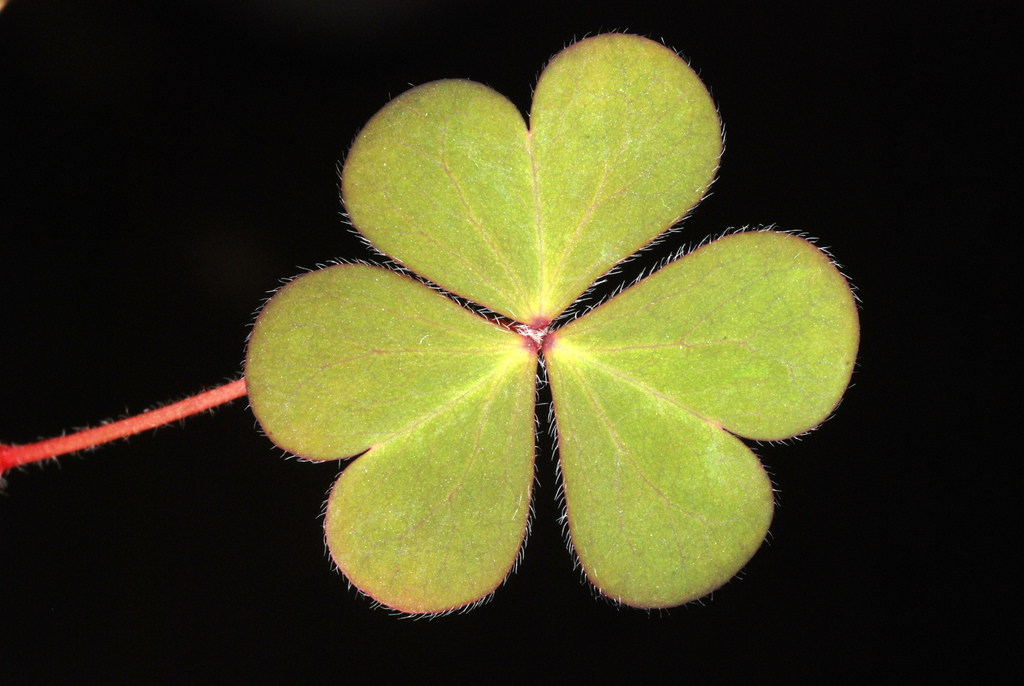
- Three heart shaped leaflets
- Small yellow five petaled flowers
- Creeping stems rooting at nodes
- Seed pods explode when touched
- Height
- 0.05 to 0.2m
- Spread
- 0.2 to 0.6m
- Leaves
- green, purple, deciduous
- Flowers
- yellow, 0.5 to 1cm
- Fruit
- brown, Summer to autumn
Problems to watch for
- AphidsCommon
- RustCommon
- Root RotUncommon
- Slugs and SnailsUncommon
Check your creeping oxalis from a photo
Pocket Botanist looks at a photo of your plant and tells you what's wrong and what to try first.
Scan with your phone's camera to get the app
Or go to pocketbotanist.app/get on your phone
Growing it
- Propagation
- seed, division
- When to plant
- spring, autumn
- Overwintering
- In cold climates, it will die back to the ground. Mulch lightly if you wish to protect the roots from deep freezes.
- In containers
- It grows easily in any container, but be aware it will quickly colonize the entire pot surface.
Seed
- 1. Collect the seed pods just before they burst.
- 2. Scatter seeds on moist potting soil.
- 3. Keep the soil lightly damp until germination.
Use this plant as a living mulch in large containers where its aggressive nature can be contained.
Grows well with
- Creeping Jenny · They share similar moisture needs and create a dense ground cover.
Similar species
- Purple Shamrock · It is a popular ornamental relative with larger purple leaves.
Science
- Family
- Oxalidaceae
- Genus
- Oxalis
- Order
- Oxalidales
- Class
- Magnoliopsida
- Native range
- Cosmopolitan, likely native to Southeast Asia.
- Conservation
- This plant is considered a widespread weed in many regions and is not of conservation concern.
It thrives in disturbed soils and cracks in pavement by producing vast quantities of seeds.
- Value to wildlife
- nectar source
- Pollinators
- bees, butterflies
- Uses
- ground cover, container filler, rock garden plant
Through the year
Ecological indicators
- Salinity
- 2/9
- Soil reaction
- 5/9
- Light
- 6/9
- Temperature
- 6/9
- Moisture
- 5/9
- Nutrients
- 5/9
Taxonomy resolved against GBIF.
Questions people ask
- Is this plant a weed?
- Yes, it is often considered a persistent weed in lawns and greenhouses.
- Can I grow it in a pot?
- It grows very well in containers but will likely spread to nearby pots.
Where the name comes from
The genus name Oxalis comes from the Greek word for sour, referring to the acidic taste of the leaves. The species name corniculata refers to the horn shaped seed pods.
Good to know
- It is often called creeping woodsorrel.
- The leaves fold up at night or in low light.
- It is a prolific self seeder that can become invasive in gardens.
- The leaves have a pleasant lemony taste due to the oxalic acid.
Also in
Keep your creeping oxalis growing
This page is a general guide. Save your plant in Pocket Botanist and you get care reminders timed for this plant, plus a care history that shows what worked.
Scan with your phone's camera to get the app
Or go to pocketbotanist.app/get on your phone
This guide was generated with AI on and checked against GBIF taxonomy. It is general information, not horticultural or veterinary advice. Read about how we build these guides.